by
by  You've heard the adage that a picture is worth a thousand words, but when that picture is protected by image copyright, the picture is only worth three words: cease and desist.
OK, that's kind of a lawyer joke. But it illustrates how protective people are about finding their copyrighted images used online without permission.
Copyright laws were established not to give the author the right to deny their work to other people, but instead to encourage its creation.
Article I, Section 8, clause 8, of the United States Constitution states the purpose of copyright laws is “to promote the Progress of Science and useful Arts, by securing for limited times to Authors and Inventors the exclusive Right to their respective Writings and Discoveries.”
It's a delicate balance between the rights of the creator and the public's interest. When in conflict, the balance tips more heavily toward the public's interest, which is often contrary to what the creator believes to be fair or just.
This article will cover exactly what copyright is and what it covers.
And then we'll look at the concept of fair use as it pertains to using images online. The goal here is to better understand how to use images others create in a way that is both respectful of the author's ownership rights and allows others to use it.
What Is Copyright?
Copyright is a federal law of the United States that protects original works of authorship. A work of authorship includes literary, written, dramatic, artistic, musical and certain other types of works.
Copyright attaches as soon as the original work is created, and applies to both published and unpublished works. As soon as you type words, click the shutter on your camera (or, for many of you, hit the home button on your iPhone), apply paint to canvas or paper or lay down tracks for your next hit, you've got a copyright (with some exceptions).
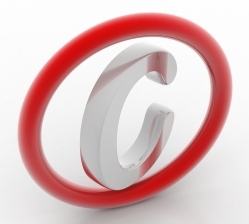
Copyright is an automatic right and does not require the author to file special paperwork, as is the case for trademark and patent. Registration is required to enforce the rights, but as a matter of right, an author is not required to register anything to get the right to use the “circle c,” showing the work is copyrighted.
One of the many terrific things about copyright is that it comes with a host of exclusive rights that allow the owner to do or authorize a number of things and exercise substantial control over his or her work. The copyright owner has the right to do four things (called exclusive rights):
- Reproduce the copyrighted work;
- Display the copyrighted work publicly;
- Prepare derivative works based on the copyrighted work; and
- Distribute copies of the copyrighted work to the public by sale, rental or lending, and/or to display the image.
Source: 17 USC Section 106.
As online content creators, curators and managers, you know the value of using images to get the reader's attention, add a visual component to commentary, illustrate using an infographic or any of a host of benefits. Using the correct image can definitely take a post from drab to fab very quickly. It can also help tell a story that words alone can't.
But unless you're a photographer showcasing your own work, chances are you'll need to use work created and owned by someone else. There are plenty of sources. While the general rule is that you can't use a copyrighted work without express authorization from the owner, there is one significant legal construct that allows millions of people every day to see and share images online.
Get World-Class Marketing Training — All Year Long!
Are you facing doubt, uncertainty, or overwhelm? The Social Media Marketing Society can help.
Each month, you’ll receive training from trusted marketing experts, covering everything from AI to organic social marketing. When you join, you’ll also get immediate access to:
- A library of 100+ marketing trainings
- A community of like-minded marketers
- Monthly online community meetups
- Relevant news and trends updates
Please keep in mind that stock photo services, creative commons licenses and public domain repositories of images are not subject to fair use due to the rights they carry.
Stock photo services require you to pay for a license, creative commons licenses confer the right to use an image under certain circumstances and public domain images are not subject to copyright in the first place.
What Is Fair Use of Copyright? Can I Use That Image?
Fair use is not the same as free use. Fair use is a legal exception to the exclusive rights an owner has for his or her copyrighted work.
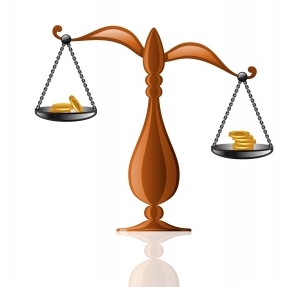
It has little to do with what we may think is fair, and everything to do with keeping the balance tipped in favor of the public interest. It's a delicate balance, mind you, but one that often leaves the copyright owner wanting to scream.
Since this discussion will only pertain to use of images online, I will use examples specific to this.
A classic example of fair use of an image online is product reviews. If you want to review a book, a new piece of technology, a food product or whatever widget, you'll likely want to include a photo. But not some washed-out, overexposed, shadowy, laundry in the background kind of photo that you'd take.
So you head to the manufacturer's website and right-click that image and save it to upload to your site. A photo will not substitute for the actual product, so the owner's rights should be very minimally affected. Therefore, your right to use the copyrighted image would likely be permitted under fair use.*
Fair use is in place for the greater good, to allow copyrighted works to be used without permission for the benefit of the public. Imagine not being able to use images of a dead dictator to tell the story of how he died. Or not being able to talk about fashion without showing the outfit you're referring to.
However, there are limits and only a court has the final decision-making ability. Section 107 of the Copyright Act states:
the fair use of a copyrighted work, including such use by reproduction in copies or phonorecords or by any other means specified by that section, for purposes such as criticism, comment, news reporting, teaching (including multiple copies for classroom use), scholarship, or research, is not an infringement of copyright.
Discover Proven Marketing Strategies and Tips
Want to go even deeper with your marketing? Check out the Social Media Marketing Podcast! Publishing weekly since 2012, the Social Media Marketing Podcast helps you navigate the constantly changing marketing jungle, with expert interviews from marketing pros.
CHECK OUT THE SOCIAL MEDIA MARKETING PODCAST NOW
But don’t let the name fool you. This show is about a lot more than just social media marketing. With over 600 episodes and millions of downloads each year, this show has been a trusted source for marketers for well over a decade.In determining whether the use made of a work in any particular case is a fair use the factors to be considered shall include—the purpose and character of the use, including whether such use is of a commercial nature or is for nonprofit educational purposes;
the nature of the copyrighted work; the amount and substantiality of the portion used in relation to the copyrighted work as a whole; and the effect of the use upon the potential market for or value of the copyrighted work.
Source: 17 USC Section 107.
All four factors are used in determining fair use, with the first (the purpose and character of the use) being the most important the court will examine. When it comes to photographs, copyright law has a long-standing deference to permit a photographer control over the first time an image is made public. In this discussion, we'll assume that you're not hacking computer systems or digging through rubbish bins looking for non-public images.
One of the issues with photos is that using just part of it is, well, a bit ridiculous. This is the third factor courts will look at (how much of the work is used); however, it is often a very significant element of whether fair use exists.
Unlike the written or spoken word, where excerpting a portion to illustrate is possible, with images it is usually the whole that is necessary. A partial photo, unless you're doing some kind of guessing game, does not portray the level of professionalism you're likely going for.
Same with using a very low-resolution option. Not only does a low-res image look bad on your site, the image creator (whether photographer or designer) probably doesn't want a bad-quality image circulated, as it could impact his or her reputation.
5 Things to Think About Before Using Copyrighted Images
So you're likely thinking this is insane and who has that much time on their hands to figure out all of this just for an image on a blog? In reality, though, answer question 1 of the 4-part fair use test and you're likely to get a very good sense of whether you'll have a leg to stand on if challenged.
#1: Do you understand the term fair use? Just because you provide attribution and/or a link back to the original doesn't mean you're free and clear. Fair use has nothing to do with attribution. That's an issue related to plagiarism, which is different from copyright.
Fair use basically means you're allowed to infringe on someone's copyright and they can't do anything about it. If your use is covered by fair use, you don't have to provide attribution anyway (although it would be nice).
#2: Why are you using the image? If it is “…for purposes such as criticism, comment, news reporting, teaching (including multiple copies for classroom use), scholarship, or research…” you're on the right track.
If you're just using the image to pretty up a post, then think twice; or better yet, get permission or buy a stock image.
#3: Have you transformed the image? If the new work which incorporates the copyrighted image is a “transformative work”—what you created no longer resembles the original—there is a greater likelihood of finding an exception to copyright infringement.
Are you taking an image and incorporating it into an infographic? Is the image now part of a video used for one of the reasons set forth in the Copyright Act?
#4: How much of the image are you using? If you're using a thumbnail and linking to the original location, there is greater likelihood of finding fair use than if you just post the original image. If you're doing a post about facial features and are just using a portion of the face from an image, you stand a better chance of arguing fair use than if you used the entire image.
#5: Are you willing to risk your site being taken down, getting a cease and desist/bill/DMCA or being sued? The Digital Millennium Copyright Act (DMCA) provides very powerful options for a copyright owner to protect his or her works in the digital space. By hitting “publish,” you may be opening a can of worms.
In Summary
When it comes to photos, when in doubt, assume it's subject to copyright and don't use it without the appropriate permission. What it comes down to is that if you need to use another person's image, make sure it fits clearly into one of the protected purposes or seek legal counsel if there is a significant investment of money or time in your project.
Fair use may be an exception allowing you to use copyrighted images, but chances are you'll be in for a discussion or possibly find your site taken down by your host if the copyright holder disagrees. Unfortunately, there are no significant cases that establish hard-and-fast rules when it comes to fair use and images used on the Internet.
However, photographers and graphic artists often make a living from selling or licensing their work and if we all just poached what we wanted, we'd be circumventing not only the law but also interfering with their right to control how they distribute their images.
Copyright fair use has been fought over when it comes to using words and images in print publications. The Internet, though, is still very much in its infancy when it comes to fair use guidance.
Without bright line rules, we're each left to interpret laws that were written long before digital communication was ever imagined and did not contemplate the ease of sharing that exists today. While it may be a remote possibility that the average blogger will be sued for copyright infringement relating to an image, bear in mind that you may be the proverbial “straw that broke the camel's back.”
If you're considering taking images from large agencies, they have legal teams that do nothing but look for infringing uses. There are inexpensive ways to search for images online, even if you change the file name. And if you're thinking you'll just crop the image so you can't see the copyright notice or other identifying information, think twice about that because the penalty for doing so is very stiff— up to $25,000, plus attorney fees and damages.
There are many resources for free images, whether public domain, licensed creative commons or inexpensive stock images, so you really shouldn't need to use copyright-protected works for beautifying your site, creating that cool presentation or making a video. But if you really have to have that image, ask first. You'd be surprised at how many people would gladly grant permission for use of their images.
Fair use doesn't mean fair game, but it's there to allow for uses that will benefit society and the public good. Don't be afraid to use images. Use this information to make good decisions and you're likely to be just fine. Always, though, if in doubt leave it out (or get permission or ask a lawyer).
What do you think? Leave your questions and comments in the box below.
Disclosure: While Sara Hawkins is an attorney, this article is for informational purposes only and is not to be considered legal advice.
*Not intended to be legal advice.
Image source FreeDigitalPhotos.net: renjith krishnan, cjansuebsri & Rawich
Attention Agency Owners, Brand Marketers, and Consultants
Introducing the Marketing Agency Show–our newest podcast designed to explore the struggles of agency marketers.
Join show host and agency owner, Brooke Sellas, as she interviews agency marketers and digs deep into their biggest challenges. Explore topics like navigating rough economic times, leveraging AI, service diversification, client acquisition, and much more.
Just pull up your favorite podcast app, search for Marketing Agency Show and start listening. Or click the button below for more information.