7 Steps For a Successful Social Media Strategy

social media how toAccording to the 2010 Social Media Marketing Report , 67% of marketers plan to increase their use of social media channels including blogs, Twitter, and Facebook.

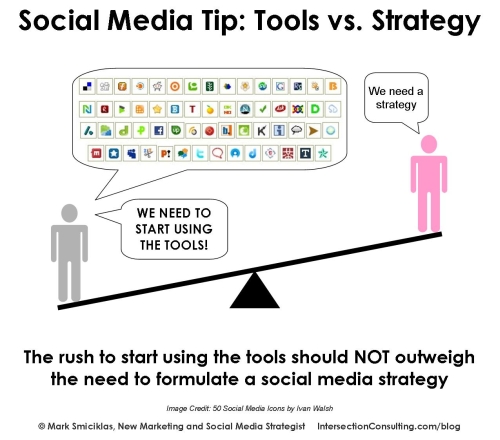
As more companies integrate social media into their marketing and communications plans, emphasis needs to be on creating a social media strategy.  Without a strategy, you’ll undoubtedly be sucked into a social media time sink.

So how exactly do you develop this strategy?

It’s easy.  Here’s a practical approach to developing a social media strategy for your business.

The Prerequisite

Do you work for a large company? Before you develop your strategy, make sure your upper-management team believes in social media and that the first goal is not to sell, sell, sell.  In other words, if your business is jumping into social media because “everyone else is doing it” or because you want to sell product rather than to build relationships, please step away from social media.  Social media is a long-term commitment and not a marketing gimmick.

If you’re having a tough time convincing your team that social media needs to be integrated into your marketing plan, then counter any concerns with these responses to common social media objections.

It’s important for the organization to understand that testing and experimentation are keys to success.  This comes naturally to an organization whose culture embraces being proactive and open.  The reason why all businesses need to have a social media strategy is because it prevents any misunderstandings and emphasizes why social media is relevant to your business’ overall goals.
Now let's develop your social media business strategy, shall we?

Here are seven key points to consider…

#1: Determine Your Goals and Objectives

Determine who owns social media.  Whether it’s marketing, PR, or communications is irrelevant.  In a perfect social media world for businesses, social media instills a collaborative approach and breaks down silos.

What’s important is to understand your social media goals and objectives and how they tie into your overall company goals.

Keep it Specific, Measurable, Attainable, Realistic/Relevant, and Timely (aka be SMART!).

#2: Research, Research, and Research Some More

Rather than jumping into the social media pool with both feet, do the equivalent of the “splash-water-on-self” maneuver so you know what to expect.  Step two of creating an effective social media strategy is research.

  • Develop a list of social media sites where you can potentially engage with people.  The list will most likely start off with Twitter, Facebook, LinkedIn, and a few select blogs and forums.
  • Check out each of the social media sites on your list and do additional research to determine relevancy by searching for your brand name, your competitors, and your target keywords.  Listen to what’s out there, identify, and understand your target audience.

#3: Create a Digital Rolodex of Contacts and Content

When social media is done correctly, relationships will build naturally.  Begin making connections by following the conversation.  You can do this by subscribing to blogs in your industry and by making a list of influencers who are relevant to your business.

This becomes handy when it’s time to provide content on your social networks.  Read Emily Proctor’s article in which she provides some excellent pointers on a social media content strategy.

#4: Join the Conversation to Develop Relationships

Now it’s time to start making use of all the research you’ve done.  You can start joining the conversation by posting comments on blogs and forums, answering questions on Yahoo! and LinkedIn, joining groups related to your industry and joining Twitter chats.

Begin developing relationships by following and friending influencers and those in your industry.  Don’t just look for people with thousands of followers; you’ll be surprised by the value that someone with only a couple of hundred followers provides.  Here’s an article on how to network on Twitter.

#5: Strengthen Relationships

It’s easy to hide behind your avatar or profile picture, but face-to-face is incredibly powerful.  I think more people are now realizing how underrated the in-person interaction really is because of how far social media has come, allowing so many people to “hide.”

Attend offline events related to your industry—not only to strengthen your knowledge base but also to network and strengthen relationships with those you might have conversed with via social media but never met in person.  A popular offline event is known as a tweetup.

#6: Measure Results

You have goals and objectives, right?  That means you should be able to measure  your success.

Remember, what you measure will tie into the goals and objectives of your social media strategy.

Let’s take the four commonly used objectives:

  • Improve brand presence across social channels—The measurement goal here is an increase in the number of followers on Twitter, number of fans on Facebook, number of comments, number of times your brand is mentioned in blogs and forums and so on.
  • Increase positive sentiment about your brand—The goal here is to convert the number of positive mentions while taking note of negative mentions.  Has the ratio of positive to negative comments improved?  With the good comes the bad in social media. Get used to it!
  • Develop relationships for future partnership opportunities—This goal is to keep track of those with whom you’ve connected.  For example, if you met a potential speaker for your webinar, include that person into your digital Rolodex.  If a vendor contacts you through your blog, capture that lead and take note.
  • Increase traffic to your website—Keep track of visitors to your website who come from each of your social media sites.  If you’re promoting an event using social media, consider using a unique code to track the campaign.

Measuring social media is a never-ending debate.  What metrics do you use to measure social media?  What objective are you measuring those metrics for?
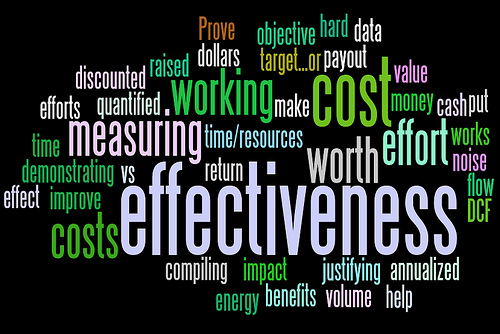
When it comes to measuring social media, it takes a multitude of metrics as well as trending reports to get a sense of what to improve.

#7: Analyze, Adapt, and Improve

Your social media strategy doesn’t end with measurement; it goes beyond that.  You need to analyze your social media campaigns, adapt any new findings into your current processes, and improve your efforts.

Testing and experimentation will perfect your social media efforts.

As you dive deeper into the never-ending pool of social media, you’ll quickly understand what works and what doesn’t.

More specifically, you’ll develop favorite tools to use, realize that there are certain days and times where it doesn’t pay to be active in social media, and come to the conclusion that you still have lots to learn.  It’s a wonderful new world and I hope many of you are as thrilled to be part of it as I am.

Conclusion

Social media strategies will vary for each business and for each industry.  However, one thing is clear: social media needs to have “all hands on deck” in order to be successfully integrated into your company’s goals and objectives.

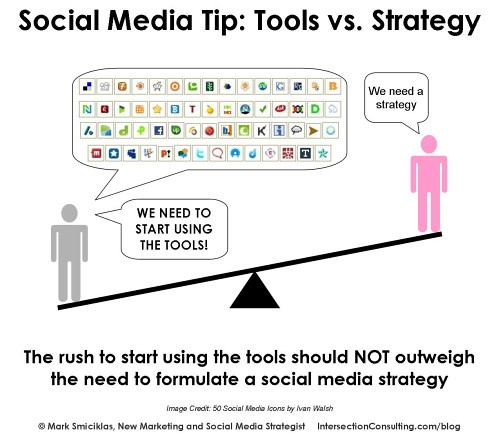
In general, I view social media as a strategy, not a tactic. I consider the social media platforms like blogs, Twitter, Facebook, etc., as tactics that tie into the social media strategy.  In other words, outline your social media strategy and support your strategy with tactics.  Without a carefully thought-out plan, you’ll eventually be overwhelmed with social media and even worse, get burnt out by it.  Use this guide as a stepping-stone to your social media success.  Cheers!

What are your thoughts about strategy versus tactics? Do you have any tips from your own experience developing a social media plan?  Please share your thoughts in the comments box below.

Image sources:
http://www.flickr.com/photos/intersectionconsulting/4044928121/
http://www.flickr.com/photos/cambodia4kidsorg/3290848259/in/photostream/

Tags: , , , , , , , , , , , , , , , ,

About the Author, Nick Shin

Nick Shin is an online marketing strategist specializing in SEM, social media, and PPC. When he isn't collaborating or consulting on marketing strategies, you can find him on the tennis court. Other posts by Nick Shin »


Share this post


72 Comments

 
  1. Nick,
    Awesome article on creating a social media strategy. Blending the offline and online networking is going to be key to future growth of our organization. Thanks for outlining a plan.

  2. Financialsamurai says:

    Cool. Nick, maybe you can be my Social Media strategist!

  3. Financialsamurai says:

    Cool. Nick, maybe you can be my Social Media strategist!

  4. Buzz says:

    I think a good step to include in every social media strategy is how you plan to brand yourself in social media networks. For businesses having an established brand, this may not be a problem although they would still have to study if their offline branding strategy translates well into social media marketing.

    For relatively new businesses however, they would have to find a way to be heard above the social media noise. What will be your message that people would want to see on their news feed? How will you integrate the available tools in social networks to reinforce your brand? What will be the viral component of your message?

  5. #4 and #5 is the basis of Social Media. Without relationships – Social Media does not exist. Thanks for this great article. Very well written and specific tips.

  6. Julie Semple says:

    I need help with my social media strategy. I am a personal trainer and a chef. I am not sure where should start

  7. Hey Julie
    as underlined in the article, before everything, you should really understand what are your goals and what do you want to get out of your social media strategy. Once you have defined your goals, it will be also clear which platform you should use

  8. Cgomez says:

    Thank you for this informative article!

  9. strategy is good, but I cringe to think that some might use it as an excuse to wait. Your market is talking.. get a strategy and start today.

  10. Emily Alford says:

    What tools do you recommend for analytics for Facebook pages and Twitter accounts?

    I am working on two of both and we are trying to find a comprehensive tool. Currently using Facebook Insights and Twitalyzer.

  11. virginiasowers says:

    Great topic. We delved into social media with a strategy “outline.” More recently I've completed a comprehensive strategy for our organization's social media presence. I found it helpful to start with the organization's key marketing objectives and develop social media strategies to support those. From the overarching social media strategy, I divided the tactics by platforms (e.g., Twitter, Facebook, blog).

  12. [...] Update: Social Media is about a long term commitment. The Social Media Examiner is doing a great job of getting information and best practices out there. Check out this awesome post called the “7 Steps For a Successful Social Media Strategy”. [...]

  13. Diane Meyer says:

    I would just want to be sure that those attempting to write a comprehensive strategy understand that they should watch, listen and learn about all platforms…Twitter, Facebook and LinkedIn to start with. Until they really understand how each may fit into their markting mix, can they develop a strategy. It would be like sitting down to play a game of chess and be expected to implement a strategy at every move, except they don't know how to play.

  14. Addoway.com says:

    I am glad you mentioned social media as a strategy. Many tend to think of it as a job, but instead of looking at it as a strategy comprised of tools to engage your audience. You need a strategy and then underlying tactics that help you get the main Goal done.

    Great article. Thank you.

  15. Nick Shin says:

    Thanks Carla. Blending offline and online is a challenge for many organizations. Check out this Flickr group that has examples of brick-and-mortar stores showing their signs for social media networking:

    http://www.flickr.com/groups/1408698@N25/

    @shinng

  16. Nick Shin says:

    Hope that means you found this article useful! ;-)

    @shinng

  17. KOTHEA says:

    The best advice is often that which, in hindsight, is obvious and commonsensical!
    Nice article Nick!

  18. Nick Shin says:

    That is an excellent point. The branding strategy comes from the overall marketing strategy for the company. This should stay consistent with how you brand on social networks. Trying to brand oneself through social media first can have unfavorable and inconsistent results. I hope new businesses realize that.

    The questions you presented are quite interesting. I think creating a social media strategy answers those concerns as it relates to the content that you provide and the integration of social media tools.

    Very insightful, thanks!

    @shinng

  19. Nick Shin says:

    Thanks Charlene! I have nothing else to add to your comment. Relationships are key in social media especially for businesses that are trying to gain leads through social media.

    @shinng

  20. Nick Shin says:

    I tend to think that many wait to jump into social media because there is so much going on at once. There seems to be an overwhelming sensation for those new to social media and maybe even an intimidation factor. I agree with you, get a strategy and start today. Social media is an experiment for EVERY business as proven by several notable and unfortunate social media accidents by some big brands.

    @shinng

  21. Mat says:

    Okay, that's weird. A few weeks ago I wrote a blog post with almost the exact same title http://bit.ly/9f7bnD You didn't copy did you? Just kidding of course. Its always great to see strategic thinking applied to social media marketing. So many business owners/executives still believe in the Field of Dreams strategy: If you build it they will come. This is simply not true. Social media marketing is difficult, like many things in business, and it must be worked with a plan in order to succeed. Great post.

  22. Sam says:

    Although I completely agree with everything in this post I think that “some” companies can often get bogged down by too much research. I think there comes a certain point where you have to say “we're as ready as we're going to be, let's start engaging.”

    It's kind of like riding a bike, you can research the laws of physics but you won't really know until you get on and start to pedal.

  23. Evad Design says:

    Sam, you're right. Great bike analogy too haha it's so true.

    And as Nick mentioned in the post, analyze what you've done, adapt, and improve.

  24. Zack Swire says:

    I come across this all the time, clients who want to jump into SM, but are too eager to lay out a plan or allocate resources. Then they wonder why they only have 120 followers and nothing is happening. Very nice article that I'll be sharing. A strategic and measured approach that you constantly build on is key.

    Cheers!

    Zack

    http://www.twitter.com/swire

  25. KjerstiBakke says:

    Very nice article that I will be sharing. Where I work we are just starting this process. This was good tip and very easy to understand.
    Thank you for your effort.

  26. Howard Shen says:

    Hey there Nick!

    5 Stars I give you to this post! :) Cheers!
    This entails a nice article to share at my blog! :)
    Giving you a trackback too!

    Keep it up,
    Howard

  27. Some good points for my twitter acount manager.

  28. [...] social media as a strategy.If you want to know more about it,click on this link to lead you to the step by step guide…. Like it? Give me yourself a favour, SHARE this to your friends! :)Hello there! If you are [...]

  29. Uğur Eskici says:

    Hey Nick,
    Nice tips thanks for helpfully article.
    Ugur.

  30. Justin Dupre says:

    Nice article! I agree that Social Media is definitely a long term commitment that provide value and useful information to the reader.The 7 key points are very useful to consider when doing your strategy.

  31. Ldhaywood says:

    Great article! I like the emphasis on face to face meetings. I have a few clients I've never met in person, but most were won with face to face presentations. And there's nothing like networking with people in your own backyard who have more expertise than myself.

  32. Styliciouslysocial says:

    This was a very informal article. Thanks for sharing.

  33. Number 7 is 100% true. No matter what you THINK is going to work, you never know until you test it out. I have had clients tell me they wanted me to post on X, Y and Z web sites and I go to those sites and there is either zero traffic, bogus posts, or just bad information. I end up having to convince the client that there is a better way.

  34. I agree with importance of a strategy but I have found the 80/20 rule is best on defining the strategy then moving right to #7 experimenting then analyze and improve. Great Article!!

  35. Greg Bennett says:

    These are the reasons why I hired someone to help me with all my social media strategy. Othewise, I would have been wondering around lost for days/weeks trying to figure this out on my own.

  36. Strategy is everything if you are thinking about seriously using social media to develop your business. Without one, it's very easy to get lost, and feel overwhelmed, like you aren't really making any progress. With one, you have a focus and a well researched process of achieving the end result.

    Great article Nick!

  37. Thanks for this resource, Nick. I can't wait to add some of my local biz photos to Signs of Social Media!

  38. Julie, before you even start with social media, identify your niche. Who is your ideal client? What is their need or problem–and what solution do you provide? What's at the heart of your biz e.g. what is your core strength, message and unique perspective you bring to your ideal client? What's your “secret sauce”?

  39. Sosyal Medya says:

    Hi Nick. Thanks for this very useful article.

  40. [...] 7 Steps For a Successful Social Media Strategy [...]

  41. Teena says:

    Very sound advice, I'll have to take your word for it. Thanks.

  42. Nick Shin says:

    You're welcome Kate! That group is one of my favorites. I hope more businesses are like you and take advantage of offline marketing to promote online networking. Potential clients are everywhere!

    @shinng

  43. Nick Shin says:

    I'd agree with the responses provided by Alistair and Kate. Make sure you understand what you want to get out of social media. It's intimidating at first, but as long as you realize that social media is a long term strategy, you'll do just fine.

    @shinng

  44. Nick Shin says:

    You're welcome! Glad you found it useful.

    @shinng

  45. Nick Shin says:

    I know of a few useful paid tools like Sysomos (disclosure: I am the SEM and Social Media Specialist @Marketwire, which recently bought Sysomos).

    A good one to add to Facebook is Google Analytics – http://www.socialmediaexaminer.com/how-to-add-g...

    @shinng

  46. Nick Shin says:

    I'm a big believer in jumping into social media with a strategy so this topic came naturally. I like the way you outlined your strategy. This article provides a foundation, but deeper strategies are requried in the tactics by platforms. I hope everyone reading this realizes that it doesn't just end with the strategy as outlined in this article. Thanks!

    @shinng

  47. Nick Shin says:

    I completely agree. The big three that every business should consider joining immediately is Twitter, Facebook, and LinkedIn. Businesses also need to realize that these platforms are tactics and require a deeper understanding as it relates to their overall goals. Some may realize that Twitter isn't for them, but don't rule it out right away.

    Love the chess analogy!

    @shinng

  48. Nick Shin says:

    You're welcome and thanks for the comment!

    @shinng

  49. Nick Shin says:

    Thanks! Your comment was zen-like. Heh.

    @shinng

  50. Nick Shin says:

    Indeed weird. My original post title was actually something else, but the editors changed it. I was fine with any changes. What a coincidence.

    The only exception to the “field of dreams” strategy is for celebs and notable public figures. If THEY build it, they WILL come.

    @shinng

  51. Nick Shin says:

    That's a great point Sam! Glad you brought it up. Too much research can cause the equivalent of “paralysis of analysis” in that you can easily get intimidated by all the social networking sites.

    You're the 3rd or 4th person to come up with a clever analogy. Loving it!

    @shinng

  52. Nick Shin says:

    Thanks! There's also the flip side to your scenario. As you garner thousands and thousands of followers, the strategy itself must also evolve. It then goes into scale where resources within the organization becomes key.

    @shinng

  53. Nick Shin says:

    You're welcome. Glad you found the article useful!

    @shinng

  54. Nick Shin says:

    Thanks Howard!

    @shinng

  55. Nick Shin says:

    You're welcome! Glad you found it helpful.

    @shinng

  56. Nick Shin says:

    Thanks Justin! I think more and more businesses are realizing that social media is a long term commitment. Now they need to realize that a strategy is a necessity when getting their business involved in such transparent platforms.

    @shinng

  57. Nick Shin says:

    Thanks! Conversing online is one thing, but meeting in person and really understanding their personality and passion only strengthens a relationship. Nothing beats a personal encounter.

    @shinng

  58. Nick Shin says:

    You're welcome! Glad you enjoyed.

    @shinng

  59. Nick Shin says:

    Great point. I wouldn't be surprised if this is a regular occurrence for social media strategists. Social media is an experiment. Everyone is experimenting; everyone is making mistakes. However, clients convince themselves that they need to be on certain sites. Showing them traffic, demographics, relevancy, participation, etc. should tell them otherwise. Just because everyone else is doing it, doesn't mean you should.

    @shinng

  60. Nick Shin says:

    Thanks Deborah!. I'm interested to know more about the 80/20 rule as it relates to strategy.

    @shinng

  61. Nick Shin says:

    If one has the time, the process can be rewarding and one can learn lots from the process. I've spent too much time doing just that, but in return, I now understand more and know what not to do. Hiring is good too ;-)

    @shinng

  62. Nick Shin says:

    Thanks! You hit it on the head. Without a strategy, you can feel overwhelmed and even feel so intimidated that you rule out social media altogether. With one, you feel more confident and more prepared to dive in.

    @shinng

  63. Nick Shin says:

    My word is gold! Thanks for commenting.

    @shinng

  64. Cody Swann says:

    Great post. I think the graphic is a bit of a misnomer, though.

    That is more like “We need to be on this platform vs We need a strategy”

    I think tool selection means picking a monitoring tool, social crm, etc. This should come AFTER you define your goals and select your platforms.

  65. [...] How to Create a Social Media Strategy for Your Business | Social Media Examiner According to the 2010 Social Media Marketing Report , 67% of marketers plan to increase their use of social media channels including blogs, Twitter, and Facebook. [...]

  66. Steve says:

    Nice Post, SM strategy also needed because social media is time consuming and you can not consume time on every social site…you need tools to increase your performance as well while keeping real participation and networking in point of view

  67. nickshin says:

    Thanks Cody! I think the graphic is a good representation of what most companies do. They pick which tools to use first rather than creating a strategy to determine which tools work best. Without understanding goals and objectives, companies are wasting time playing around on different platforms and fooling around with the multitude of tools to manage social media.

    @shinng

  68. nickshin says:

    You're absolutely right Steve. Social media can waste a lot of valuable time if you don't have goals and objectives. Once you've understood what you want to get out of social media and evaluated the social media landscape as it relates to your business and industry, what tools and platforms to use should be considered next to maximize productivity.

    @shinng

  69. nickshin says:

    Thanks Cody! I think the graphic is a good representation of what most companies do. They pick which tools to use first rather than creating a strategy to determine which tools work best. Without understanding goals and objectives, companies are wasting time playing around on different platforms and fooling around with the multitude of tools to manage social media. nn@shinng

  70. nickshin says:

    You’re absolutely right Steve. Social media can waste a lot of valuable time if you don’t have goals and objectives. Once you’ve understood what you want to get out of social media and evaluated the social media landscape as it relates to your business and industry, what tools and platforms to use should be considered next to maximize productivity.nn@shinng

  71. NigelFrith says:

    Great piece – what people need to keep in mind is that a good social media plan will be give snowball effect in terms of success – not the immediate bang like you get with Google adspend. I think a lot of marketing people may find this a tough concept as most of us are used to getting pretty quick returns from other forms of online marketing. I use social for some of my sites – the one that is proving the most entertainment in terms of learning is http://www.oilpaintingsonline.com/ as the growth via social is working but very slow *(but steady)- and with a topic like art you would expect it to be buzzing. any ideas welcomed

  72. Nick Shin says:

    Thanks Nigel. I think a lot of marketing professionals are patient when it comes to results, but are impatient when it comes to implementing a new strategy. Some are too quick to try out a new platform only to quit much too soon to see the overall benefit.nn@shinng


Leave a Comment


XHTML: You can use these tags:
<a href="" title=""> <abbr title=""> <acronym title=""> <b> <blockquote cite=""> <cite> <code> <del datetime=""> <em> <i> <q cite=""> <strike> <strong>


blog comments powered by Disqus