by
by Are you wondering if building a personal brand is worth the effort? Curious about how to stand out in a crowded market while staying true to yourself?
In this article, you'll discover a comprehensive framework for developing a compelling personal brand that opens doors and creates opportunities.
Why Personal Branding Matters for Marketers, Entrepreneurs, and Employees
Personal branding delivers significant advantages that extend beyond simple visibility. Trust travels farther than advertising. When developed strategically, a strong personal brand makes organic marketing exponentially more effective than paid advertising campaigns. While paid advertising has its place, the trust and authenticity cultivated through personal branding create connections that no budget can replicate.
A distinctive personal brand helps professionals differentiate themselves in saturated markets. Consider the marketing industry, where countless professionals offer similar services. A personal brand with a unique perspective on your subject matter distinguishes you from others covering the same topics. Originality matters less than developing a distinctive point of view that resonates with your target audience.
Personal branding acts as a magnet for opportunities. When you establish a clear identity and maintain consistent visibility in your field, opportunities arise naturally. People discover you not because you present unprecedented ideas, but because you have developed a recognizable perspective that attracts the right audience.
Building a personal brand creates community and loyalty. When you successfully cultivate an audience, you gain the ability to market directly to that community and request their support when needed. This audience becomes an increasingly valuable asset over time.
Personal branding provides resilience through career transitions and unexpected challenges. A strong personal brand, built over years, can sustain professionals through difficult periods. For example, when someone needs to take extended leave for medical treatment, a well-established personal brand and network can facilitate their return to work through supportive connections and opportunities.
When you establish yourself as an authority on a particular topic, opportunities naturally gravitate toward you. Event organizers seek you out for speaking engagements. One speaking opportunity often leads to another, creating a cascading effect of visibility and credibility.
Why Personal Branding Matters for Employees
Personal branding benefits extend beyond entrepreneurs and business owners. Employees can develop their own brands while working for companies. Corporations increasingly recognize the value of employee-generated content, particularly when employee brands align with company missions and values.
However, strategic alignment is essential. Companies show less enthusiasm for personal brands that conflict with their own mission or values. Within reasonable boundaries and guidelines, employees have substantial latitude to develop their own identity and authority. A craft beer hobby, for instance, holds little relevance if you work in retail but becomes highly valuable if you work for a brewery or related media company.
Personal branding represents something within your control that can increase your professional value. Unlike many career advancement strategies requiring financial investment, much of personal branding can be accomplished organically through consistent effort and energy.
How to Establish Your Personal Brand
People conduct business with those they know, like, and trust. They cannot know you without a developed brand. They cannot like you without consistent visibility over time. They cannot trust you without demonstrated expertise through sustained presence and value delivery.
The following framework provides a systematic approach to developing your personal brand.
Foundation 1: Clarity
Clarity serves as the foundation of your personal brand—the bedrock upon which everything else builds. Every touchpoint of your personal brand should flow from this fundamental clarity. Clarity represents the “what” of your personal brand. It answers essential questions: What do you stand for? What do you want to be known for? What emotional response should people have when they encounter your brand?
Go Deeper Than an Article Can Take You
Join thousands of small-business marketers at Social Media Marketing World — three days of AI, social media, and marketing strategy taught by world-class experts. April 1–3, 2027 in Anaheim.
Every session is pitch-free and built around tactics you can use yourself, no big team required. Your All-Access ticket includes an extra day of workshops, full access to AI Business World, and recordings of everything.
GET MY ALL-ACCESS TICKET — SAVE $800Consider a high-powered real estate executive who had built tremendous offline authority but lacked online presence. She worked with directors and C-level executives on building personal brands. While her offline brand commanded authority, she had no online presence simply because she didn't show up there. Building her personal brand began not with creating content or choosing platforms, but with establishing absolute clarity about her brand identity.
The process started by identifying her brand pillars: luxury real estate, fierce negotiation skills, and deep community ties—both locally and globally within luxury real estate markets. These three pillars became the foundation for every subsequent decision about developing and presenting her brand.
Developing Your Brand Keywords
The journey to clarity begins with brand keywords—three golden keywords that come from two categories. Soft keywords are adjectives describing your approach. Hard keywords represent your professional role.
For the real estate executive, her hard keyword was “executive.” Her soft keywords were “fierce” and “community-oriented.” These adjectives describe not just what she does but how she does it and what makes her approach distinctive.
Your keywords should combine adjectives that describe your approach with a noun that clearly states your professional role. These keywords become the lens through which you filter every brand decision.
Building Your Brand Pillars
Once you clearly establish your three keywords, you can build upon them to create your brand pillars. These pillars represent the elements for which you want to be known.
Consider the distinction: You might be known for your writing, but you want to be known as the author of an upcoming book. The book becomes the brand pillar while writing remains a brand keyword. Always start with keywords, then move to pillars.
The pillars remain part of the “what”—who you are and what you want to be known for. For the real estate executive, being an executive was just the starting point. She specialized in luxury goods exclusively, working only with properties over twenty million dollars, primarily in the $100 million dollar range and above. Adding these qualifiers to the base noun creates distinction.
These pillars serve a crucial practical purpose. When creating content, you can filter it through these pillars. For the real estate executive, content showcased luxury real estate developments she worked on, with captions explicitly mentioning deal values like “2.5 billion dollars” to emphasize the luxury positioning. Content also featured elements of her own luxury lifestyle, reinforcing brand consistency.
Foundation 2: Competence
Competence represents far more than a skill set. It signals that you genuinely know what you're doing. Competence is the “why”—the purpose behind your brand. While many people building personal brands focus heavily on charisma or visibility, competence provides the substance. Competence is the quiet power of knowing what you do well and doing it consistently, letting that excellence speak for itself.
Consider LeVar Burton as an example of competence in personal branding. He has appeared for decades in educational American programming like Reading Rainbow, showing up with care, precision, and purpose—either reading stories or advocating for literacy. He also portrayed Geordi La Forge in Star Trek. His competence in both roles established him independently in each domain.

His purpose—his “why”—is encouraging literacy. This commitment continues today through work with local libraries in Los Angeles, where he conducts readings with young people and volunteers for events. He recently completed a documentary on literacy. His purpose to increase American literacy appears throughout his work, pushing forward the next generation of readers.
Identifying Your Competence
Discovering your competence starts with self-examination. What naturally draws you? Are you drawn to volunteering in community after-school programs? Do you seek out every branding and marketing event in your area? Are you passionate about networking or cars in a specific way?
Understanding what you care about provides insight. Sometimes that passion remains a hobby, but sometimes it becomes a through-line for your personal brand. For example, if you love helping others fix their cars, that service orientation might extend into your professional life through mentorship programs, even if your day job involves unrelated work.
The driving force behind what you do and what you genuinely enjoy should inform your personal brand. A personal brand should reflect reality—your reality. That's the meaning behind “personal” brand.
Consider someone whose competence lies in making complex concepts simple and accessible. This might manifest through content that helps people understand emerging technologies or empowers professionals to achieve their missions. Their “why” becomes a passion for recruiting and curating experts, then asking them questions others wish they could ask. They serve as a connector and curator—a competence not everyone possesses. They excel at making technical concepts understandable and accessible.
Foundation 3: Confidence
Confidence is the engine that propels your personal brand forward. It determines how you express yourself and show up in the world. It allows you to own your story and ultimately determines whether people will remember you.
However, confidence in personal branding doesn't mean being the loudest or most extroverted person in the room. Confidence means being anchored in your worth and knowing what you bring to the table. Confidence is knowing who you are in the room; ego is shouting who you are in the room.
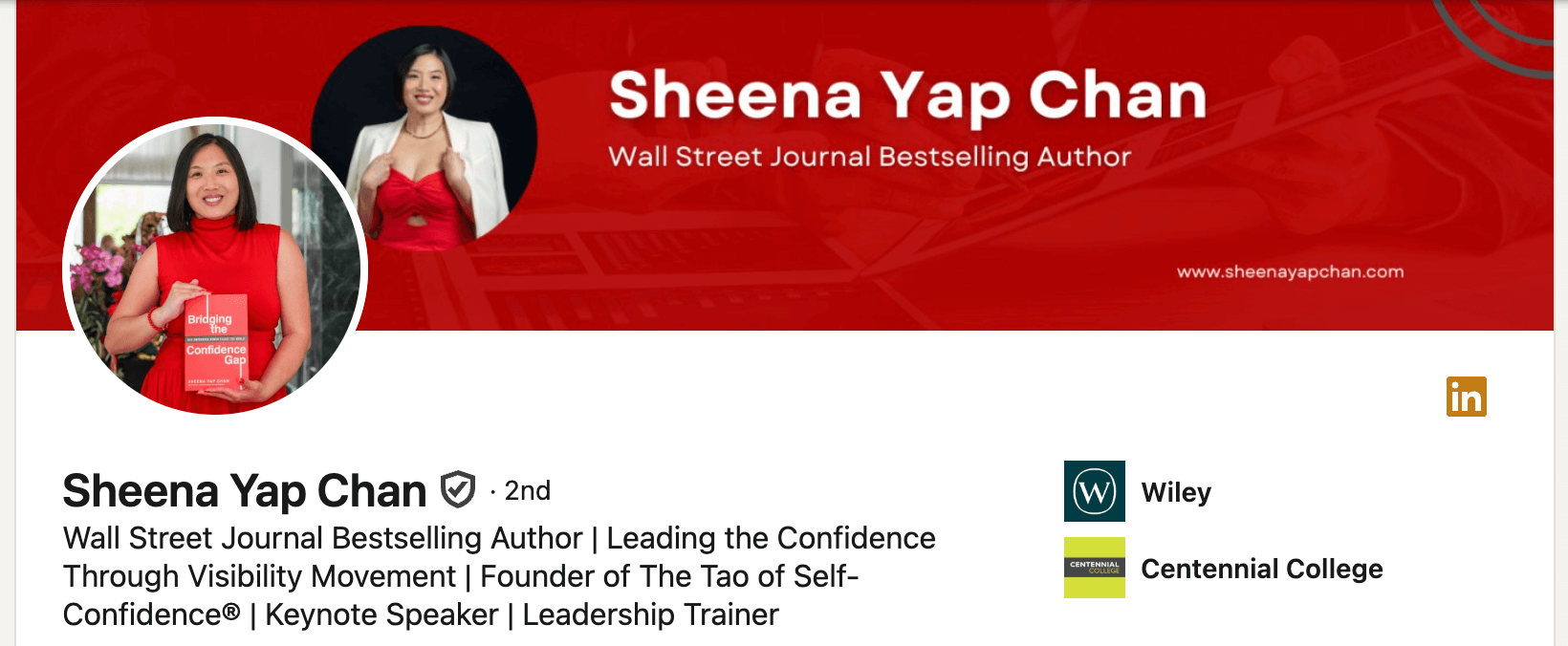
Consider Sheena Yap Chan, an author who built a platform around empowering Asian women through confidence. She addresses cultural conditioning that encourages Asian women to shrink into the background and reclaims confidence as a radical act of visibility. She developed a framework around the word “visible,” with each letter representing a principle. She didn't wait for permission to write her books. She built her brand on her mission and ideas. Her book, The Tao of Self-Confidence, reflects her commitment to this principle. She asks everyone she interviews about their moment of confidence—when they advocated for themselves and claimed their identity.
Another word associated with confidence is calm. Leaders exhibit calm confidence. At conventions and conferences, people naturally gravitate toward individuals who appear sure of themselves without being egotistical.

Tired of Guessing Which AI Moves Matter?
New AI tools and strategies launch every week — and figuring out which ones matter takes hours you don't have.The AI Business Society filters the noise for you, with expert-led training you can put to work the same day — plus a community of marketers sharing what's actually working.
I'M READY FOR REAL AI RESULTSBuilding Your Confidence Professionally
Building confidence in professional settings often benefits from a practical structure. In meetings and live events, having a script helps, especially when feeling insecure. Decide on one point you want to make, write it in your notes app or on a Post-it note, and refer to it when needed. Using notes is perfectly acceptable.
Building Your Confidence Personally
On the personal side, recognize that you deserve to be present in professional spaces. If affirmations resonate with you, repeating phrases like “I am worthy of being in this room” three to five times daily can be helpful, particularly when self-confidence feels low.
Neuroscience shows that repeated thoughts create neural pathways. When we repeat statements frequently, our brains begin to accept them as true. This is why minimizing negative self-talk and focusing on forward-moving affirmations proves beneficial.
Research on basketball players shows that repeatedly visualizing successful shots produces results similar to those produced by physical practice. The brain struggles to distinguish between mental and physical practice. Programming your mind through daily affirmations can transform beliefs over time. Some affirmations may not feel true initially, but with repetition, they become internalized.
The law of assumption suggests that assuming things are true causes your brain to rewire, making them become true. For example, if you want to travel more with your partner but currently lack resources, repeatedly affirming this goal changes how you perceive opportunities. When someone offers a project requiring overseas travel, you'll view it differently because you've been conditioning yourself to recognize such opportunities. Having these mantras opens doors in your belief system, making you more thoughtful about opportunities that align with your goals.
The Practical Impact of Confidence
Confidence leads to action. Reading about ambitious goal-setting can inspire previously unimaginable ventures, like starting a software company. You might initially tell yourself limiting beliefs: it's too complicated, too expensive, impossible. While indeed complicated and expensive, it is possible. Setting an ambitious goal—like reaching one hundred thousand customers by 2027—and consistently reminding your team of that vision transforms perception. What once seemed impossible becomes possible, then probable, then likely. That's the power of confidence as fuel for personal branding.
Confidence is powerful, but many people confuse it with ego. Some individuals announce, “Don't you know who I am?” This approach stems from ego or insecurity rather than confidence. A confident approach would be: “Hi, I'm [name]. It's great to finally meet you. I'd love to discuss ways we might work together.” Leading with ego closes doors; confidence opens them.
Recognizing and releasing ego represents part of many professionals' journeys. It's a challenging but necessary evolution.
Foundation 4: Community
Community represents the “who” and “where” of your personal brand. It's where you broadcast your personal brand. A personal brand developed in isolation—without online presence, conversations, or engagement—will not exist because it operates in a vacuum.
When built around people, a personal brand becomes not just a solo spotlight but a campfire around which people gather. That is the power of community.
Consider an example of a highly engaged Facebook group for comedians who love cats in the Los Angeles area. This niche group—originally for LA-based comedians who love cats—has expanded slightly but remains focused. The group shows remarkable engagement with multiple posts daily, unlike many groups with no new posts for weeks. It has spawned three or four offshoot groups. Members have made business contacts, romantic connections, and friendships through this community. They even organized a group viewing of the movie Cats—perfectly on brand.
In terms of personal brand and community, shift from “look at me” (ego-driven or insecurity-driven) to “sit with me.” Think of the campfire analogy: “Come join me, come join us.” This is the essence of a podcast—two people inviting others to join a conversation and share knowledge and learnings. That invitation to join creates community rather than mere content consumption.
Understanding Your Community Platforms
When evaluating which communities to join or where to focus efforts, look beyond subscriber counts. Check the “online now” number to gauge actual activity levels. Compare a community with five people online to one with fifty online. Also consider posting frequency, community rules, content quality, and moderator activity.
If one community is massive while another is more targeted but has restrictions, you must decide where to invest your time. The balance involves finding maximum visibility with the largest relevant audience and minimum resistance.
Assess content performance in each community you're considering. Use the “Top” sorting option to see historically successful posts. Analyze community response patterns, engagement levels, and optimal posting times.
Community Beyond Your Own Platform
Personal branding through community doesn't require creating your own platform. You don't need to speak at events to participate in community. Local meetups happen regularly, which you can simply attend. Many areas have creator meetups where you show up and provide value. Some attendees will know you; others won't. There are numerous ways to participate.
In-person participation transforms abstract numbers into real relationships. You might have thousands of followers online—just a number—but meeting people, shaking hands, having conversations, and sharing experiences deepens relationships. Actively participating and showing up consistently, whether online or offline, proves essential.
Two words matter profoundly: showing up. Many fear being perceived or making mistakes. It's better to show up imperfect than not to show up at all. Showing up consistently will expand your network and advance your career.
As long as you're a regular, honest person, showing up grows your community and network and opens doors. You never know when someone at a creator meetup might say, “I have the right client for you.” That wouldn't happen without in-person attendance. People more readily open their networks to those they meet in person because there's an intuitive assessment of whether someone is trustworthy and worth introducing to their network. When you pass this basic test by being authentic and using common sense, opportunities multiply. You don't need to be the superstar in the room—just show up as yourself.
Foundation 5: Consistency
Consistency encompasses where you share content and the content itself, both online and offline. Where will you show up? It's where your brand lives—not only the content you create but how often and how frequently you share that content with others. It includes all platforms you use and all moments your audience remembers you for. This is how trust builds. It's your reputation. You want to repeat with integrity.
Consider creating daily videos on LinkedIn under the hashtag Daily Goldie—over eight hundred consecutive daily videos spanning more than two years, never missing a single day. This essentially represented one person's work, not a large team. Daily appearances varied in quality, especially initially. The first thirty videos were unedited, shot on a phone, and uploaded—as close to raw as possible. They lacked transitions or sophisticated editing. Captioning wasn't even understood initially. But they appeared every single day.
Eventually, this consistency led to being the second person ever to conduct a LinkedIn Live. One early LinkedIn Live stream broadcast from NASA in Florida showed a launch, though the platform was incredibly buggy, and the screen went black halfway through. Despite technical challenges, consistency continued.
The Reality of Audience Reach
This applies to all content: you can publish one hundred or two hundred pieces of content, but everyone sees only a fraction. Even podcast subscribers, being human, may skip episodes. They don't listen to every episode—not intentionally, but because life is busy.
The goal is to create enough content with sufficient consistency that when people discover you, they can explore your backlog. Whether you have a podcast, Substack newsletter, or video channel, new audience members can consume previous content. Whatever the entry point, it should expand into an entire universe for them.
Consistency Online and Offline
Consider consistency in both online and offline contexts. This builds trust. Repeat with integrity.
Offline consistency matters profoundly. Speaking at conferences like Social Media Marketing World represents a massive opportunity. This is where all the principles—clarity, competence, confidence, community, and consistency—converge. You want to show up with calm confidence. You want to build a community if you don't already have one.
When first speaking at such events, perhaps with forty thousand LinkedIn followers (later growing to over one hundred thousand), enough recognition existed that people approached the speaker at the conference. Providing stickers and swag for the community—a common practice—demonstrates appreciation.
Showing up competently, delivering valuable advice, and embodying all these principles at a conference focused on consistency, content, and community building creates powerful results. Meeting new people and connecting with online community members in person further strengthens relationships. Despite technological connections, human-to-human interaction remains powerful.
Even for introverts who feel overwhelmed at conferences, attending relevant events proves valuable. For those interested in marketing and business, conferences like Social Media Marketing World provide significant opportunities.
The ultimate insight about consistency: showing up repeatedly advances your career and personal brand development. Your network expands. Your opportunities multiply. As long as you show up as a regular, honest person and avoid destructive behavior, consistency in showing up grows your community, expands your network, and opens doors. You never know when showing up will lead to your next significant opportunity.
Goldie Chan is the founder of Warm Robots, a branding and storytelling agency, and author of the new book Personal Branding for Introverts. Follow her on LinkedIn.
Other Notes From This Episode
- Connect with Michael Stelzner @Stelzner on Instagram and @Mike_Stelzner on X.
- Watch this interview and other exclusive content from Social Media Examiner on YouTube.
Listen to the Podcast Now
This article is sourced from the Social Media Marketing Podcast, a top marketing podcast. Listen or subscribe below.
Where to subscribe: Apple Podcasts | Spotify | YouTube Music | YouTube | Amazon Music | RSS
✋🏽 If you enjoyed this episode of the Social Media Marketing podcast, please head over to Apple Podcasts, leave a rating, write a review, and subscribe.
Stay Up-to-Date: Get New Marketing Articles Delivered to You!
Don't miss out on upcoming social media marketing insights and strategies! Sign up to receive notifications when we publish new articles on Social Media Examiner. Our expertly crafted content will help you stay ahead of the curve and drive results for your business. Click the link below to sign up now and receive our annual report!

Where Do You Actually Stand With AI?
Most marketers use AI, but they don't know what's holding them back from real results.
Our 3-minute quiz pinpoints the one gap keeping you stuck — and gives you the exact next step to fix it.
GET MY RESULTS