by
by Are you putting out more content than ever but seeing conversion rates stall or drop? Is your audience slipping away, even as traffic stays steady?
In this article, you'll discover why conversions have become harder to earn in 2026, how to reverse the silent erosion of your email database, which landing page mistakes are killing your sign-ups and sales, and what to do the moment after someone converts to get the most out of every interaction.
Why Getting Conversions Is Harder Than Ever
The digital landscape in 2026 is noisier than at any previous point in marketing history. AI has made it dramatically easier for every marketer to flood every channel with offers, posts, and content. More emails are going out. More social content is being published.
The volume of everything has risen, and getting conversions now requires doing many small things consistently, not finding one big silver bullet.
#1: 4 Ways to Grow Your Database
Every email database loses approximately 20% of its contacts every year.
Addresses go stale, people change jobs, and inboxes get abandoned. If you have 1,000 subscribers today and add no one new, you'll have roughly 800 engaged contacts by next year. The year after that, you're down to about 640. After just two years, nearly 40% of your original list is gone, without you doing anything wrong.
If database growth rate isn't one of your primary KPIs, and you don't track it weekly or monthly, you will eventually have no one left to market to.
Opt-Ins on Your Website Homepage
The most common mistake marketers make is burying their email opt-in with a small link in the navigation bar or a form tucked away at the bottom of the page.
Whether your email opt-in is a newsletter signup, a free guide, or an early access list, Jay recommends placing it as the primary hero element in the center of your homepage. Front and center before anything else on the page.
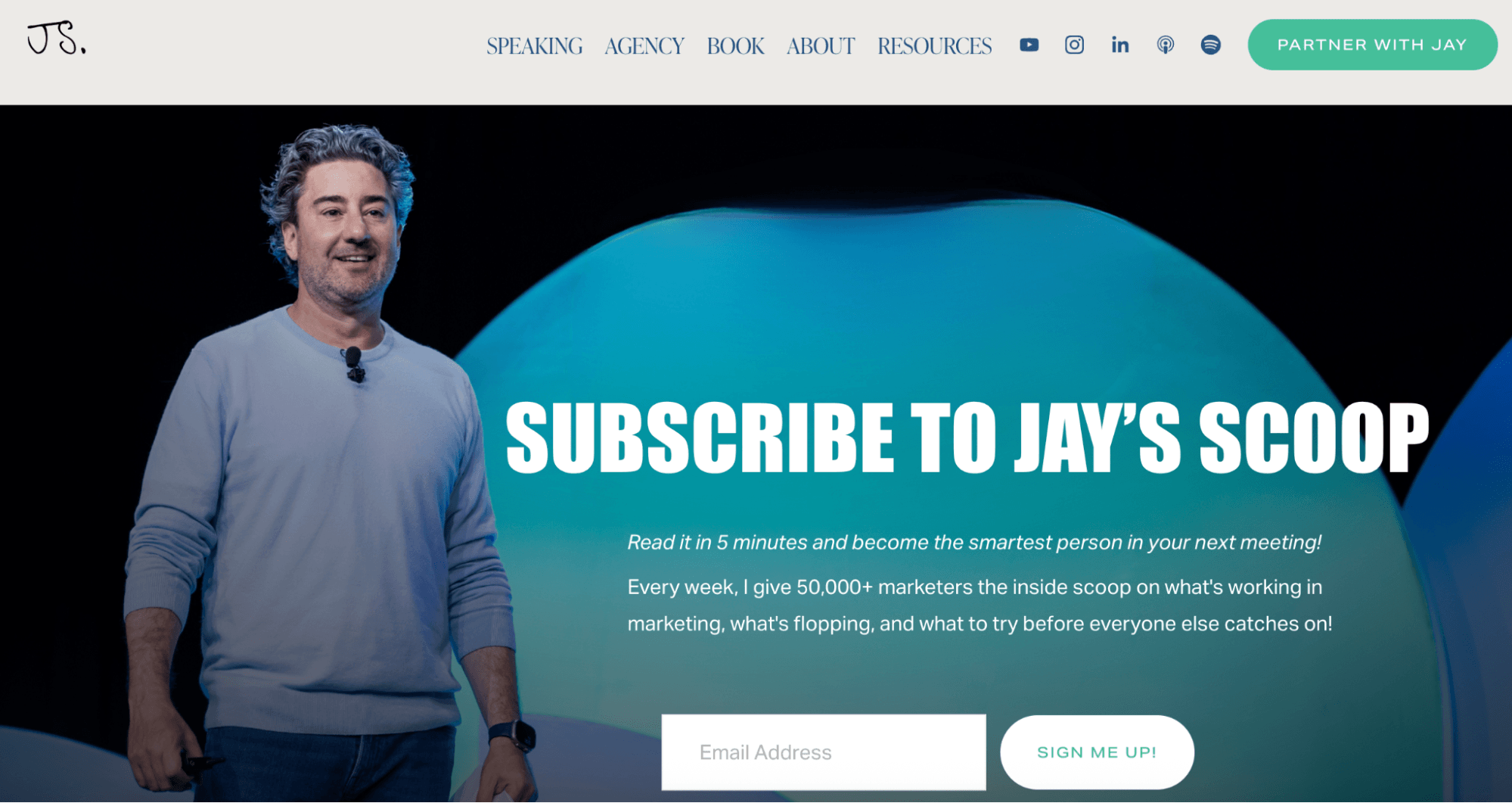
For e-commerce brands, the framing shifts from information to access. Rather than leading with discounts, Jay suggests positioning offers like “Get on our early drop list” or “Be the first to know.” The underlying psychology is FOMO reframed: people in 2026 don't just fear missing out, they want to be first. That's the desire worth tapping.
When discounts are part of the incentive, Jay advises calculating the lifetime value of a discount-driven customer compared to a full-price buyer before committing to that approach. If the lifetime values are comparable, a discount incentive is a strong play. If they diverge, an access-based offer—one that signals the subscriber is a true insider—may be the better move.
Timed Popups With Conversion-Optimized Language
The most common objection to pop-ups is that they're annoying. Jay's response is straightforward: when you visit a major brand's website and a pop-up appears, you don't abandon your purchase in protest. You hit the X and forget it existed within seconds.
But for first-time visitors, a pop-up with any kind of incentive, such as a guide, a discount code, or early access, converts at roughly 5%. For repeat visitors, that number climbs to around 9%.
Timed popups take this further by triggering based on a visitor's behavior rather than as soon as they arrive on your website. For example, delivering a pop-up offering an additional incentive to purchase to a visitor who has spent 30 seconds on your pricing page can convert at over 10%.
Go Deeper Than an Article Can Take You
Join thousands of small-business marketers at Social Media Marketing World — three days of AI, social media, and marketing strategy taught by world-class experts. April 1–3, 2027 in Anaheim.
Every session is pitch-free and built around tactics you can use yourself, no big team required. Your All-Access ticket includes an extra day of workshops, full access to AI Business World, and recordings of everything.
GET MY ALL-ACCESS TICKET — SAVE $790When designing your pop-up, don’t rely on a simple yes/no option. Instead, use yes language that restates the benefit and use no language designed to make declining feel uncomfortable.
For example, the yes option should restate the benefit: “Yes, I’m ready for socks that keep my feet warm but not sweaty!” The no option might say, “No, I like it when my feet are clammy, and I can't sleep.”
This is the single biggest lever for improving pop-up conversion rates. Nobody wants to click the button that describes them negatively, so they don't. Conversions skyrocket because the psychological cost of opting out suddenly feels real.
Paid Ads on Instagram and Reddit
Organic list growth has gotten more difficult as both Google search traffic and organic social reach have declined. That’s where paid ads come in handy.
Jay's agency tests across platforms to find the lowest cost per subscriber, and right now, two platforms are consistently delivering results under $5 per new subscriber, often in the $2 to $3 range.
The first is Instagram, specifically Reels and Stories lead ads with no more than 3 fields; each additional field significantly increases the cost per acquisition. The critical principle is to keep users on-platform by serving a lead ad that they complete without leaving the app. Set up your lead capture so the lead flows directly into a CRM or email platform via an API or a Zapier integration.
Running the same program on LinkedIn typically costs 4–5 times more to reach the same audience.
The second is Reddit. Because Reddit users are often mid-funnel and actively researching a topic or trying to solve a problem on the platform, they are particularly receptive to relevant offers.
Reddit lead gen ads let you target specific subreddit communities with a pop-up ad with a form. The data is handled similarly to how it is on Instagram, flowing into your CRM the same way. Reddit also recently launched a reminder ad unit that users can click to receive a reminder about an upcoming sale. Reddit will send both an email and a push notification at the designated time.
Endorsement Ads in Others’ Newsletters
Jay is a strong advocate for newsletter swaps with other publishers and paid placements in creator newsletters with the caveat that only endorsement-style ads perform meaningfully. When the newsletter creator writes the ad in their own voice, “I use this tool every day and here's why…”, the reader's existing trust in that creator transfers to your offer.
#2: Fix What's Broken on Your Landing Pages
If 100 people clicked on your email offer and bounced when they hit your landing page, the bounce isn't random noise. It's a coordinated response signaling that something is wrong on the page. Jay's view is that accepting a 5% conversion rate as normal is the same as accepting that 95 people walked out the door.
Here's how to fix what's driving them away.

Tired of Guessing Which AI Moves Matter?
New AI tools and strategies launch every week — and figuring out which ones matter takes hours you don't have.The AI Business Society filters the noise for you, with expert-led training you can put to work the same day — plus a community of marketers sharing what's actually working.
I'M READY FOR REAL AI RESULTSPro Tip: Test your landing page on mobile first. Over 70% of first-time email opens occur on mobile devices. Designing and testing a landing page on a desktop and calling it done is a fundamental error. Every element, from field length to button size and image display to text readability, should be evaluated on a phone before the landing page is tested on anything else.
Keep Content Above the Fold and Strip Out All Navigation
Every element that gives someone a reason to keep moving without converting is a risk. This includes content below the fold and navigation elements.
The ideal landing page requires no scrolling, so that everything is visible immediately, and the only action available should be the conversion itself.
Match the Hero Image From Your Ad or Email to Your Landing Page
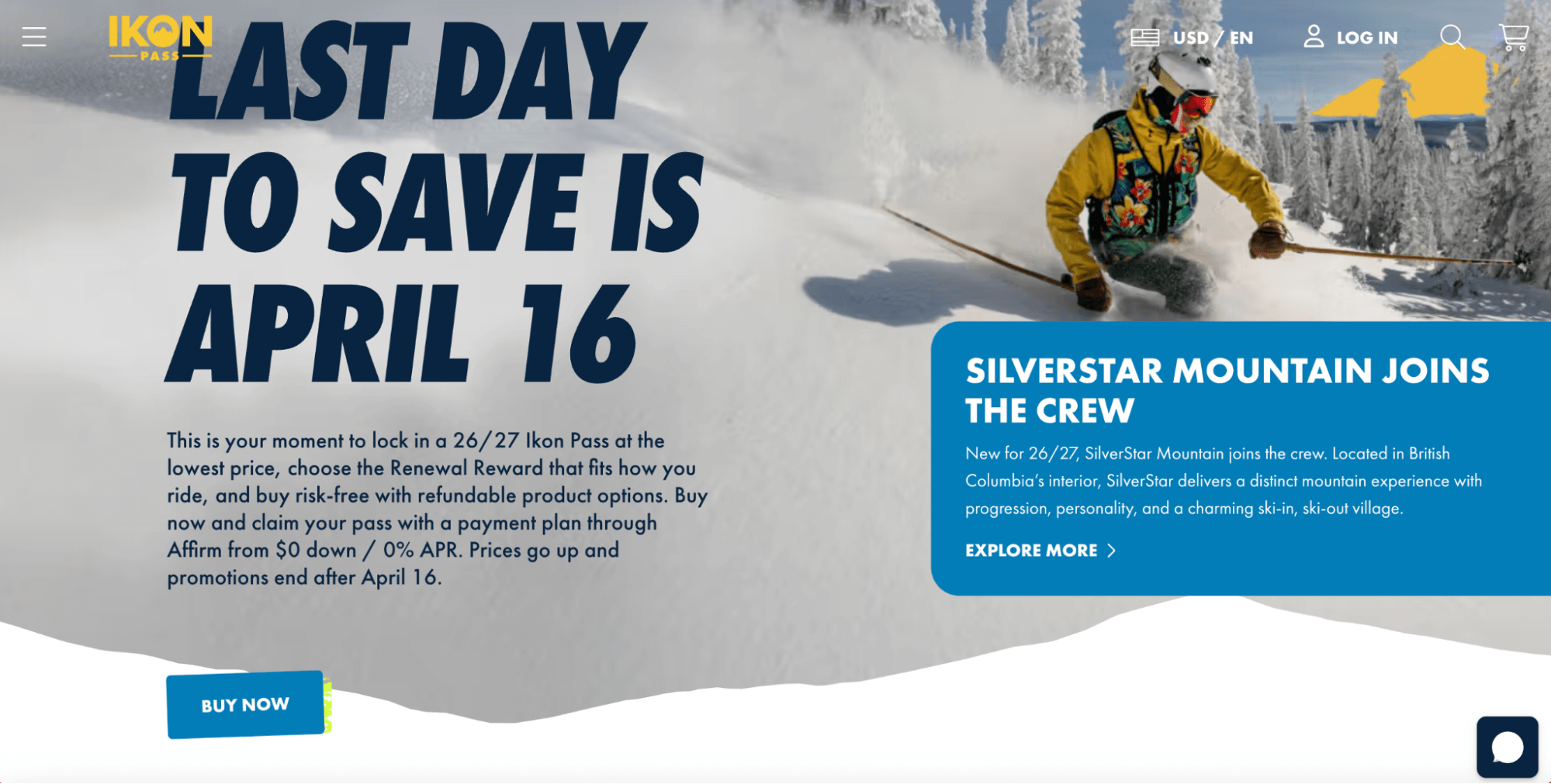
Visual continuity signals to the visitor they're exactly where they intended to be. The result is a conversion rate increase of over 10%—from a single design decision.
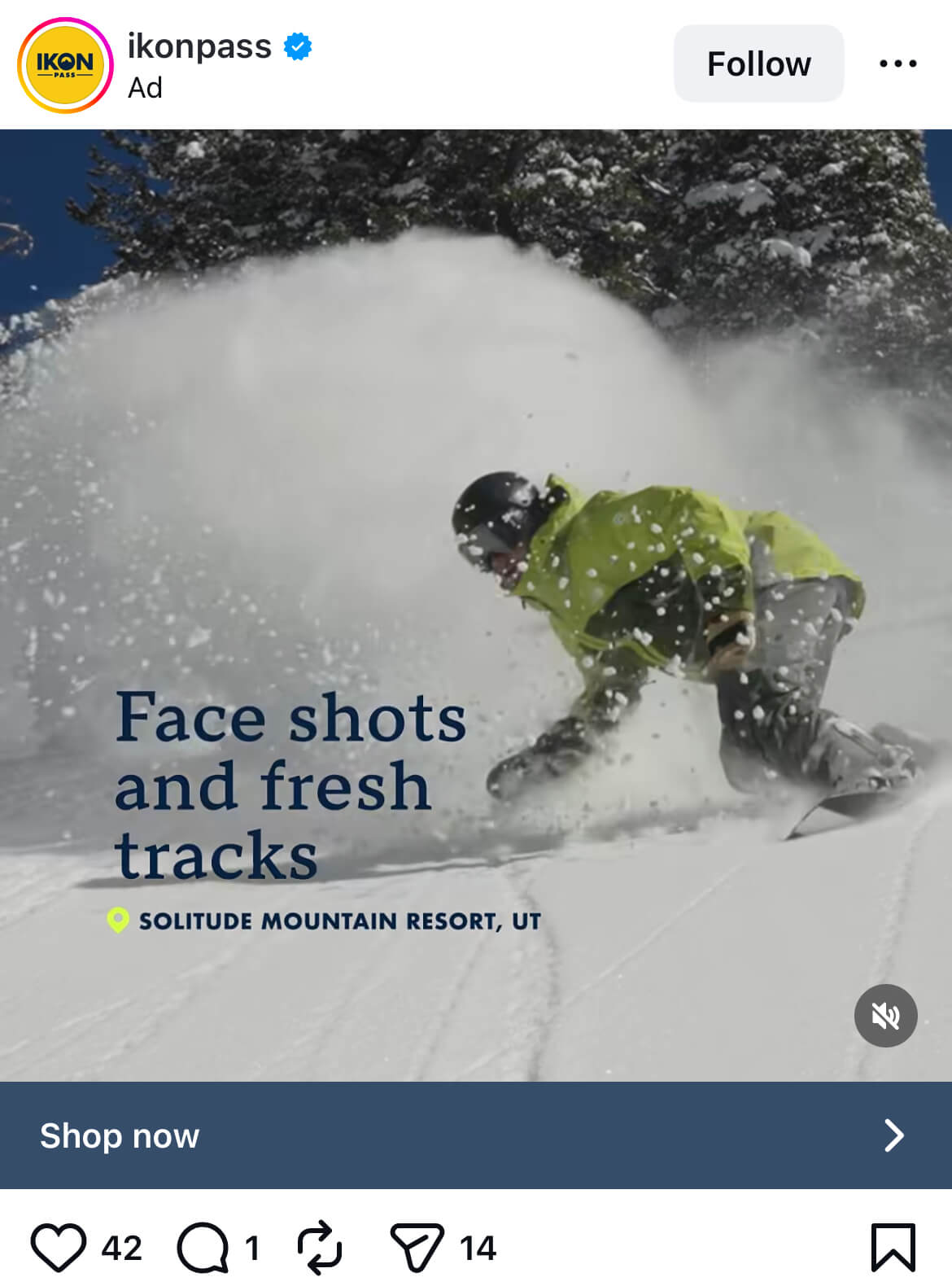
When campaigns use multiple creative variations and an exact image match isn't possible, the priority is maintaining the same visual feel and tone across the ad and the page.
Reduce Your Form Fields or Break Them Into Steps
For every additional must-fill field you require, you'll lose approximately 8% of your registrants. Jay recommends keeping forms to around 5 fields when possible. If the form genuinely requires more than 8 fields, the solution is a multi-step form that presents information across sequential steps rather than all at once.
A more advanced variation of this is the double-incentive approach. The form initially asks only for name and email to deliver the first offer. Then, on the next page, you offer a second incentive: an additional resource or bonus in exchange for completing the remaining fields.
Replace “Submit” with a First-Person, Offer-Restating Button
“Submit” communicates nothing about what the person is getting and carries a bureaucratic weight that works against conversion. The text doesn't need to be clever; it just needs to remind the person of the value they're about to receive. For an insurance quote offer: “Yes! I want my 3 free quotes.” For a webinar: “Count me in for this awesome webinar.”
Add One Hero Testimonial and Validation Assets
Just below or beside the form button, place a single testimonial in quotation marks. A sentence from a real customer is enough.
Alongside this, include logos of recognizable companies your brand has worked with, partnered with, or been associated with in any way. Finally, display any awards your company has received, regardless of their prestige.
The combination of a testimonial, logos, and awards provides the final moment of confidence that pushes a hesitant visitor to act.
#3: Optimize Your Post-Conversion Thank You Page for Additional Conversions
The moment after someone completes a purchase or fills out a form is the highest-engagement moment in your entire marketing funnel. The buyer is excited, their trust in the brand is at its peak, and their attention is fully on that brand in that second.
The worst thing to deliver in that moment is a generic “Thanks, your order will ship soon” message.
Instead, show a few offers relevant to what the person just did, along with a CTA, to drive additional conversions. A product-based optimization could be, “We think you'll love these 3 things, too,” and a webinar-based optimization could be “You'll love this webinar about X. Download these additional 3 guides.”
Even when the conversion is a free resource rather than a purchase, the thank-you page can present additional free offers.
Pro Tip: Track which subscribers take a second freebie versus only the first. If people who download two freebies convert to paying customers at twice the rate of single-freebie subscribers, that behavioral signal becomes the basis for database segmentation and more targeted follow-up.
#4: Use One-Click Actions to Protect Your Email Deliverability
Email providers now evaluate inbox placement heavily based on engagement signals, and opens are treated as weak engagement. Clicks, on the other hand, are treated as strong signals. A subscriber who clicks something in your email is far more likely to receive your next message in their primary inbox rather than the spam or promotions folder.
One-click quiz formats work particularly well here. You present two options as a simple “this or that” choice in the email body. The subscriber clicks one, and two things happen simultaneously:
- The click registers as meaningful engagement with their inbox provider.
- Your CRM tags them on the backend based on which option they chose.
Option A versus Option B tells you something real about their interests or preferences, which is data you can use to personalize every send that follows.
Jay describes this as a double win. You improve deliverability and get a richer audience profile from a single element in a single email.
Jay Schwedelson is a leading expert in demand generation. He is the founder of Guru Media Hub, the host of the Do This, Not That podcast, and the author of Stupider People Have Done It: Marketing Truths, Career Moves, and Life Advice for Doers. Follow him on LinkedIn and Instagram.
Other Notes From This Episode
- Connect with Michael Stelzner @Stelzner on Instagram and @Mike_Stelzner on X.
- Watch this interview and other exclusive content from Social Media Examiner on YouTube.
Listen to the Podcast Now
This article is sourced from the Social Media Marketing Podcast, a top marketing podcast. Listen or subscribe below.
Where to subscribe: Apple Podcasts | Spotify | YouTube Music | YouTube | Amazon Music | RSS
✋🏽 If you enjoyed this episode of the Social Media Marketing podcast, please head over to Apple Podcasts, leave a rating, write a review, and subscribe.
Stay Up-to-Date: Get New Marketing Articles Delivered to You!
Don't miss out on upcoming social media marketing insights and strategies! Sign up to receive notifications when we publish new articles on Social Media Examiner. Our expertly crafted content will help you stay ahead of the curve and drive results for your business. Click the link below to sign up now and receive our annual report!

Where Do You Actually Stand With AI?
Most marketers use AI, but they don't know what's holding them back from real results.
Our 3-minute quiz pinpoints the one gap keeping you stuck — and gives you the exact next step to fix it.
GET MY RESULTS