by
by Wondering why your Instagram content isn't converting the way it used to? Curious what separates the accounts that consistently drive revenue from those stuck chasing views?
In this article, you'll discover a three-part Instagram marketing strategy for 2026 that combines authentic content creation, sustainable posting systems, and a simplified approach to Meta paid ads that amplifies organic results.
Why Instagram Feels Different in 2026
Instagram's algorithm in 2026 has undergone one of the most significant shifts in the platform's history, driven largely by a flood of AI-generated content that often lacks the depth and originality audiences respond to. Audiences are questioning whether content is AI-generated, and when that suspicion takes over, the creator's actual message gets lost entirely.
Trial reels have added another layer of change. The feature has become a testing ground for creators willing to A/B test hooks, wording, and formats before committing a reel to their main feed. Ellen now tests all of her reels as trial reels, running two to three variations (occasionally four) to see which hook or phrasing resonates most. The opportunity is real, but the feature has also made it easier for some creators to mass-produce content.
The result is an algorithm overwhelmed with volume. Reach has dipped for many business owners, and the competition for attention has intensified. In fact, 2026 is the first year Ellen has had to temper her usual advice of “just focus on making better content” with a recognition that the playing field has genuinely shifted.
Still, Instagram remains her primary revenue-driving platform, and the strategy she outlines in this episode reflects how she has adapted.
#1: Create Natural-Feeling Instagram Content
The first layer of any Instagram strategy starts with the content itself. Without strong foundational content, no amount of ad spend or advanced tactics will make up for it. Trial reels, paid ads, and growth hacks are great acceleration layers, but they require something worth accelerating.
Today, audiences are rejecting the perfectly curated aesthetic that dominated Instagram for years. High-production brand shoots, carefully designed Canva graphics, and polished video setups are underperforming compared to content that feels spontaneous and real.
Ellen has tested polished against unpolished content repeatedly in her own account. Every time she posts a heavily designed carousel, engagement drops. When she posts a casual phone photo of herself with text overlaid, engagement climbs. One recent carousel featuring a selfie with a miniature pony at a weekend cafe reached 50,000 views, more than double her follower count.
JessiJeanHome’s account is a prime example of this shift. The entrepreneur and creator launched her Yap Challenge, which encourages participants to show up on camera and tell their stories in an unscripted, casual format.
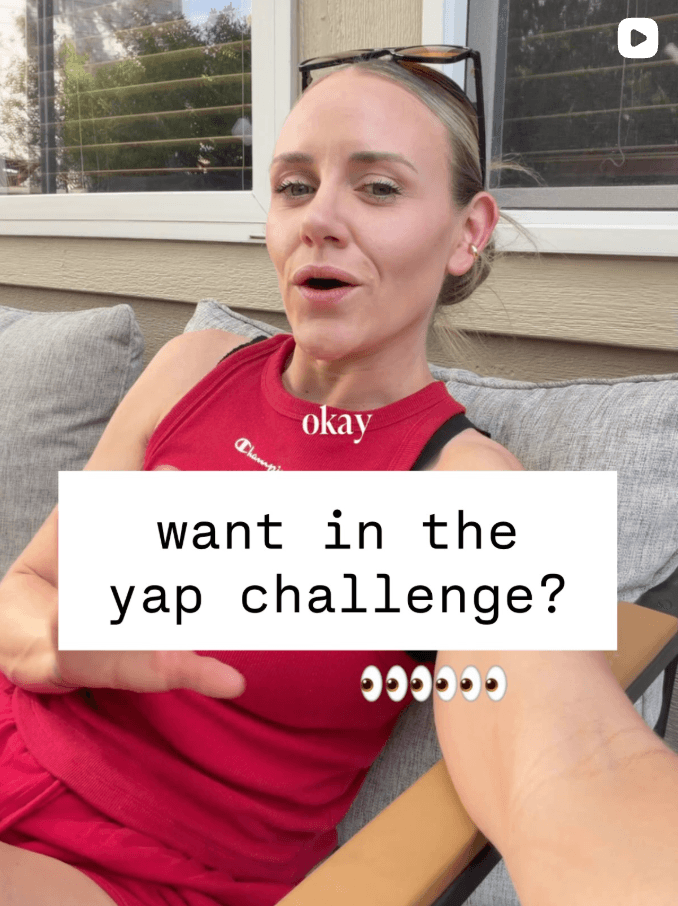
Over two months and two launches, the challenge generated over $7 million in US sales. Ellen points to that number as evidence of both the revenue potential of authenticity-first content and the market demand for it. People want to hear from real humans, and marketers are willing to pay for guidance on how to show up that way.
Pro Tip: It’s important to note that natural-feeling doesn’t exclude the use of AI in Ellen’s process. She uses AI, specifically Claude, as a collaborative content partner. She has trained her AI with five years of her own content, opinions, and frameworks, so when she brings a half-formed idea or a rant about something she noticed on the platform, the AI helps shape it into a structured post. She brings the idea, the opinion, and the human experience grounded in real interactions with clients, students, and her own observations. The AI refines and formats.
How to Create Natural-Feeling Instagram Reels
For reels, Ellen recommends placing the camera off to the side during a natural activity rather than staring directly into a lens because many people adopt an unnatural tone and cadence when the camera goes live.
A florist might set the phone to the side while arranging flowers and talk about a particular bloom mid-arrangement. A podcaster might record during a conversation, then pull 30-second clips that capture a natural flow.
Go Deeper Than an Article Can Take You
Join thousands of small-business marketers at Social Media Marketing World — three days of AI, social media, and marketing strategy taught by world-class experts. April 1–3, 2027 in Anaheim.
Every session is pitch-free and built around tactics you can use yourself, no big team required. Your All-Access ticket includes an extra day of workshops, full access to AI Business World, and recordings of everything.
GET MY ALL-ACCESS TICKET — SAVE $800Pro Tip: Trim the first 30 seconds of any recording. The opening moments of a recording often carry an artificial “presenter” energy, recognizable in a slightly different voice or an overly structured intro. Cutting into the middle of the conversation, even starting a reel mid-sentence, creates a more organic feel that audiences respond to.
How to Create Natural-Feeling Instagram Carousels
Carousels are currently Ellen's highest-performing content format. Her approach mirrors the same authenticity principle seen in her reels: casual phone photos with text overlaid, rather than designed graphics.
She makes the carousels in Canva for easy duplication and repurposing, but the visual style is deliberately unpolished. She uses a 4:5 aspect ratio to maximize screen real estate. The photos come from daily life: selfies, snapshots from her workspace, images from weekends, or travel. The text is a simple black font on a white background, prioritizing readability over brand aesthetics.
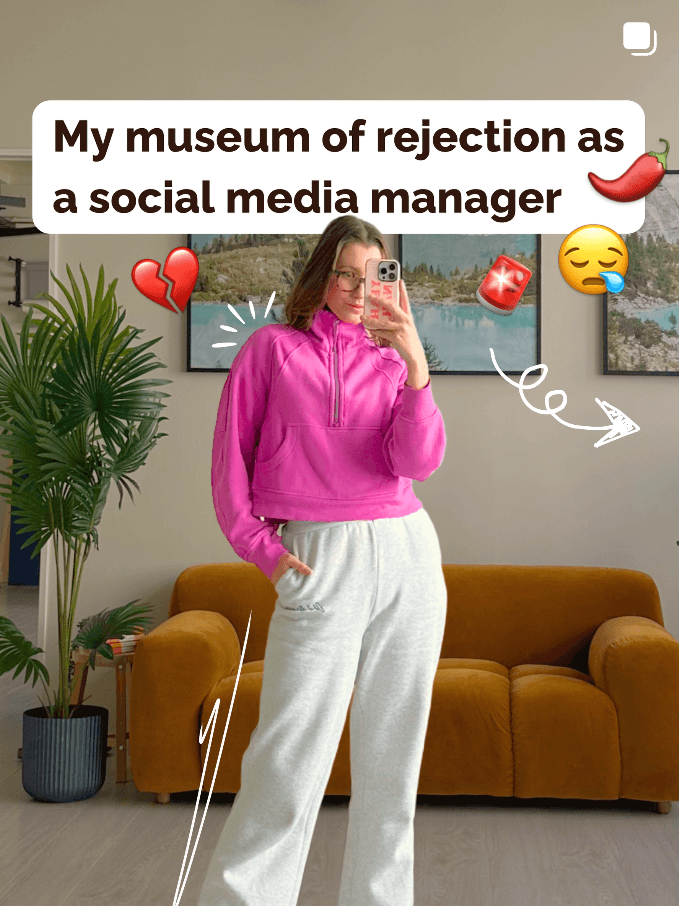
Ellen points to the Instagram account FriendsThatInvest as another strong example of this approach. The creator, who has 400,000 followers, posts carousels using candid photos from holidays, cooking at home, and everyday moments, with simple text overlaid. Despite her large following, the content feels personal and intimate because of its casual visual style.
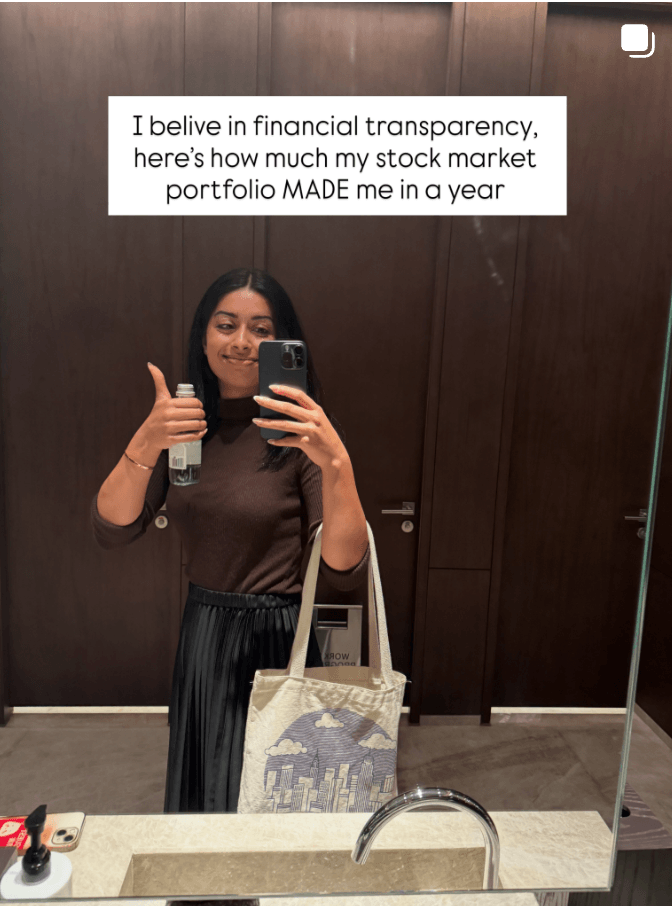
For those who struggle with knowing which images to pair with which content, Ellen suggests using AI as a brainstorming partner: feed it a batch of photos and a topic, and ask for pairing suggestions. She also says the images themselves should stay real and unmanipulated; using AI to generate or alter photos risks triggering the same audience skepticism that undermines polished content.
How to Find Your Format Mix and Posting Cadence With Instagram Metrics
Ellen recommends alternating between carousels and reels, posting one of each in rotation. Your exact ratio should follow the data: if analytics show carousels consistently outperform reels for a given audience, shift to a 3:1 carousel-to-reel ratio for a month and measure the results.

Tired of Guessing Which AI Moves Matter?
New AI tools and strategies launch every week — and figuring out which ones matter takes hours you don't have.The AI Business Society filters the noise for you, with expert-led training you can put to work the same day — plus a community of marketers sharing what's actually working.
I'M READY FOR REAL AI RESULTSWhen evaluating content performance, Ellen doesn't look at likes. The shift away from likes as a primary metric aligns with broader audience behavior. People aren't liking posts the way they used to, but they will comment on content that offers something they want and save posts they plan to return to. The metrics that indicate genuine resonance are comments, saves, and shares.
Ellen tested four trial reel variations for a recent freebie launch. The version she selected for her main feed wasn't the one with the most views or likes. It was the one with the most comments and saves, because those signals indicated the content had genuinely connected with her audience.
Another of her posts received modest likes but generated 200 comments from people who triggered her ManyChat automation to access a digital product link.
Pro Tip: Ellen recommends approaching analytics with emotional distance, treating metrics as data rather than personal validation. A post with low views isn't evidence of failure; it's information about what didn't resonate. That analytical mindset keeps frustration from leaking into the content itself, where low energy and visible discouragement directly translate into lower-performing reels.
#2: Build Systems That Support Consistent Posting
Consistency is the second layer of the strategy, but Ellen defines it as showing up on a sustainable schedule with a system that supports that schedule, not matching the output of full-time influencers whose entire business model revolves around posting volume.
Ellen's own system involves a bi-weekly filming day. She blocks the calendar, takes no meetings, and spends the day creating video content for Instagram, YouTube, and her podcast, while also capturing photos for future carousels. A second day is dedicated to editing and assembling carousel posts. This batching approach concentrates creative energy into focused blocks rather than scattering it across the week.
For business owners building their own systems, Ellen recommends two tactics.
The first is to attach your content creation to an existing routine. She cites a skincare creator who films a video every day during her skincare routine, and notes Michael Stelzner's unscripted three-minute videos recorded on his front porch at 5:50 each morning. The content itself is unedited and authentic, and the routine removes the friction of deciding when or how to create.
The second is to set a phone alarm every 60 minutes as a reminder to snap a photo of whatever is happening during your work or content-creating days, whether it's packing orders, sitting at a desk, or grabbing coffee. Those images can be reused with different text for different topics, across weeks of carousels.
Pro Tip: Content pillars and a simple content calendar provide structure without rigidity. Rotating through three to four topic categories each week ensures variety and prevents the blank-page paralysis of deciding what to post. The calendar doesn't need to be elaborate; even a list of topics mapped to the week's posting days keeps momentum.
#3: Amplify High-Performing Organic Instagram Posts With Paid Ads
The third layer is paid advertising, which should only be added once your content and consistency foundations are in place. Putting ad spend behind weak content or an inconsistent posting schedule wastes money.
Ellen was personally resistant to running her own ads for nearly two years. She had previously hired an agency that didn't deliver a return on investment, and Meta's ad platform is notoriously complex.
However, Instagram ads offer two capabilities that organic posts lack. First, a direct clickable link that sends users straight to a website, checkout page, or product landing page, something Instagram's organic post format doesn't support. Second, geographic and demographic targeting. One of Ellen’s Canadian clients was seeing the majority of their organic reel views coming from India, a problem that disappeared with paid targeting controls.
Ellen's approach to Instagram ads is deliberately simple. The strategy starts by identifying organic content that has already proven itself, specifically, she’s looking for posts that drove inquiries, freebie downloads, or product purchases, not just posts with high view counts.
Using Meta's option to run an existing Instagram post as an ad means the ad spend bolsters organic content rather than creating a separate ad ecosystem. Visitors who find the profile organically see a post with strong engagement metrics and don't necessarily know ad dollars are amplifying it.
How to Structure a Simple Instagram Ad Campaign
Ellen's ad structure uses one campaign, one ad set, and three ad creatives.
The campaign is named for the specific product or offer being promoted.
The ad set defines demographics, but Ellen keeps targeting to a minimum: country, gender, and a broad age range. She doesn't add interest-based targeting layers, such as specific software tools or niche interests. Meta's AI has become sophisticated enough to find the right audience without granular manual targeting, and Ellen says her best results in the last five months have come from this simplified approach.
The three ad creatives are variations of proven organic posts. Ellen lets Meta distribute spend across them for a week or two, then cuts the underperformer and runs the remaining two.
Pro Tip: Ellen has set up a Claude skill that knows her budget caps and monitors the cost per lead on her ads. When the cost per lead exceeds her threshold, Claude sends her an alert flagging the underperforming ad creative for removal. This kind of automated monitoring makes the process less intimidating for solopreneurs managing ads without a dedicated team.
Ellen Mackenzie is an Instagram strategist and founder of Dishing Up Digital, where she helps female entrepreneurs grow their businesses through social media. She hosts the Dishing Up Digital podcast. Follow her on Instagram and LinkedIn.
Other Notes From This Episode
- Connect with Michael Stelzner @Stelzner on Instagram and @Mike_Stelzner on X.
- Watch this interview and other exclusive content from Social Media Examiner on YouTube.
Listen to the Podcast Now
This article is sourced from the Social Media Marketing Podcast, a top marketing podcast. Listen or subscribe below.
Where to subscribe: Apple Podcasts | Spotify | YouTube Music | YouTube | Amazon Music | RSS
✋🏽 If you enjoyed this episode of the Social Media Marketing podcast, please head over to Apple Podcasts, leave a rating, write a review, and subscribe.
Stay Up-to-Date: Get New Marketing Articles Delivered to You!
Don't miss out on upcoming social media marketing insights and strategies! Sign up to receive notifications when we publish new articles on Social Media Examiner. Our expertly crafted content will help you stay ahead of the curve and drive results for your business. Click the link below to sign up now and receive our annual report!

Where Do You Actually Stand With AI?
Most marketers use AI, but they don't know what's holding them back from real results.
Our 3-minute quiz pinpoints the one gap keeping you stuck — and gives you the exact next step to fix it.
GET MY RESULTS