by
by Wondering how to get more eyes on your Instagram carousels and posts without creating extra content? Curious which of Instagram's latest features can help small businesses reach new audiences?
In this article, you'll discover how to use Instagram's newest updates, including the TV app, AI-powered story effects, audio swapping, and adding music to carousels for Reels feed distribution, to expand your reach and engagement.
#1: Instagram's TV App Expansion and What It Means for Marketers
Instagram's TV app has expanded to Samsung TVs, joining Amazon Fire TV and Google TV. That means the app is now available on more smart TVs than not. The setup process is simple: download the app, scan a QR code with a phone, and an Instagram account syncs to the big screen within seconds.
The TV experience is organized around personalized interest categories, similar to Netflix. Instagram expert Elizabeth Marberry describes seeing a “For You” section at the top, followed by categories based on her recent activity, including back-to-school content, fitness, and humor. The layout draws on the same recommendation-based algorithm that drives Instagram's mobile experience, but surfaces it in a lean-back, browse-by-category format.
The categories are more specific than broad labels. Elizabeth noticed one of hers was “inclusive fitness,” not just “fitness” or “fitness for women over 40.” The platform categorizes content with surprising granularity based on consumption patterns. Elizabeth advises against forcing a brand into a particular category or stressing about which one the algorithm assigns. What matters more is being crystal clear on what an account wants to become known for. When all of a brand's content consistently reinforces a single focus, the algorithm handles categorization on its own.
Instagram stories are also viewable on TV. Elizabeth reports the experience was surprisingly engaging, even for someone accustomed to consuming stories on a phone. The platform also includes a “wide watch on widescreen” option, surfacing horizontal videos that had gone viral on Instagram and displaying them in a full-screen TV format.
Jerry notes that YouTube has already laid the groundwork for short-form and creator content on TV screens, and Instagram appears to be following that playbook. Meta is unlikely to abandon this direction, given how much YouTube has already normalized the behavior.
Elizabeth advises that marketers should treat Instagram on TV as a “watch, not a pivot.” There's no need to rebuild a content strategy around this update. The fundamentals still apply: strong messaging, a clear customer journey, and content that hooks viewers in the first few seconds. These elements translate to any screen. New features won't fix weak marketing.
An effective Instagram strategy starts with a foundational question: what does a brand want to become known for? Elizabeth explains that Instagram is now an interest-driven platform, and both the algorithm and the AI crawling account content need clear signals to categorize and recommend it. If a content strategy is scattered, posting about unrelated topics from week to week, neither the algorithm nor a new viewer can quickly understand what the account is about. Strategically positioning all content to reinforce one brand story is the most important thing a marketer can control.
That said, brands already producing horizontal or widescreen content could experiment with uploading it to Instagram. While browsing the TV app, Elizabeth noticed a videographer's horizontal video that had earned over 40,000 likes just days after it was posted. Trial Reels, which allow creators to test content with non-followers before committing to a full publish, offer a low-risk way to experiment with this format. The opportunity is niche-dependent; professional videographers and storytelling-heavy brands are better positioned than most to take advantage of widescreen on Instagram.
On mobile, horizontal video still doesn't display well in the standard Reels feed. It appears with black bars on top and bottom, and unlike YouTube and TikTok, Instagram doesn't currently allow users to rotate their phone for a full-screen horizontal view. Elizabeth recommends filling that unused screen space by adding text hooks above the video and engagement questions below it, so the content still takes up the full vertical frame. Jerry notes that Instagram's Edits app is also getting a desktop version and the ability to export longer videos, further signaling a move beyond vertical-only, mobile-only content.
Neither Instagram nor TikTok is available on Apple TV yet. Both apps are available on Amazon Fire TV, Google TV, and Samsung devices, but their absence from Apple TV means a significant segment of users can't access them through their preferred streaming device. Once Instagram arrives on Apple TV, that may signal a stronger commitment to the format.
Pro Tip: Reels are currently capped at 20 minutes for content to appear in the Reels feed. Regular posts can be up to 60 minutes. For anyone testing long-form content on Instagram, keeping videos under 20 minutes ensures maximum distribution via the Reels surface. Instagram will notify creators when a video's length will limit its reach, so the app itself provides a safeguard before publishing.
#2: Using AI-Powered Stories Effects and Keeping Stories Authentic
Instagram has introduced more than 30 new AI-powered effects for stories. These effects can transform photos by interpreting scene elements like lighting, composition, and subjects. Users can also create custom AI effects by entering their own prompts directly in the stories composer. The effects are accessed by tapping the three-star icon on the right side of the story creation screen.
Marketers Are Learning AI Alone
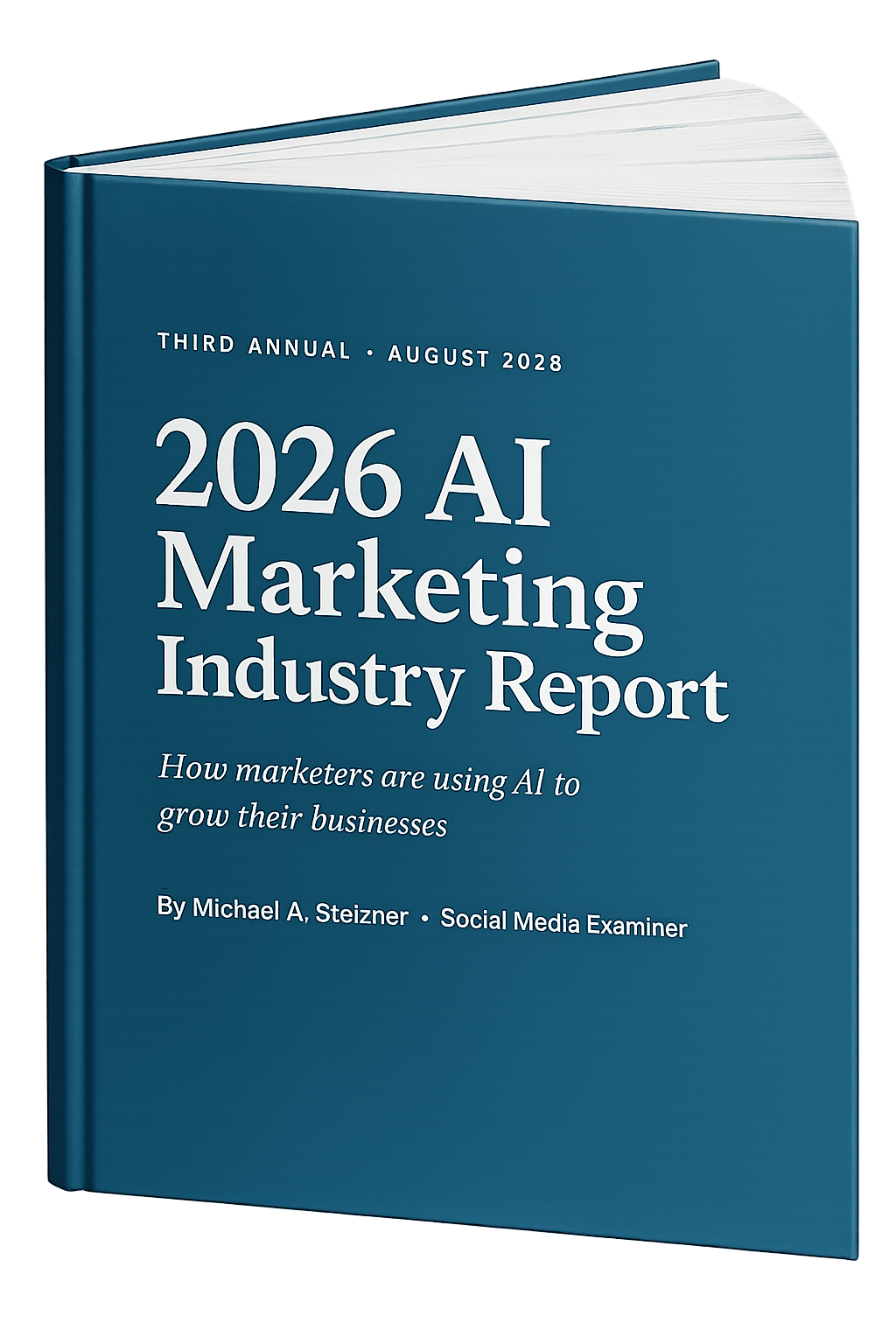
Sound familiar? 85% of marketers learn AI by experimenting on their own, just 7% get company training, and more than half spend their own money on tools.
Our third annual AI Marketing Industry Report surveys 681 marketers and distills everything into 32 clear charts — what's working, what platforms marketers rely on, and what to learn next.
SKIP THE GUESSWORK — READ THE REPORTElizabeth tested several of these, including a “clone” effect that takes a photo and generates multiple versions of the user in different poses. These AI effects are also available on Reels, not just stories. Elizabeth describes using one that transformed a still image to look as though she was underwater, then adding text overlay on top.
From a marketing standpoint, Elizabeth sees these effects as useful for pattern interrupts rather than a daily strategy. During a product launch, for example, an AI-transformed image could stand out in a story feed where followers are accustomed to seeing standard selfies and talking-head clips. The novelty captures attention, and that moment of disruption can be paired with a strategic call to action.
Jerry raises an important concern: stories have traditionally been the most raw, authentic surface on Instagram. Adding AI effects risks eroding the very quality that makes stories effective for building trust. Elizabeth agrees. In her experience coaching clients, stories work best for brands that show up unpolished, share real moments, and speak directly to their audience.
Elizabeth shared an example: she posted a story about working from a library study room to hide from her kids during summer, and received a flood of messages from followers who related to the situation. That kind of human, off-the-cuff content drives more engagement than any effect.
For story frequency and quality, Elizabeth recommends five to six raw, off-the-cuff stories over two or three highly polished ones. Reducing friction around content creation leads to more consistency, and consistency deepens trust. Being “less precious” about each individual piece of content prevents the exhaustion that comes from overanalyzing every post.
Stories also function as a brand's warmest audience. The people watching stories are the hottest prospects, so the emphasis should be on fostering community through discussion, polls, and behind-the-scenes content rather than chasing effects.

Which AI Moves Actually Matter?
That's what every marketer is wrestling with now. New AI strategies, new tools, new takes every week — but no clarity. Most marketers and business owners are trying to figure out AI alone.The AI Business Society is your trusted guide. Get expert-led training you can put to work immediately. Plus a community of marketers sharing what's actually working.
I'M READY FOR REAL AI RESULTSPro Tip: The more engagement a story receives, the higher it moves in the story tray at the top of followers' screens. Raw, conversational stories tend to generate more replies and reactions than polished or effect-heavy ones, which directly affects story visibility.
#3: Swapping Audio on Published Posts and Carousels
Instagram now allows users to swap out the audio on already-published posts and carousels while preserving all existing engagement, including likes, comments, and shares. There's no need to delete and re-upload content.
The most straightforward use case is when a licensed song gets removed. Instagram pays for music licensing, and when contracts expire, the audio disappears from affected posts. Elizabeth has experienced this firsthand: videos that had performed well suddenly lost their sound months after publishing. Previously, the only options were to leave the post silent or take it down. Now, the audio can be replaced without losing any accumulated engagement.
A second use case is brand-safety related. If an artist becomes associated with a major controversy, brands may want to distance their content from that music. The swap feature allows this without sacrificing the post's performance history.
The third and most strategic application is testing. Elizabeth suggests posting a carousel with one audio track, waiting a few days, and then swapping to a different track if engagement is underperforming. Audio sets the vibe and tone of content, shaping how audiences respond. An educational carousel backed by nineties hip-hop lands differently than the same carousel backed by ambient spa music, even though the visual content is identical.
Elizabeth cautions against micromanaging content performance on a 24-hour cycle. Some content takes days or even weeks to gain traction. She has seen posts continue gaining followers and comments two months after initial publication. The instinct to change things immediately often stems from insufficient data to make a meaningful decision.
#4: How Adding Music to Instagram Carousels Unlocks the Reels Feed
Instagram announced that when music is added to a carousel, that carousel now appears in the Reels tab. This is a significant change for Instagram reach. Carousels have traditionally been strong for nurturing existing followers but limited in their ability to reach new audiences. The Reels feed remains the number-one surface for growing visibility and discoverability on Instagram, with carousels a close second. By adding music, a carousel can now surface in both the standard feed and the Reels feed, expanding its potential reach.
Elizabeth recommends adding music to every post, even single-image posts. For those who consume Instagram with sound on, music sets the brand's tone and energy. For those who don't, the audio doesn't interfere, but the post still benefits from Reels feed distribution.
Elizabeth also emphasizes the importance of closed captions on any content featuring spoken audio. A significant portion of Instagram users browse without sound, whether at work, in public, or simply out of habit. Captions ensure the message lands regardless of sound settings.
Pro Tip: To unlock Instagram's full music library, change the account category to “digital creator” or “entrepreneur.” This can be done under Edit Profile > Category. The category can be hidden so it doesn't display publicly on the profile. Accounts set to niche-specific categories like “wedding venue” or “restaurant” often have access to a limited selection of music. Changing the category doesn't affect how the algorithm classifies the account, because Instagram relies on the handle, name field, bio, and content signals for that.
Elizabeth also shares a workflow for saving audio: while scrolling Instagram, she saves trending sounds to an audio folder within the app. When she opens the Edits app (Instagram's free video editing tool), all saved audio syncs automatically and is ready to use.
When repurposing content for other platforms like TikTok or YouTube, Elizabeth recommends turning off the original audio and replacing it with platform-native music. Using Instagram-licensed music on TikTok can create copyright issues. Each platform's built-in music library provides the safest option.
#5: Creating Multi-Caption Carousels and Strategic Carousel Content
Instagram recently introduced multi-caption carousels, allowing a separate caption for each slide rather than relying on a single caption for the entire post. Adam Mosseri demonstrated the feature using a photo dump format, with each image accompanied by its own contextual caption.
Elizabeth sees photo dumps and behind-the-scenes recaps as the most natural fit for multi-caption carousels. A conference speaker could pair each photo with a short story about the moment it captures. A brand could walk through product development stages slide by slide.
The feature also opens up deeper storytelling opportunities. Carousels already limit how much text fits on each slide; adding per-slide captions provides another layer of context, narrative, and calls to action.
Elizabeth adds a practical caution: just because Instagram provides another box to fill doesn't mean every post needs it. Multi-caption carousels require hooks for each slide's caption, increasing production effort. Brands should weigh whether the additional work serves a strategic purpose before adopting the format across all carousel content.
For captions in general, Elizabeth stresses that the first line determines whether someone continues reading. The hottest prospects will read a full caption, so a strong call to action at the end is worth including. Even a simple engagement question like “Have you experienced this?” can generate significant comment activity.
Elizabeth Marberry is an Instagram marketing strategist who helps small businesses drive more organic leads and sales. Her podcast is Strut It, and her membership is Hot Reels: The 12 Month Instagram Content Lab. Follow her on Instagram.
Other Notes From This Episode
- Connect with Michael Stelzner @Stelzner on Instagram and @Mike_Stelzner on X.
- Connect with Jerry Potter on LinkedIn and YouTube.
- Watch this interview and other exclusive content from Social Media Examiner on YouTube.
Listen to the Podcast Now
This article is sourced from the Social Media Marketing Podcast, a top marketing podcast. Listen or subscribe below.
Where to subscribe: Apple Podcasts | Spotify | YouTube Music | YouTube | Amazon Music | RSS
✋🏽 If you enjoyed this episode of the Social Media Marketing podcast, please head over to Apple Podcasts, leave a rating, write a review, and subscribe.
Stay Up-to-Date: Get New Marketing Articles Delivered to You!
Don't miss out on upcoming social media marketing insights and strategies! Sign up to receive notifications when we publish new articles on Social Media Examiner. Our expertly crafted content will help you stay ahead of the curve and drive results for your business. Click the link below to sign up now and receive our annual report!
Discover Proven Marketing Strategies and Tips
Want to go even deeper with your marketing? Check out the Social Media Marketing Podcast! Publishing weekly since 2012, the Social Media Marketing Podcast helps you navigate the constantly changing marketing jungle, with expert interviews from marketing pros.
But don’t let the name fool you. This show is about a lot more than just social media marketing. With over 650 episodes and millions of downloads each year, this show has been a trusted source for marketers for well over a decade.