by
by Wondering what YouTube's aggressive push into living rooms means for your channel strategy? Want to learn how to make sure your YouTube content looks great on a 65-inch screen?
In this article, you'll discover how to optimize your YouTube channel for TV viewers, create content that works on connected TVs, and use new YouTube features like unique reach metrics, Ask YouTube AI search, and buy-with-Google-Pay commerce.
Why YouTube on TV Changes Marketing
YouTube has made its intentions clear: TV is the priority. The platform has said repeatedly that connected TVs are the end goal, and every recent update points in that direction. For many channels, TV has already become the number one traffic source.
The shift matters for marketers because TV viewers are in a fundamentally different mindset than mobile viewers.
Someone watching on their phone during a train commute has low expectations for production quality. But someone who just finished a Netflix documentary and flipped over to YouTube is unconsciously comparing the two experiences. The brain carries over the production standard it just absorbed, even though the viewer knows they're now watching an individual marketers rather than a studio production.
Liron Segev explains that quality on TV doesn't mean perfection, though. Daily vloggers have already trained audiences to accept shaky camera work and imperfect production and as AI makes everything look polished, that authenticity may matter even more than technical precision. The key distinction is being mindful of where the audience is and meeting them there.
#1: Optimize Your YouTube Channel Banner and Thumbnails for TV
The biggest mistake Liron sees is marketers who never watch their own channel on a TV. Most check their content on a computer or phone before publishing, but few actually sit on their couch, at viewing distance from the screen, and experience their channel the way a TV viewer would. That perspective check is free and reveals problems that don't show up on smaller screens.
The first low-hanging fruit is the channel banner. Liron says this is free real estate that most marketers haven't given a second thought.
On TV, the banner displays additional space at the top and bottom that doesn't appear on phones or computers. YouTube provides dimension guidelines when uploading a banner, showing exactly where the image will crop on each device. marketers should ensure their banner works across all three formats, and can even place additional branding or promotional messaging in the TV-only areas.
Thumbnails are the second priority. YouTube recently expanded the thumbnail file size limit from 2 megabytes to 50, enabling 4K resolution uploads. But a higher-resolution version of a cluttered thumbnail is still a bad thumbnail. The fundamental rule hasn't changed: a thumbnail's only job is to stop someone from scrolling. Clean design, simple colors, and minimal text work on every screen size.
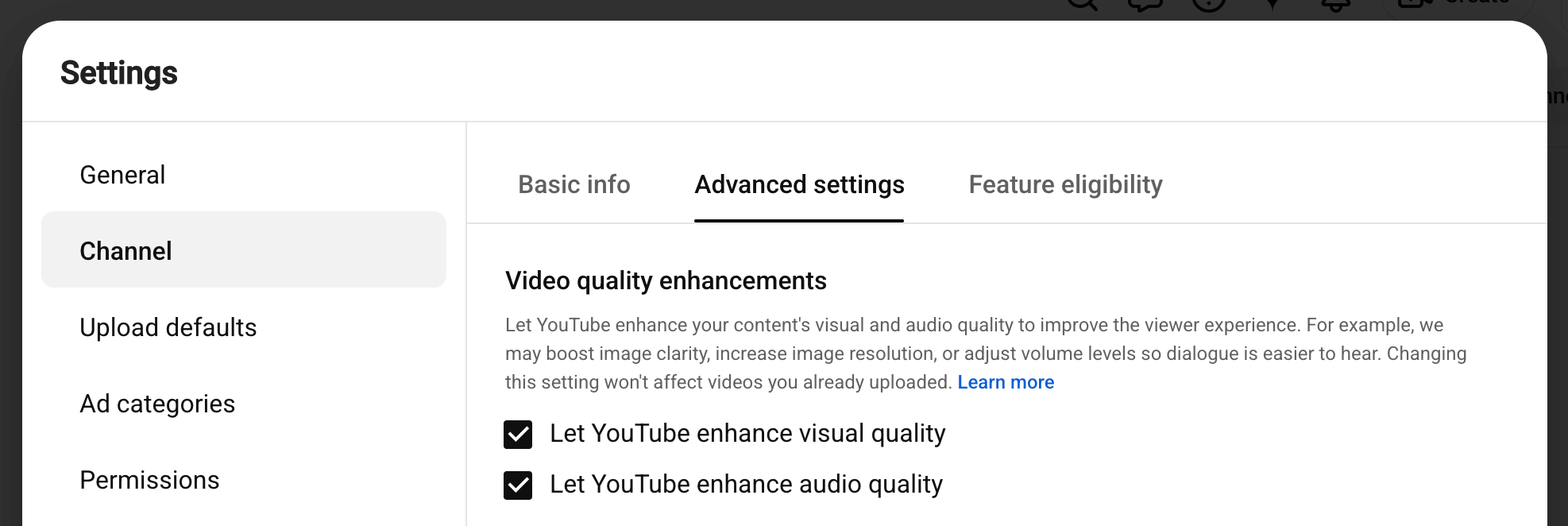
YouTube has also introduced an AI-powered feature that automatically upscales videos uploaded below 1080p to higher resolution. Brands can disable this if they prefer to control their own quality.
The third piece of low-hanging fruit is delivering on the promise made in the title and thumbnail. Whatever the title promises, the video should deliver immediately. Liron emphasizes starting with that delivery in mind, then expanding into deeper content afterward. This approach also matters for AI discovery, where the first 100 words of a video's transcript carry outsized weight.
#2: Create Longer, Episodic YouTube Content for the Couch Audience
TV viewers lean toward longer content. 10 minutes, once the stretch goal for many marketers, is now a starting point for TV-optimized videos. The data supports this shift, and the format aligns with how people consume content on their couches: laid back, drink in one hand, phone in the other, looking for something to settle into.
Liron recommends leaning into what he calls the “infotainment” approach. The content should be informative, but it also needs to keep the audience engaged over a longer runtime. Traditional YouTube prioritized tight editing: get in, deliver value, get out. TV viewing rewards a more relaxed pace where viewers feel like they're hanging out with the marketers rather than being lectured to.

Which AI Moves Actually Matter?
That's what every marketer is wrestling with now. New AI strategies, new tools, new takes every week — but no clarity. Most marketers and business owners are trying to figure out AI alone.The AI Business Society is your trusted guide. Get expert-led training you can put to work immediately. Plus a community of marketers sharing what's actually working.
I'M READY FOR REAL AI RESULTSOne practical shift is leaving in the moments that old-school YouTube would have cut: mistakes, bloopers, sneezes on camera. These humanizing moments are now part of the experience and contribute to authenticity. Even traditional TV shows like America's Got Talent have started showing more behind-the-scenes content instead of scripted skits, likely influenced by the same viewer expectations that YouTube marketers are navigating.
Liron frames the opportunity in striking terms. Brands spend millions on 30-second Super Bowl commercials reaching 100 million viewers, when they could be on YouTube, in front of a potential audience of billions, every day, for as long as they want. The cost is production time, but the content lives and remains discoverable forever.
Think Episodic, Not One-Off Videos
The content strategy should shift from standalone how-to videos toward episodic formats. People subscribe because they want to know what happens next, not just because they needed a three-step fix for their Wi-Fi. A quick tutorial doesn't need to be 45 minutes long, but content designed for TV should have a story arc that pulls viewers through and brings them back.
Re-hooks, brief periodic recaps designed to re-engage distracted viewers, matter more in the TV environment. Viewers watching on TV are often simultaneously on their phones, so marketers should build these re-engagement moments into longer content without being condescending. Liron suggests framing these naturally: “We've just covered part A; let's get into part B now.”
#3: Understand YouTube's New Unique Reach Metric
YouTube is rolling out a new analytics metric called Unique Reach. Unique Reach estimates the total number of people watching a video, including co-viewers on shared TV screens who aren't logged in separately. It goes beyond the existing unique viewers metric, which counts only individual logged-in accounts, to approximate how many people are actually in front of the screen at the same time.
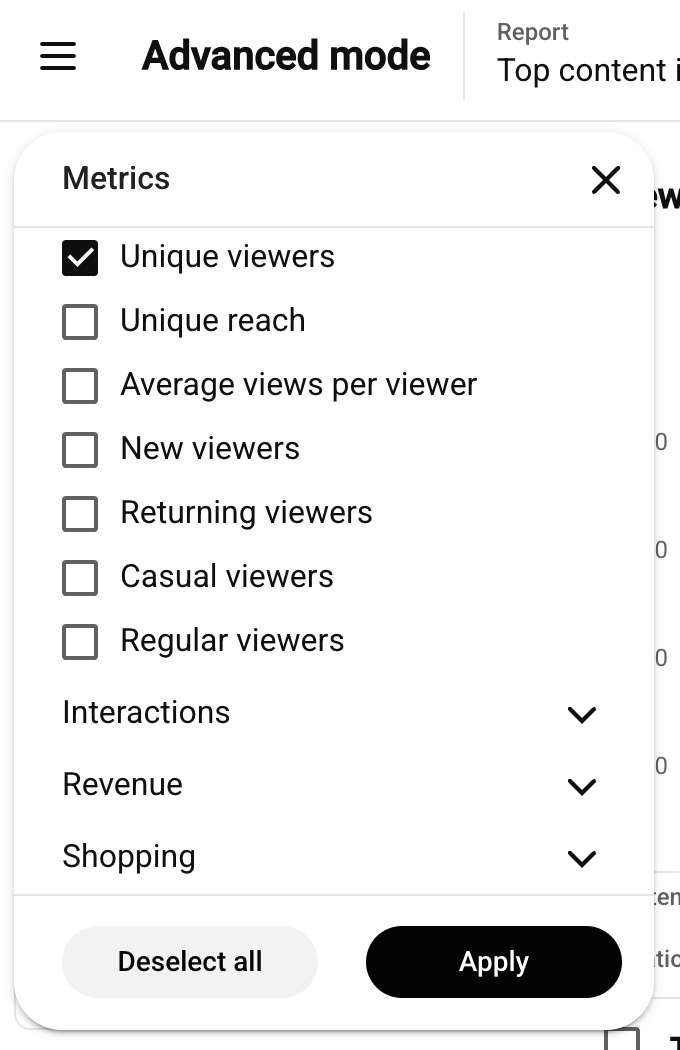
The metric draws on signals like time of day (evening viewing likely means more household members present), the device type (TV versus mobile), demographics, and video genre. It's modeled on how traditional TV advertising measurement works through systems like Nielsen ratings, which are themselves estimates rather than exact counts.
Liron sees the metric as a useful indicator rather than a definitive number. For marketers with baked-in sponsor segments, the higher unique reach number can strengthen the value proposition when negotiating deals. It looks better in reports, makes budget approval easier, and supports the case for ongoing partnerships.
The caution is for brands evaluating sponsorship opportunities:
If a video shows 5,000 views but 15,000 unique reach, Liron advises asking for both numbers and using traditional view counts as the baseline. The unique reach figure is a positive signal that the content attracts a broader audience, but it doesn't justify tripling the sponsorship budget. Jerry Potter adds that context matters: a family-oriented channel likely does have multiple viewers per screen, while other channel types may not.
3 Days of World-Class Training—Zero Travel!

Couldn't make it to Social Media Marketing World and AI Business World this year? Get all of the great content at a fraction of the price with a Virtual ticket.
That’s full access to recordings of every keynote, workshop, and session—the ones people travel thousands of miles to see. Don't wait. Get your Virtual ticket and enjoy actionable content that you can watch anytime, anywhere.
Lean Into Group Viewing in Your Content
One creative application of this shift is scripting content that invites group participation. Cooking channels already do this well, saying things like “make sure your kids are helping you” or “get your team around for this.” This shifts the traditional YouTube one-to-one address toward a communal experience that's more natural for TV viewing.
Liron points to live streaming and live shopping as another dimension of this trend. Platforms like Whatnot are succeeding with live social shopping, and YouTube is positioned to enter that space. Long live streams, like Pokémon card opening events that run for 2 hours, generate enormous watch time because viewers stay for the communal experience, not just the content itself.
#4: Prepare for Ask YouTube and AI-Powered Search on TV
YouTube is expanding Ask YouTube, its Gemini-powered AI chatbot, to smart TVs, gaming consoles, and streaming devices. Ask YouTube lets viewers use their TV remote's microphone button to ask questions, get AI-generated answers, and search within videos, all without leaving the YouTube app or picking up their phone.
Jerry Potter draws a parallel to what AI overviews have done to blog traffic: if viewers can get answers without watching the video, some view counts could drop. Liron agrees the parallel is valid but reframes the concern. Marketers don't ultimately care about views; they care about results. If a brand becomes the trusted answer source that AI cites, and that leads to phone calls and customers, the outcome is more valuable than raw view counts that don't convert.
The practical implication is that marketers should structure content so AI can identify and surface their answers. Liron recommends answering the core question in the first 100 words of the video, then expanding into deeper content. This mirrors the approach that works for written content optimized for AI search results.
This also changes how marketers should handle links and references.
The old approach of saying “the link is in the description” doesn't work on TV, where viewers can't easily access the description box. Now, Liron recommends verbally stating website URLs and social media handles directly in the video. When a viewer asks Ask YouTube what URL was mentioned, the system can surface that information directly.
There's an additional layer to how Ask YouTube processes content. Gemini is a multimodal vision model, meaning it doesn't just read transcripts but can also see what's on screen. Lower thirds, on-screen graphics, and text overlays become additional signals that AI can process. marketers who display URLs, handles, or key information visually give AI more data to work with when answering viewer queries.
Optimize YouTube Content for Voice Search and AI Discovery
The expansion of Ask YouTube to TV reinforces a broader shift toward voice-based and AI-mediated discovery.
AI has become sophisticated enough to understand context regardless of exact wording. A query doesn't need to match a video's keywords precisely for the system to recognize a match. Because Gemini can both listen to audio and watch what's happening on screen, videos that were never explicitly optimized for search may still surface if their content answers the question.
The practical implication is that titles and thumbnails should be optimized for human appeal, while letting AI handle the deeper content matching because YouTube’s AI system takes a single user question and automatically generates multiple related sub-queries to build a more complete answer. A question about lawn care products in Arizona might trigger related queries about local landscapers and regional pesticide regulations.
To take advantage of this, Liron recommends weaving natural-language search phrases into video scripts. Rather than saying “here are five products I would recommend,” a marketers might say “my friend Jerry asked me, what are the best five products I would recommend?” This phrasing matches how real people type queries into AI tools, and it appears naturally in the transcript that AI systems crawl.
Creating a Shorts FAQ playlist is another tactic Liron recommends. Just as a website has a dedicated FAQ section, a YouTube channel should have a playlist of short videos that each answer a single common question. Jerry notes that some of his FAQ-style shorts from three years ago are now getting more monthly views than they did at launch, suggesting that search-driven discovery gives these videos a long tail that the initial algorithmic push doesn't.
Titles should also reflect how people actually speak when searching. Instead of “best five tips to sell your home quickly” or “lawn care products Arizona,” Liron recommends framing titles as natural questions: “What are the best lawn care products in Arizona for summer?” Not every video should take this approach, but search-oriented content benefits from titles that match conversational queries.
Pro Tip: Liron emphasizes that AI won't cite content it could have written itself. Marketers who add personal experience, proprietary data, and proof points that AI doesn't already have elevate themselves as authorities worth citing. The transcript of every video is already what Liron calls “AI fodder,” so the differentiator is the uniqueness of your information, not just its presence.
#5: Take Advantage of YouTube's TV e-Commerce Features
YouTube is introducing Buy with Google Pay functionality on connected TVs, allowing viewers to purchase products with 2 clicks using their TV remote. The feature works for ads and tagged shopping videos, and it mirrors the frictionless checkout experience that TikTok Shop and Amazon Prime Video have already introduced on their platforms.
For marketers selling low-ticket items, merch, or products through affiliate links, this is a natural extension of existing commerce capabilities. Liron recommends experimenting with it, noting there's little downside to adding another sales channel. For higher-ticket items like consulting packages or masterminds, the 2-click checkout isn't the right path; those still require landing pages, referral processes, and sales calls.
The larger shift is toward voice-activated commerce during TV viewing. Liron envisions viewers saying things like “add this to my shopping list” or “send this to my wife” while watching content, the same way they'd talk to another person in the room. This natural-language interaction replaces the awkward QR code approach that never gained real traction with TV viewers.
YouTube's data shows 35 billion hours of shopping-related videos were watched on the platform, with a significant portion happening in the living room. The platform is clearly investing in making TV a transactional environment, not just a viewing one.
Liron Segev is a YouTube strategist and AI consultant who helps companies build their online presence using YouTube and custom AI content systems. Follow him on YouTube and LinkedIn.
Other Notes From This Episode
- Connect with Michael Stelzner @Stelzner on Instagram and @Mike_Stelzner on X.
- Connect with Jerry Potter on LinkedIn and YouTube.
- Watch this interview and other exclusive content from Social Media Examiner on YouTube.
Listen to the Podcast Now
This article is sourced from the Social Media Marketing Podcast, a top marketing podcast. Listen or subscribe below.
Where to subscribe: Apple Podcasts | Spotify | YouTube Music | YouTube | Amazon Music | RSS
✋🏽 If you enjoyed this episode of the Social Media Marketing podcast, please head over to Apple Podcasts, leave a rating, write a review, and subscribe.
Stay Up-to-Date: Get New Marketing Articles Delivered to You!
Don't miss out on upcoming social media marketing insights and strategies! Sign up to receive notifications when we publish new articles on Social Media Examiner. Our expertly crafted content will help you stay ahead of the curve and drive results for your business. Click the link below to sign up now and receive our annual report!
Curious About How to Use AI?
Our newest show, AI Explored, might be just what you're looking for. It's for marketers, creators, and entrepreneurs who want to understand how to use AI in their business.
It's hosted by Michael Stelzner and explores this exciting new frontier in easy-to-understand terms.
Pull up your favorite podcast app and search for AI Explored. Or click the button below for more information.