by
by Are you wondering if AI video creation tools are worth the investment? Overwhelmed by YouTube's rapid rollout of new features?
In this article, you'll discover what YouTube's latest AI tools can actually do for your business, which content formats have the biggest opportunity for organic reach, and how to use new targeting features without hurting your channel's performance.
#1: YouTube Ingredients to Video & AI Likeness: YouTube’s Latest AI Video Tools
Having announced that over a million channels used YouTube’s AI creation tools daily in December, the platform recently launched Ingredients to Video in Shorts and the YouTube Create app.
YouTube Ingredients breaks down what’s helping a video perform well—things like format, topics, and creative elements viewers respond to. It’s designed to give creators practical guidance on what to keep, tweak, or test next so they can make videos that are more likely to get views and engagement.
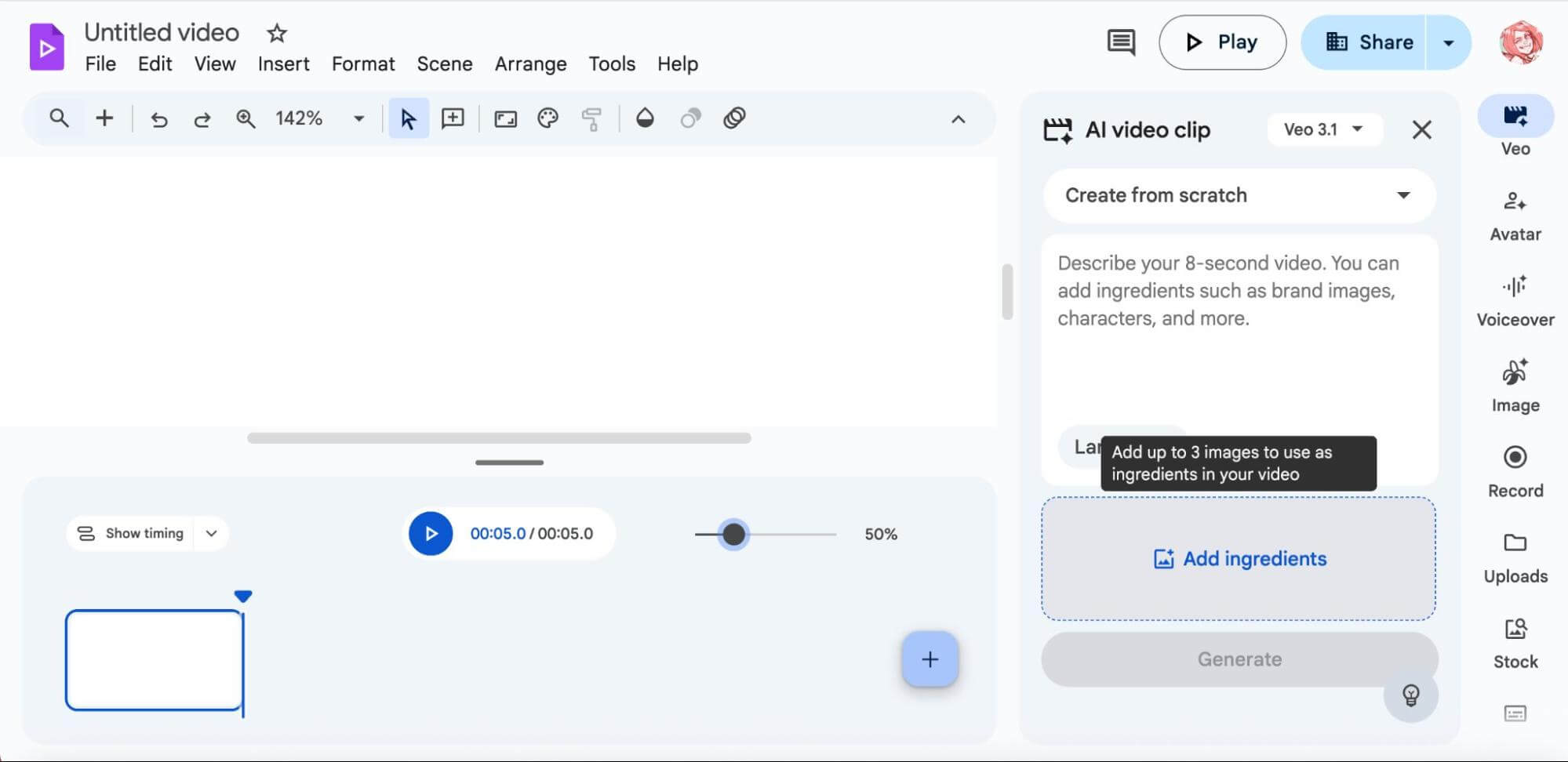
The feature sounds promising, but Liron explains the reality falls short for businesses. Two fundamental problems prevent these tools from being worth the time investment today.
Problem One: Many businesses lean on AI video tools, hoping algorithmic favor will compensate for weak content. But AI won't help you communicate something meaningful if you have nothing worthwhile to say.
The fundamental question: how much value can you deliver in an eight-second AI-generated clip? Businesses are experimenting, but Liron hasn't seen effective strategies emerge yet.
Problem Two: Demos show someone typing a prompt and getting perfect results instantly. Reality is drastically different.
You'll run multiple iterations. You'll stitch clips together because some parts work while others don't. When you tell the AI to correct something, it overcorrects and breaks what was working. You'll jump between detailed prompts and simple ones, trying to hit your target. By the time you get something usable, you could have filmed it yourself.
The technology is improving rapidly, but we're not at a place where three-line prompts are producing Super Bowl-quality video.
Later in 2026, creators will be able to generate Shorts using their own likeness without third-party tools.
Audiences already accept AI creators. The key question: would audiences rather have value from an AI likeness or no value at all?
Audiences watch content with one filter: What's In It For Me.
If you have a leaking toilet and find a video that helps you fix it, do you care about lighting, makeup, or production quality? No. You need help solving a problem.

Which AI Moves Actually Matter?
That's what every marketer is wrestling with now. New AI strategies, new tools, new takes every week — but no clarity. Most marketers and business owners are trying to figure out AI alone.The AI Business Society is your trusted guide. Get expert-led training you can put to work immediately. Plus a community of marketers sharing what's actually working.
I'M READY FOR REAL AI RESULTSWhether a graphic, a person, or an AI avatar delivers the solution doesn't matter if you get the help you need. Format becomes irrelevant when the value is there.
#2: Image Posts in Shorts
YouTube will soon roll out static image posts directly into the Shorts feed.
Liron takes a deep breath before addressing this because he doesn't know what YouTube is thinking. Why post a still image on a platform that's fundamentally about video? It makes no sense to him.
The only scenario where images might work: pattern interrupts. You're scrolling through video after video, then suddenly an image appears. The lack of motion catches you off guard. That's weird. Let me see what this is.
Businesses could test these image types as pattern interrupts:
- Infographics: Visual data in a single frame
- Memes: Images with cultural relevance
- Data visualizations: Charts and graphs presenting information at a glance
To test this feature, upload the image as a video with a voiceover. Create your infographic, then record yourself explaining what it shows. For example, start by saying “This is the biggest mistake” while the graphic displays. That gives people a reason to pause, transforming the static image into engaging video content in which the visual serves as the anchor while voiceover provides context and value.
Pro Tip: When YouTube launches something new, they actively promote it. Early adopters often get algorithmic favor. But you shouldn’t restructure your entire content strategy around this feature. For example, don't pivot to patterns like three shorts, one image, three shorts, one image.
#3: YouTube's Promote Feature and Interest Targeting
YouTube added Interest Targeting to its Promote tool, letting creators target viewers based on interests like gaming, beauty, or travel. The feature targets based on anonymized viewer activity.
The Promote tool functions like Facebook's boost feature and is affordable for many marketing budgets.
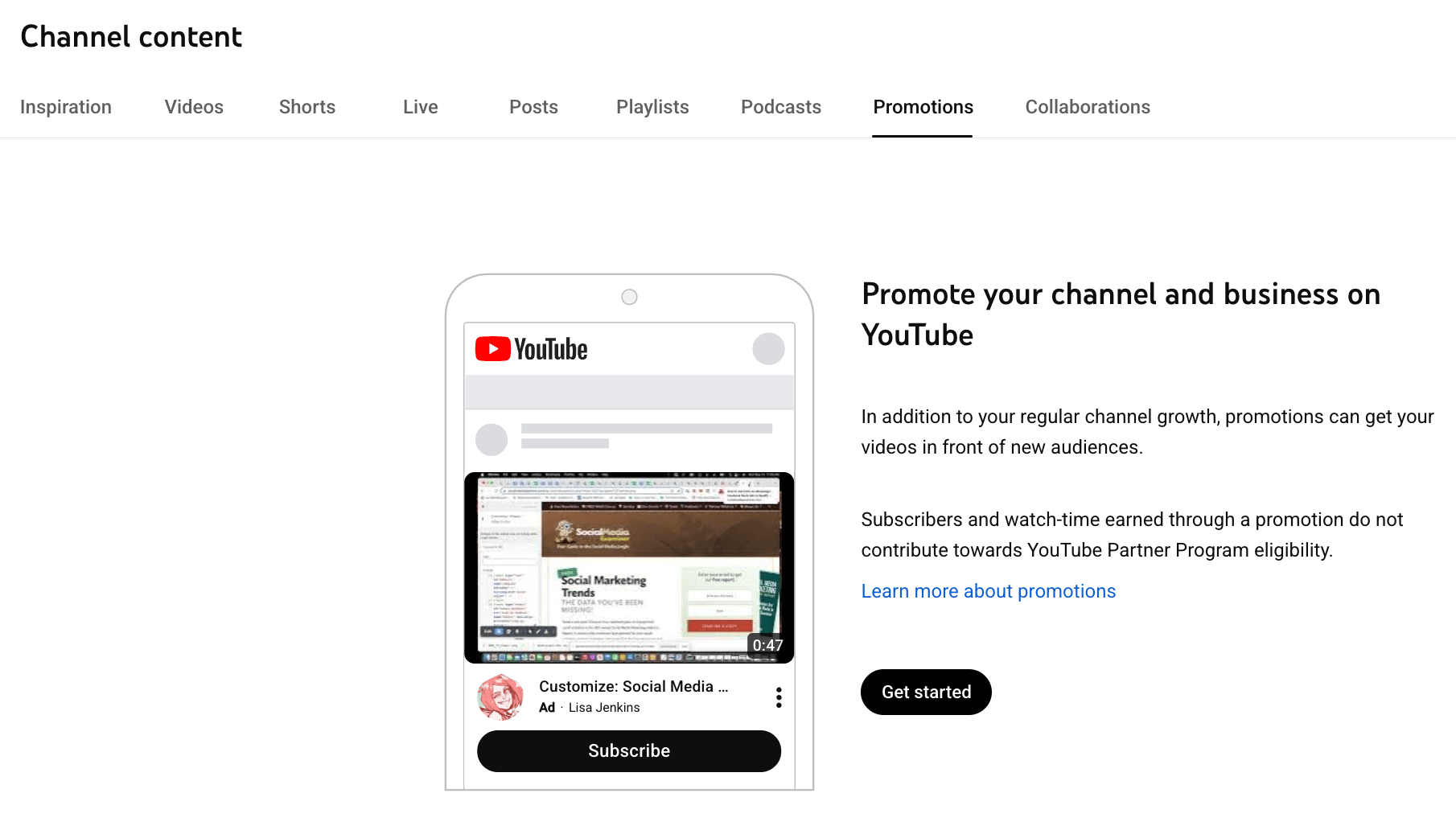
Marketers are asking two critical questions about this feature.
Does Paying to Promote Your Content Hurt Organic Reach on YouTube?
No, YouTube won't penalize your organic reach for using paid promotion.
Liron has tested this himself multiple times and spoken directly with YouTube representatives who confirmed it repeatedly. These are two completely separate algorithms—Google AdWords and YouTube itself. They have different outcomes, different KPIs, and measure completely different things.
You can now see proof in YouTube analytics. The platform outlines YouTube advertising as a completely separate line item.
How Should Marketers Use the Promote Features?
Promote becomes valuable when you use it for the right strategic reasons.
3 Days of World-Class Training—Zero Travel!
Couldn't make it to Social Media Marketing World and AI Business World this year? Get all of the great content at a fraction of the price with a Virtual ticket.
That’s full access to recordings of every keynote, workshop, and session—the ones people travel thousands of miles to see. Don't wait. Get your Virtual ticket and enjoy actionable content that you can watch anytime, anywhere.
If you're chasing vanity metric numbers for the sake of numbers, you're wasting money and damaging your channel's data signals. Liron can get you 100,000 views tomorrow from viewers who will never buy from you. As a business, does that excite you? Not really. This is the trap of vanity metrics. If they're the wrong views and wrong subscribers, it just muddies your data.
Here are three scenarios where YouTube Promote does make sense:
- Testing New Concepts: You have an idea you're not sure will resonate with your core audience, but you want to lean into this new direction. Promoting just this video lets you test the concept before making bigger content strategy decisions.
- Geographic Expansion: Instead of relying on YouTube to organically reach people in specific locations, you can target them directly. For example, test whether customers in Canada care about your content by promoting specifically to people interested in your topic who live in Canada.
- Interest-Based Discovery: When you're targeting creators learning about YouTube features, you can promote only to people interested in that specific topic. Those viewers might share your video, embed it on their website, or include it in their newsletter.
- Starting a Brand New Channel With Proven Expertise from Another Platform: If you're bringing expertise from another channel—it's proven on TikTok, proven on LinkedIn, you've got the content creation skills down—and now you're just bringing it to a new YouTube audience, absolutely use Promote. Launch with four videos, then promote them. This gives you the leg up to get your channel going from zero to one.
The critical factor in all these scenarios is alignment with your ideal customer profile (ICP). You're trying to reach new eyeballs that organic distribution isn't reaching—but they must be the RIGHT eyeballs.
Pro Tip: Look at your ten or twenty most recent videos. Identify which ones performed well organically—videos that outperformed your baseline metrics. Your current audience really liked these videos. That's a strong signal to put promotion money behind those specific videos. If your main audience loved it, maybe a new audience will love it too.
#4: YouTube Shopping
YouTube positions itself as a premier shopping destination because viewers trust product and brand recommendations from creators. Over 500,000 channels have already set up YouTube Shopping.
The platform is focused on frictionless commerce. Soon, when a channel recommends a product, viewers will be able to buy it without leaving the YouTube app.
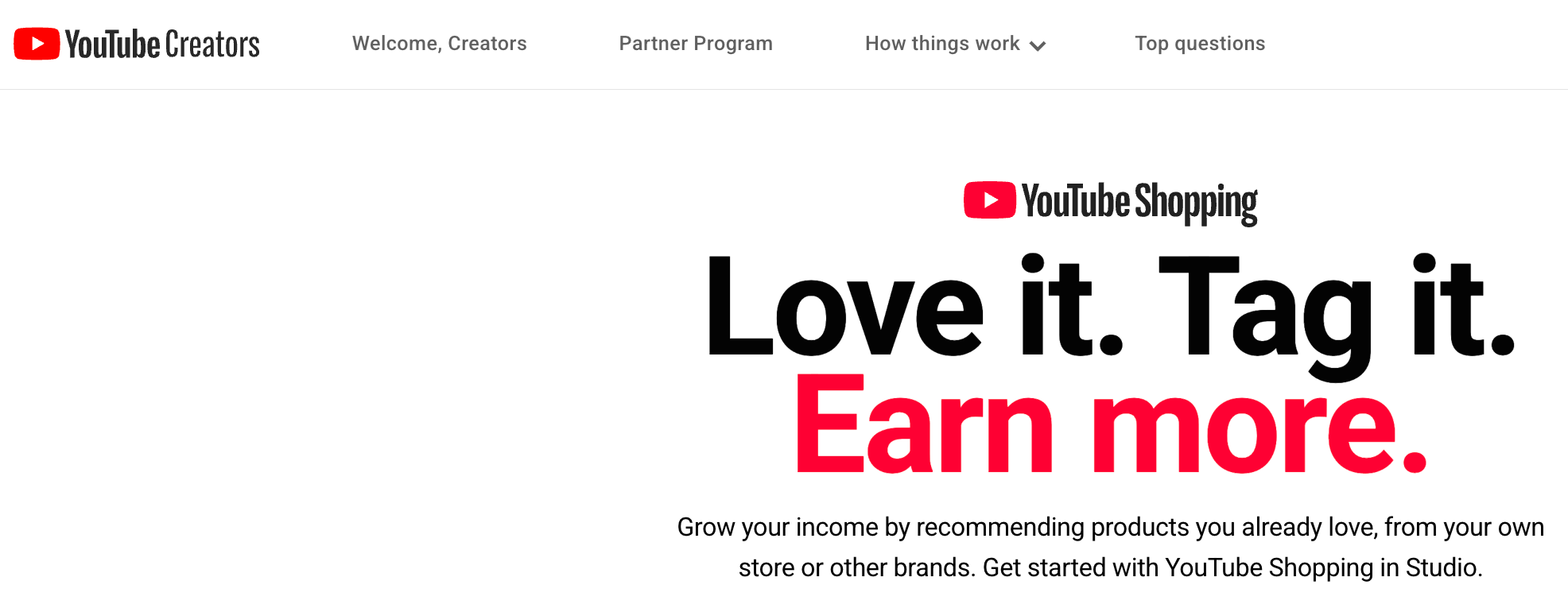
But does it actually work?
Liron has added products to his videos, so he's part of that 500,000-channel statistic. But he hasn't seen anything happening. Being part of the data doesn't mean it's successful.
Liron shares that he has never bought a single thing on YouTube because he saw it on a YouTube channel with a conveniently located button.
However—and this is critical—he has bought products and services because of YouTube videos. He's seen products being reviewed, found a link in the description, then clicked off-platform and completed his transaction there.
Whether YouTube Shopping works depends entirely on what you're selling and at what price point.
If you're a creator with your own products and you want to promote those, YouTube Shopping is a smart move. Your audience already trusts you.
If you have a $20 product, the decision threshold is low enough that someone might buy on impulse while watching. Limited drops and limited runs also work particularly well.
If you have a high-ticket item or a consulting service, the dynamics change completely.
The odds of somebody seeing your video and feeling the urge to spend $5,000 because there's a conveniently located button? Liron isn't seeing that. The purchase decision for high-ticket items requires consideration, comparison, and consultation that in-platform shopping can't provide.
Tactical Opportunity: Links in Shorts for Paid Media
YouTube previously removed clickable links from Shorts. But they're bringing them back for paid media in 2026. If you promote a Short, you can include clickable links.
Combined with the Promote feature, paid Shorts with direct purchase links could work for impulse-buy products. Marketers with lower-cost products should explore this.
Liron Segev is a YouTube strategist who helps businesses turn YouTube channels into lead-generation machines through growth strategy and content optimization. Follow him on YouTube and LinkedIn.
Other Notes From This Episode
- Connect with Michael Stelzner @Stelzner on Instagram and @Mike_Stelzner on X.
- Connect with Jerry Potter on LinkedIn and YouTube.
- Watch this interview and other exclusive content from Social Media Examiner on YouTube.
Listen to the Podcast Now
This article is sourced from the Social Media Marketing Podcast, a top marketing podcast. Listen or subscribe below.
Where to subscribe: Apple Podcasts | Spotify | YouTube Music | YouTube | Amazon Music | RSS
✋🏽 If you enjoyed this episode of the Social Media Marketing podcast, please head over to Apple Podcasts, leave a rating, write a review, and subscribe.
Stay Up-to-Date: Get New Marketing Articles Delivered to You!
Don't miss out on upcoming social media marketing insights and strategies! Sign up to receive notifications when we publish new articles on Social Media Examiner. Our expertly crafted content will help you stay ahead of the curve and drive results for your business. Click the link below to sign up now and receive our annual report!
Curious About How to Use AI?
Our newest show, AI Explored, might be just what you're looking for. It's for marketers, creators, and entrepreneurs who want to understand how to use AI in their business.
It's hosted by Michael Stelzner and explores this exciting new frontier in easy-to-understand terms.
Pull up your favorite podcast app and search for AI Explored. Or click the button below for more information.