by
by Are your Facebook and Instagram ads getting lost in the feed while your competitors keep stealing the clicks? Are you spending time and money tweaking campaign settings when your real problem might be on screen?
In this article, you'll discover how to build a Facebook and Instagram ad creative strategy from the ground up—including how to identify the right messages to test, what kinds of creative formats actually perform, and how to tap into Meta's free creator network to generate high-performing ads without doing all the production yourself.
Why Facebook and Instagram Ad Creative Is Your Biggest Lever in Meta Ads
Five or six years ago, Facebook advertisers could gain a real competitive advantage through smarter targeting, more complex funnels, manual placement selections, and campaign-level settings that most advertisers ignored. That era is over.
Meta's Advantage Plus suite has automated nearly all of that. Meta has essentially told advertisers to step back from the technical levers and trust the system to handle delivery. That shift leaves only two areas where you can genuinely outcompete: your offer and your creative.
The creative is what people actually see. It either stops them mid-scroll or it doesn't. It either convinces them to act or it doesn't. No amount of campaign-level optimization can compensate for creative that fails to connect. Focusing on creative yields more consistent improvement in results than almost anything else you can do.
#1: Set Your Creative Strategy Before You Touch a Single Image or Video
Before producing any ad, you need two things locked in: a clearly defined customer avatar and a positioning decision. Ben Heath has found that most advertisers shortchange both.
How to Define Your Avatar With Specificity, Not Categories
Saying your audience is “entrepreneurs” or “parents” is not enough. Ben's own agency targets business owners (not marketing managers) who are already spending at least $10,000 per month on Meta ads, have proof of concept on the platform, and are still managing their campaigns themselves rather than having outsourced to an agency or built an in-house team. That level of specificity matters because it tells you exactly what pain points to address and which messages will resonate with your prospects.
Specificity also matters technically, not just strategically. Today on Meta, the creative itself handles much of the targeting. Meta tracks who engages with your ads and uses that signal to determine who sees them next. If your ad is designed to speak directly to your ideal customer, those are the people most likely to engage, and Meta will keep showing it to more people like them.
How to Choose Your Positioning
Within your market, you need to decide how you want to be perceived. Is your product or service at a luxury level? Price-competitive? Fast-growth focused? Brand-first? Answering this shapes every creative decision that follows.
If you position yourself as a luxury brand and then run constant discount promotions, the messaging works against itself. All of your ads need to reflect the same positioning to maintain a consistent perception.
#2: Identify the Angles That Give People a Reason to Buy
An angle is Ben's term for the reason someone might want to buy your product or service. Most businesses have several potential angles, and the only way to know which one resonates most is to test them.
The most common categories of angles include:
- Affordability: Your product is less expensive than the competition
- Style or design: Your product looks better or is more attractive
- Status: Social cachet is associated with buying your product
- Time savings: Your offer helps customers get something done faster or frees up their schedule
- Desired outcome: You guarantee a specific result
- Anxiety alleviation: Your product or service reduces stress or removes uncertainty
- Risk mitigation: You protect them from a negative outcome
Ben tested these angles against his own customer avatar for his agency's done-for-you Meta ads service and found that return on ad spend was the primary motivator—not scaling, not stress relief, not status from working with a well-known shop. But he's careful to note that the result is specific to his customer. If his agency targeted Fortune 500 marketing managers instead of business owners, risk mitigation would likely be the winning angle.
How to Find Your Angles
The fastest method is to read your existing reviews and testimonials. If you've been marketing primarily around one angle, most of the positive feedback will reflect that, but outliers may point to new angles. When customers mention something you weren't emphasizing, that's a signal worth testing.
Ready to Supercharge Your Marketing Strategy?
Get expert training and an unbeatable conference experience when you attend Social Media Marketing World this April 28-30—from your friends at Social Media Examiner.
Broaden your reach, skyrocket your engagement, and grow your sales. Become the marketing hero your company or clients need!
🔥 Save $500 on an All-Access ticket. Sale Ends Friday! 🔥
GET THE DETAILSYou can also paste a collection of reviews into an AI tool and ask it to identify the themes that keep surfacing.
Beyond that, simply think through the promises you make in your offer. What do you tell people they'll get? Breaking those promises into distinct angles gives you a testing framework.
#3: Build Creative Diversity Into Your Meta Ads Stack
Meta's Andromeda update, which Ben says hit most ad accounts in the summer of last year, changed the way the platform handles creative. It now wants and can handle a large volume of diverse creatives within a single campaign and ad set.
The system uses that variety to perform what Meta calls personalized ad delivery. Running more creative types gives Meta more options to match the right format to the right person. If a particular user tends to engage with carousels, Meta serves them a carousel from your creative stack; if another user responds better to short videos, they get a short video.
The system also uses creative diversity to combat ad fatigue, rotating meaningful variations so people don't feel they've already seen your ad before they've had a chance to engage with it.
Ben's benchmark for a well-stocked ad set is 20 distinct creatives. That would have been an absurd recommendation a few years ago, when Meta itself recommended no more than six per ad set. He acknowledges this target is unrealistic for many advertisers, given the time and resources involved—the goal isn't to hit 20 for its own sake, but to understand what the platform now prefers and build toward it as best you can.
A typical creative stack at that level might look like six to eight videos and a couple of carousels, with the remainder being static images. Within those formats, you'll want different styles.
If producing 20 original pieces of ad creative from scratch isn't realistic for your team, don't manufacture low-quality work just to hit a number. Mediocre work produced just to fill a number isn't the point. You should only add creatives you're genuinely confident in.
#4: Match Your Facebook and Instagram Video Ad Style to Your Business and Offer
Within the video portion of your creative stack, Ben identifies five main styles worth testing:
Founder-Led Video: This style works particularly well when the business is fueled by a personal brand or when the founder's story is a meaningful part of the offer. The founder or owner speaks directly to the camera about the product, why they built the business, and what makes it worth buying.
Demonstration Video: Someone shows how the product or service actually works. For portfolio-based businesses, this might be a time-lapse of work being done. For physical products, it's showing the product in use.
Testimonial Video: One or more real customers share their experience, ideally on camera. Ben strongly advocates for video testimonials over written ones because they are much more persuasive as an ad format.
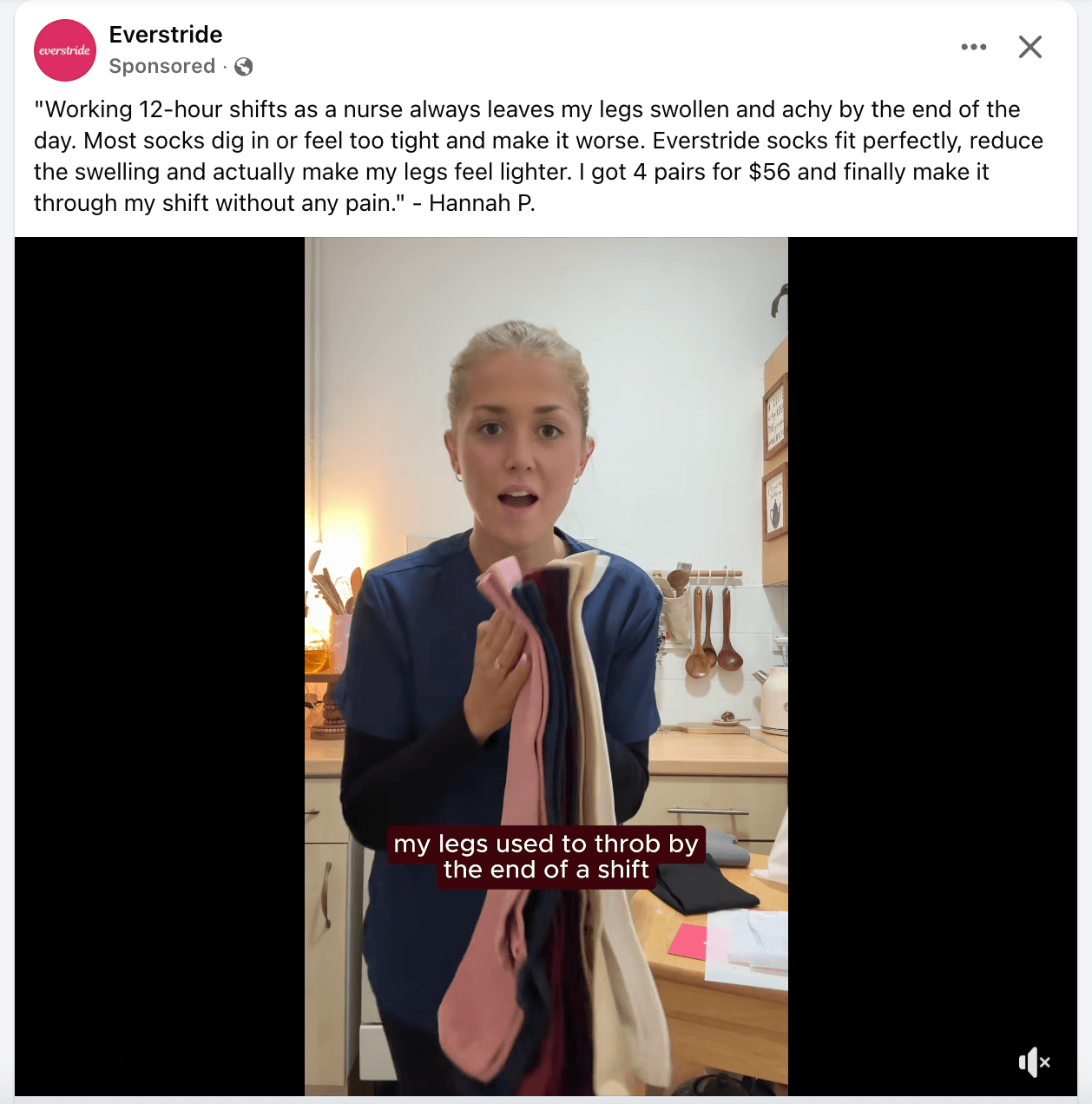
To get these testimonial videos, he recommends building a repeatable incentivization system—a discount off the customer's next purchase is the most common approach. His team has also had success reaching out to customers who left written reviews and asking them to record a short vertical video saying the same thing. Ben notes that if testimonials are valuable enough to use in advertising, they're worth marketing for.
UGC (user-generated content) Video: This is distinct from creator/influencer content—the feel is more authentic and less polished, which can work well for some audiences. These videos feature regular customers without a following or influence, creating content about the product.
AI Is No Longer Optional for Marketers—Ready to Master It?
This April 29-30, join over a thousand forward-thinking marketers at AI Business World—a conference-in-a-conference at Social Media Marketing World.
Get two days of practical AI training where you'll discover:
✅ Systems that 3x your output—leaving time for strategy and creativity
✅ Proven strategies you can deploy right away—no guesswork, no wasted budget
Become the indispensable AI expert your company needs.
GET YOUR TICKETS—SAVE $150Animated Video: Motion graphics or images brought to life through editing work well for portfolio-based businesses that want to showcase a range of work, particularly when the subject matter is visual.
Three Video Ad Examples
Ben describes a driveway cleaning business whose ad worked extremely well. The founder filmed himself selfie-style on his phone, with one of his employees visible over his shoulder, cleaning a driveway. You could clearly see the contrast between the cleaned and uncleaned sections of the driveway. The video had low production value and a casual tone—an intentional choice for a local service business where relatability and friendliness matter more than polish. The founder communicated what the company does, quickly named a few benefits, and ended with a call to action. It combined founder-led and demonstration styles in under a minute.
Ben's favorite demonstration ad he's seen recently was for a small tabletop bookshelf insert kit—a product where you pop out cardboard pieces and assemble them into a miniature lit-up cityscape, roughly six by four inches. The ad showed someone building the product from start to finish, with no narration except a single audio clip at the opening that mimicked a Japanese train announcement: “Next stop, Kyoto.” What made it exceptional was that it achieved something rare: a luxury and premium feel while maintaining a fast, attention-holding pace through quick cuts. The music and cinematography did the positioning work. The ad needed no hard sell, just a clear visual demonstration of what the product does and how beautiful it looks finished.
Bear Grylls appeared in an ad for a water filter company he co-owns, and Ben describes it as a masterclass in combining styles. Grylls opened the video, already finishing the filter installation under the sink, announcing it had taken under 60 seconds. He noted that even people who aren't handy could do it. He then walked through the benefits—improved water quality, no more buying bottled water—before the ad cut to a call to action. It mixed product demonstration, founder-led content (he's a co-owner), and creator/influencer credibility in one clean package.
#5: How to Adapt Your Best-Performing Organic Instagram and Facebook Content for Ads
Take your best-performing posts, particularly video posts, and append a short call to action to the end.
Ben recommends keeping this under five seconds and placing it at the very end of the video.
The scene change doesn't need to match the original—Ben says testing has shown that a cut to a noticeably different setting can actually help retain attention rather than hurt it.
What matters is how the CTA is delivered: Ben hasn't seen as good results from voice-over with text on screen as from face-to-camera CTAs, which he describes as more direct, even if they’re a bit more jarring. If your original video was face-to-camera, a brief face-to-camera CTA is the safer choice. If it wasn't, a short spoken-on-camera line is still likely to outperform a text overlay with narration.
Pro Tip: Organic content is also useful as a low-cost testing signal. Content that grabs attention organically is likely to do the same as an ad. Whether it converts is harder to predict, but the attention-grabbing signal tends to translate.
#6: Use Meta's Creator Marketplace to Get Better Video Creative at Scale
If producing high-quality video creative is a bottleneck, Meta's Creator Marketplace is one of the most underused tools available to advertisers. It's free to access, currently hosts approximately 1.5 million creators, and is growing rapidly.
The marketplace lets you search for and connect directly with creators, influencers, and content producers who have built audiences within specific niches. You can filter by audience demographics, niche, and engagement, and Meta has recently added an ads performance indicator badge: a predictive tool that flags which creators are likely to perform well for you specifically if you were to run partnership ads with them.
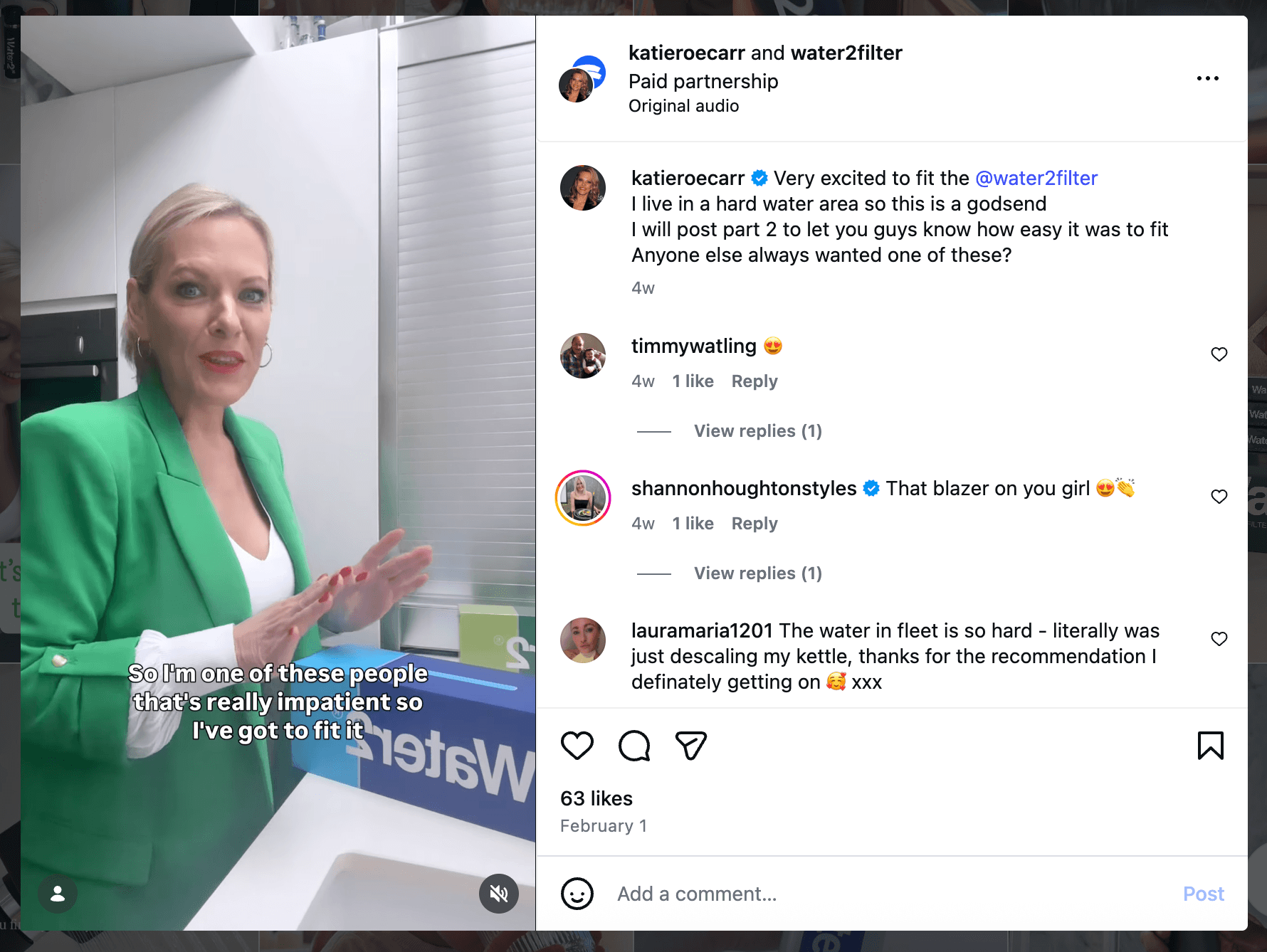
One reason creators outperform non-creator videos is a measurable, trackable metric: hook rate. Hook rate is the percentage of people who watch past the first three seconds of a video ad, and it's a metric you can pull directly from Meta Ads Manager. Creators who have built an audience in a relevant niche consistently produce higher hook rates than equivalent non-creator content because their face or name already carries recognition and trust with that audience. A higher hook rate means more people are actually watching your message, which is the prerequisite for everything else in the ad to work.
How to Work With Creators for Video Ads
Ben pushes back on the assumption that creator partnerships require celebrity-level accounts. A creator with 40,000 Instagram followers in the health and fitness niche, where brand deals are their primary source of income, may be willing to create content for around $100.
If their audience aligns with your customer avatar, that creator's recommendation could significantly outperform anything you're producing yourself.
Ben recommends starting with a flat fee rather than an affiliate or commission arrangement—especially if you plan to run the ad for months or even years. Once you find a creator whose content converts, the return on their flat fee quickly eclipses what a commission structure would have cost you.
How to Contact Creators via Creator Marketplace
Ben recommends a specific approach when reaching out through the marketplace. Rather than posting an open call for creator applications, he advises going directly to the creators you want to work with and presenting a clear, specific offer: here's what I'm looking for, here's what I'm paying, are you interested?
Outreach sent through the Creator Marketplace lands in a dedicated folder in the creator's inbox, separate from Instagram DMs, which creators often never see. As someone who receives a high volume of Instagram messages himself, Ben says anything that comes through the Creator Marketplace gets his attention because he knows a business deal is on the table.
How to 5x the Video Asset Output From a Single Creator Session
Ben's primary tip for working with creators is to ask for creative variety without dramatically increasing cost.
For each video ad a creator produces, ask them to record five different hooks—the opening scene and first line, roughly the first three to five seconds of the video. Ask them to change their location, their opening line, or both for each variation.
The body of the video stays the same; only the opening changes. You then take each of those hooks and edit them onto the same video body yourself, creating five distinct ad files from a single creator session.
Because recording a few additional opening clips adds almost no time to the creator's workflow, the fee doesn't change meaningfully. Ben describes this as one of the highest-leverage moves in creative production because it multiplies your testable volume without increasing your costs.
How to Run Creator-Made Video Ads
Partnership ads are the correct format when working with creators. When an ad runs as a partnership ad, it displays both your brand's name and the creator's profile in the feed—giving you the credibility of their audience relationship alongside your ad targeting.
Ben Heath is a Facebook and Instagram ads expert and a Meta Megaphone partner who helps marketers and entrepreneurs improve their return on ad spend. He runs Heath Media, a Meta ads agency. Follow him on YouTube.
Other Notes From This Episode
- Connect with Michael Stelzner @Stelzner on Instagram and @Mike_Stelzner on X.
- Watch this interview and other exclusive content from Social Media Examiner on YouTube.
Listen to the Podcast Now
This article is sourced from the Social Media Marketing Podcast, a top marketing podcast. Listen or subscribe below.
Where to subscribe: Apple Podcasts | Spotify | YouTube Music | YouTube | Amazon Music | RSS
✋🏽 If you enjoyed this episode of the Social Media Marketing podcast, please head over to Apple Podcasts, leave a rating, write a review, and subscribe.
Stay Up-to-Date: Get New Marketing Articles Delivered to You!
Don't miss out on upcoming social media marketing insights and strategies! Sign up to receive notifications when we publish new articles on Social Media Examiner. Our expertly crafted content will help you stay ahead of the curve and drive results for your business. Click the link below to sign up now and receive our annual report!

Want to Unlock AI Marketing Breakthroughs?
If you’re like most of us, you are trying to figure out how to use AI in your marketing. Here's the solution: The AI Business Society—from your friends at Social Media Examiner.The AI Business Society is the place to discover how to apply AI in your work. When you join, you'll boost your productivity, unlock your creativity, and make connections with other marketers on a similar journey.
I'M READY TO BECOME AN AI-POWERED MARKETER