by
by Are you spending most of your marketing budget chasing new customers while the ones you have are leaving? Do you suspect that better customer retention could be your biggest revenue lever, but you're not sure where to start?
In this article, you'll discover a proven three-part framework to keep customers coming back and turn them into your most effective marketing channel.
Why Customer Experience Is a Revenue Strategy
Most marketers define their job as getting customers in the door. Shana Lynn Bresnahan, a retention strategist who helps small businesses scale courses, memberships, and coaching programs, argues that stopping at the sale is where most businesses leave significant money on the table.
There are both a mission and a business argument for investing in the post-sale experience.
For mission-driven founders, the logic is simple: you fulfill your mission not when someone buys, but when they actually get results. Focusing exclusively on acquiring new customers while neglecting what happens afterward means you're not delivering on what you promised.
The business case is equally compelling. Profitability in any business comes down to two levers: increasing customer lifetime value (LTV) and decreasing customer acquisition cost (CAC). Marketers typically fixate on the acquisition side — finding cheaper ad channels, improving conversion rates — while ignoring the compounding impact of retention on the other side of the equation.
Consider a $47-per-month subscription membership. At an 80% monthly retention rate, meaning you lose 20% of customers every month, each customer is worth roughly $235 in lifetime value. Improve retention by just ten percentage points to 90%, and that lifetime value doubles to approximately $470. Improve it by another five points to 95%, and it doubles again.
The progression is exponential, similar to compound interest. Better retention also opens up ascending customers to higher-level programs and additional products, since longer-tenure customers are far more likely to buy more.
Beyond the math, happy customers who get results become word of mouth advocates, the most affordable customer acquisition channel that exists. Meanwhile, acquisition is only getting harder and more expensive. Emails land in spam and promotions folders, organic posts reach smaller audiences, and the cost of paid advertising keeps rising. Retention is not just a customer service concern. It's how marketers justify their existence and keep their businesses profitable.
#1: Three Things You Need to Design or Improve Your Customer Experience Using the Retention Accelerator Formula
Shana asks every prospective client the same three questions before they discuss strategy: Do you know your product? Do you know your numbers? Do you know your people? These aren't gatekeeping questions; they're the foundation that makes every customer experience improvement actually work.
Your Product Quality Assessment
No amount of retention strategy can save a product that doesn't deliver on its promises. If you're seeing high refund rates and struggling to keep repeat customers, the first question to ask before you invest in the experience around it is whether your product itself needs work.
The fastest way to assess product quality isn't a survey; it's your customer support inbox.
For any business trying to improve retention, talking regularly to customer support is non-negotiable. The support team is always the first to know about product defects, recurring complaints, and the specific friction points customers encounter.
Signs that your product is working: subscription customers have a low churn rate, consumable product buyers are repeat purchasers, and you're generating referrals through word-of-mouth.
Marketers Are Learning AI Alone
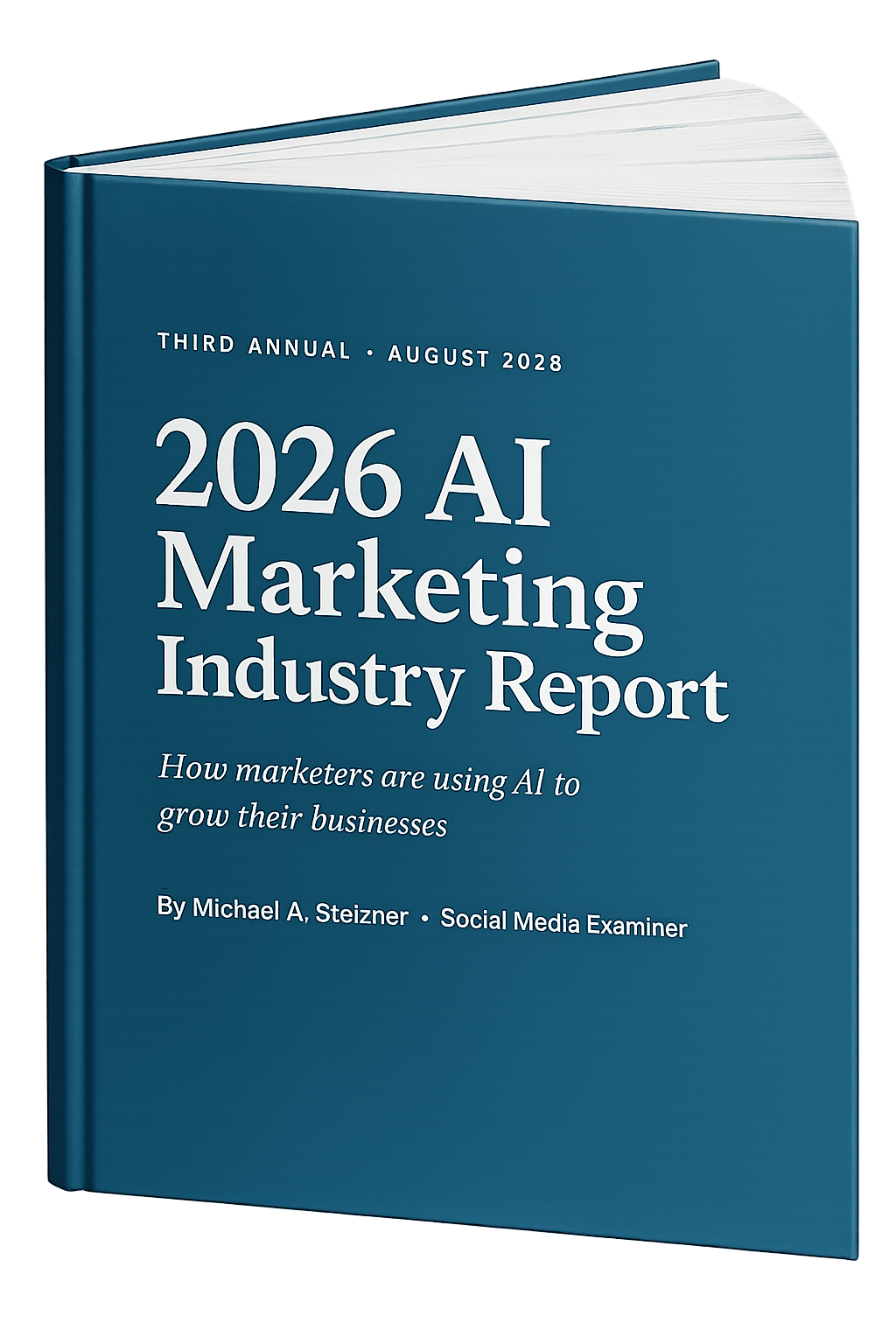
Sound familiar? 85% of marketers learn AI by experimenting on their own, just 7% get company training, and more than half spend their own money on tools.
Our third annual AI Marketing Industry Report surveys 681 marketers and distills everything into 32 clear charts — what's working, what platforms marketers rely on, and what to learn next.
SKIP THE GUESSWORK — READ THE REPORT8 KPI Numbers
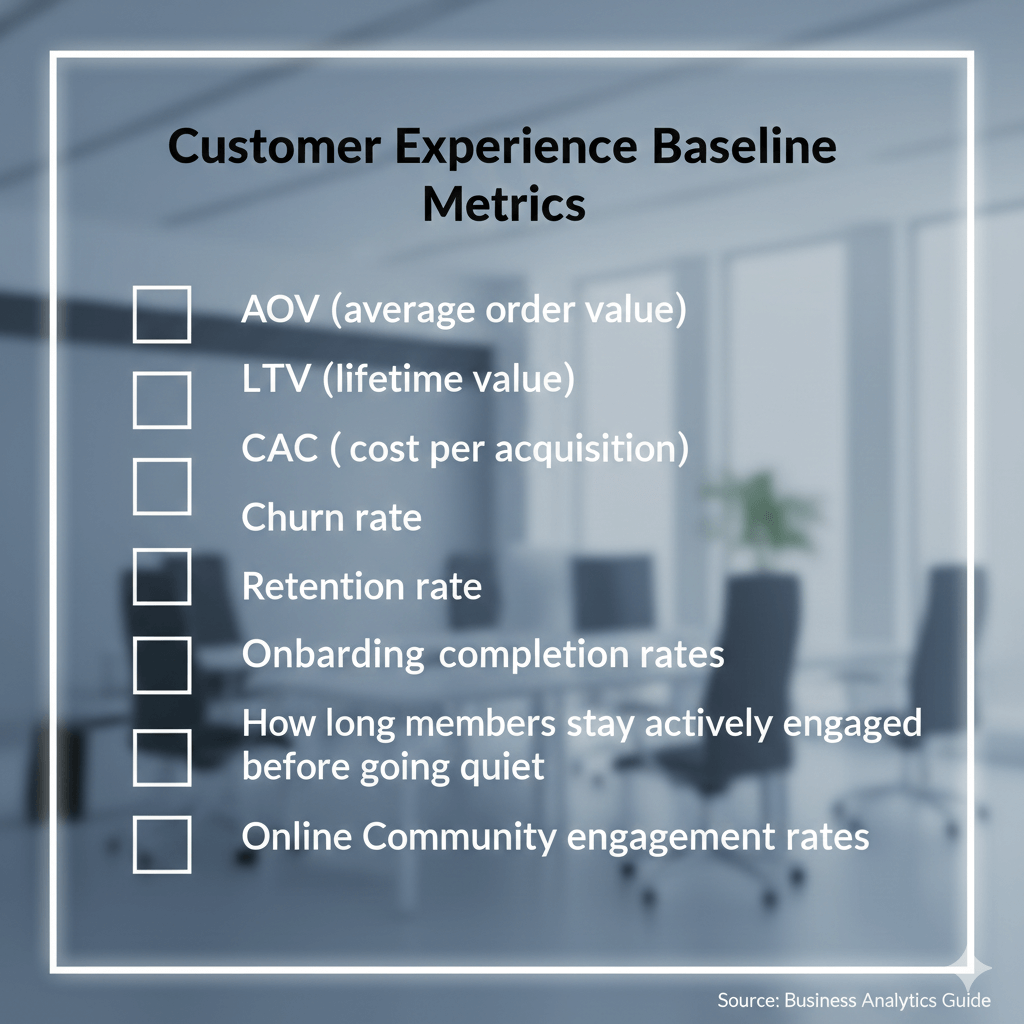
Before testing any customer experience improvements, establish your baseline metrics. The key numbers to track are:
- AOV (average order value)
- LTV (lifetime value)
- CAC (cost per acquisition)
- Churn rate
- Retention rate
- Onboarding completion rates
- How long members stay actively engaged before going quiet
- Online Community engagement rates
Pro Tip: Shana advises benchmarking against yourself rather than chasing industry averages. Without your own baseline, you can't measure whether your improvements are working, and you'll have a hard time justifying your efforts to whoever oversees the marketing budget.
An Extensive Customer Profile
The 15-minute ideal customer avatar worksheet that circulates in marketing courses is not enough here.
Corporate marketers understand the enormous investment companies make in understanding who their customers are (their demographics, buying behaviors, wants, and needs) because those insights inform every product and marketing decision.
Digital business owners often skip this step because they don't face the same upfront capital requirements as, say, a franchise operator or a manufacturer. That's a mistake. The more deeply you understand your customers' language and what they actually want from your product, the better you can personalize the experience and make smarter product decisions.
#2: Align or Elevate the Results Your Product Delivers
The first element of Shana's retention accelerator formula is ensuring customers actually get results with your product or service. If they don't, nothing else matters. They won't come back, and they won't have a beneficial story to tell.
The most common failure mode here is over-promising and under-delivering. Shana describes this as the “kiss of death” for any business. Great marketers know how to position a product compellingly, but if the actual experience inside the program doesn't match the promise that got someone to buy, you've already lost them.
The fix is either aligning your marketing claims with what the product actually delivers or elevating the product to match the promise. One of those two things has to happen.
Define the Desired Outcome
Shana uses a useful reframe: you're not selling the widget, you're selling what the widget makes possible. Getting clear on what customers are actually buying emotionally helps you design an experience that gets them to that outcome. Are you selling an online course platform, or are you selling financial freedom and time freedom? Are you selling a dress, or are you selling confidence?
Consider a customer who buys a dress but goes home without the matching shoes, jewelry, or guidance on how to style it. She tries it on, it doesn't look the way she imagined, and the dress ends up returned or hanging in the closet. But if she goes home with the accessories and the styling direction, she wears it, gets compliments from her friends, and comes back to shop again. The store's job wasn't just to sell the dress. It was to ensure the customer could actually wear it and feel great.
Find and Remove Friction
Once you know the desired outcome, the next question is: where is the friction getting in the way? Friction can be mindset-based, physical, or technical. Whatever form it takes, your job is to make getting results easier and faster.
You can't solve friction you haven't personally experienced. A practical starting point is to mystery-shop your own product. Go through your entire customer experience as if you were a new buyer and keep asking: How can I make this easier? How can I make this faster?
For a SaaS client serving teachers, Shana conducted a friction audit and found that teachers had to download lesson plans one at a time. A quick fix: enable bulk downloads.
Then she asked them to describe the dream scenario for a teacher using the product. The answer: an AI bot that asks a few questions, designs a full year of lesson plans, gets approval, and checks in with answers to follow-up questions. The client couldn't build that immediately, but working toward it clarified the next achievable step: uploading all their training video content into an AI-powered bot so teachers could ask questions and get linked back to the relevant training, dramatically reducing friction with available resources.
#3: Build In Customer Support and Recognition Opportunities
The second element of the retention accelerator formula is recognition, and Shana is quick to distinguish it from gamification. Recognition, at its core, means seeing each customer as an individual, not just a number or a subscriber ID.
Personalized experiences are no longer a differentiator; they're an expectation. Customers interact with platforms like Netflix that remember their preferences and serve up content tailored to them. They expect businesses to know who they are, why they joined, and what they're trying to accomplish.

Which AI Moves Actually Matter?
That's what every marketer is wrestling with now. New AI strategies, new tools, new takes every week — but no clarity. Most marketers and business owners are trying to figure out AI alone.The AI Business Society is your trusted guide. Get expert-led training you can put to work immediately. Plus a community of marketers sharing what's actually working.
I'M READY FOR REAL AI RESULTSThe Stoplight System
Shana organizes customer recognition opportunities around a three-color stoplight framework.
Green represents praiseworthy actions, such as when a customer logged in for the first time, completed onboarding, watched their first video, hit a milestone, or sent their first referral. These moments deserve acknowledgment, and a well-timed message reinforces progress and keeps momentum going. “We see you, you just completed onboarding! Here's what's unlocked for you next.”

Yellow represents warning signs, such as when a member hasn't logged in for 45 days, or when someone didn't complete onboarding within the first 10 days of joining. These are signals to check in proactively. For a gym with a member who hasn't shown up in two or three weeks, a simple outreach can re-engage someone who was about to quietly cancel, “We just wanted to check in. Are you sick? Injured? How can we support you?”
Red represents customers who are canceling, submitting support requests about problems, or expressing frustration. Even these customers deserve a good experience, because how you treat people on the way out shapes your reputation just as much as how you treat them when they join. Reputation is marketing, and a bad cancellation experience will cost you potential customers you've never met.
Personalization at Scale
When the idea of personalizing for thousands of customers feels impossible, Shana points to clients managing thousands of members who make it work by tracking behavioral data, conducting assessment questions at onboarding, and running small-group onboarding coaching calls. The investment in those calls pays for itself in improved retention and profitability.
For businesses with less infrastructure, the Four Seasons model is instructive. The hotel doesn't assign a staff member to memorize every guest's preferences. It sends a simple preference form at booking to capture and save pillow firmness preferences, dietary restrictions, etc., and add them to the customer’s profile. Every subsequent stay begins with those preferences already in place.
Shana's hairstylist operates the same way with zero technology: she listens, takes notes, ties them to the client's file, and picks up conversations exactly where they left off.
The starting point isn't complex technology. It's mapping your member journey past the point of sale, identifying every moment where personalization or recognition is possible, and building toward the dream experience given your current resources.
Shana worked with the Nonprofit Leadership Lab, a membership organization serving nonprofit leaders, when its annual membership renewal rate was 40%. Two simple, automated changes moved that number to the 60-70% range.
The first change: a check-in email is sent 60 days before each member's annual renewal date. The email asked a single, genuine question and gave members the option to reply for support., “How are things going? How can we best support you right now?”
Most members who received the email didn't reply or take any action. But for a membership of over 14,000 people, Shana has data showing that simply receiving personalized outreach increased retention rates even when no action was taken.
The second change: 14 days before renewal, an iPhone video from the founder, walking and talking, acknowledged the specific emotional experience of nonprofit leadership, named the external factors that made their work harder, and shared what the organization had planned for the year ahead.
Both touchpoints took a few hours to implement and run automatically.
#4: Build Customer and Customer-to-Customer Relationships
The third element of the retention accelerator formula is relationships. At the root of every lasting customer relationship are two things: trust and belonging. Both are in short supply right now. The rise of AI-generated content, post-pandemic social fragmentation, and an overall “trust recession” in the industry mean customers are more skeptical and more starved for real connection than they've been in a long time.
Shana identifies three types of relationships that determine how sticky a customer becomes: their relationship with the owner or founder, their relationship with the team, and their relationship with other customers.
Connection to the Owner or Brand
You can no longer hide behind a brand name. Customers want to know who is behind a business, and they want that person to show up authentically.
For businesses built around a founder's expertise, this means the founder must be visible so that customers feel connected to the person whose name is on the door.
Connection to the Team
Founder-centric businesses often resist letting team members take front-facing roles, assuming customers only want access to the expert. Shana challenges this assumption directly.
When team members are empowered to represent the brand and build real connections with customers, it doesn't dilute the customer relationship; it multiplies it.
Advertising agencies understand this: when pitching a new client, they don't send one person. They bring a team because there's more trust, more connection, and more relationship surface area to work with.
Connection to Other Customers
The third relationship, customer-to-customer, is where community becomes a retention strategy. People are craving authentic connections with other people who share their challenges and goals. If your business becomes the place where that connection happens, customers don't just have a reason to stay for the product; they have a reason to stay for each other.
Shana recommends having an online community platform regardless of business type. Even SaaS companies benefit: an engaged community can actively shape product development by surfacing what members need and brainstorming solutions together.
For online businesses without a community platform, smaller touchpoints still build relationships. A 30-second video from the founder, sent in an email the day after the first order arrives, can establish a human connection that a standard order receipt never could. In a short-form video culture shaped by TikTok, Instagram Reels, and YouTube, a founder simply saying, “Thank you for supporting our small business, we care about your experience, we're here if you need us,” cuts through in a way that generic automation can't.
Shana's most vivid example of the relationship element in action isn't a digital business. It's a clothing boutique in a small North Dakota town run by her husband's aunt. The owner could have simply sold clothes. Instead, she chose to build community.
She knew her customers by name. She kept notes on their preferences. She created Saturday sip-and-shop events that turned her store into a gathering place. When new inventory arrived, she posted online and invited her best customers to come in after hours to help unbox the new items, giving them first access and making them feel like insiders. She organized girls' night out shopping experiences where customers met each other, got opinions from strangers who became friends, and bought things they wouldn't have considered on their own.
When the owner eventually closed her business to retire, her customers mourned the loss of a clothing boutique. That's the power of community built into a retail business.
Shana Lynn Bresnahan is a retention strategist who helps small businesses scale their courses, memberships, and coaching programs. She hosts the Community Creators with Shana Lynn podcast. Follow her on Instagram.
Other Notes From This Episode
- Connect with Michael Stelzner @Stelzner on Instagram and @Mike_Stelzner on X.
- Watch this interview and other exclusive content from Social Media Examiner on YouTube.
Listen to the Podcast Now
This article is sourced from the Social Media Marketing Podcast, a top marketing podcast. Listen or subscribe below.
Where to subscribe: Apple Podcasts | Spotify | YouTube Music | YouTube | Amazon Music | RSS
✋🏽 If you enjoyed this episode of the Social Media Marketing podcast, please head over to Apple Podcasts, leave a rating, write a review, and subscribe.
Stay Up-to-Date: Get New Marketing Articles Delivered to You!
Don't miss out on upcoming social media marketing insights and strategies! Sign up to receive notifications when we publish new articles on Social Media Examiner. Our expertly crafted content will help you stay ahead of the curve and drive results for your business. Click the link below to sign up now and receive our annual report!
Discover Proven Marketing Strategies and Tips
Want to go even deeper with your marketing? Check out the Social Media Marketing Podcast! Publishing weekly since 2012, the Social Media Marketing Podcast helps you navigate the constantly changing marketing jungle, with expert interviews from marketing pros.
But don’t let the name fool you. This show is about a lot more than just social media marketing. With over 650 episodes and millions of downloads each year, this show has been a trusted source for marketers for well over a decade.