by
by  Do you have a social media strategy for your business yet?
If you don't, you could be missing out on game-changing results.
According to the 2011 Social Media Marketing Industry Report, 78% of marketers saw increased traffic with just six hours a week invested in social media.
The businesses that do social media marketing well will see even bigger wins in 2012, as the gap between who “gets it” and who doesn't grows wider by the minute.
The good news? You don't need to be everything to everyone Insane Inflatable 5k anymore. Chances are your strategy will be more effective if you keep it simple.
As Michael Stelzner predicted, “The old mantra of ‘be everywhere' will quickly be replaced with ‘be where it matters to our business.' …It will be essential to focus on where you'll see results.”
Below is a three-step plan designed to help you develop an effective, streamlined road map for social media success.
Step #1: Assessment
Start with a single question: “Why social media?” The answer will dictate everything you do in this first phase. Assessment is to evaluate where you are, where you want to go and what the wins will be along the way.
Put Your Audience First
First things first: You need to clarify your audience's needs, wants and challenges—not to mention where they're spending time online. Use tools like Survey Monkey or Google Docs to quickly and inexpensively survey your customers.

The five major benefits of knowing your audience are considerable:
- Laser focus: You can create content that resonates instantly.
- Break barriers: Confront pain points head-on to build trust.
- Language: Increase engagement by being a person your audience relates to.
- Empathy: The more you listen, the better you can respond to specific needs.
- Positioning: You can become the go-to source in your niche.
Define the Guiding Theme of Your Strategy
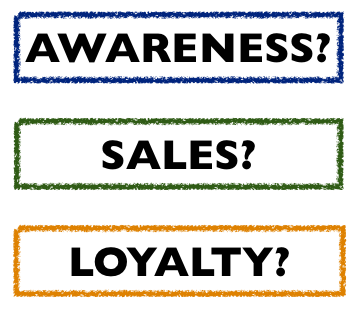
In their book, The Now Revolution, authors Jay Baer and Amber Naslund explain the importance of defining your theme. Since you've identified your audience, the next step is to ask yourself what you want them to do . What's your theme? It's usually one of three things:
- Awareness
- Sales
- Loyalty
Loyalty and awareness can both lead to sales, of course—but stick to just one overarching goal for your strategy. Consistency and simplicity are key here.
Go Deeper Than an Article Can Take You
Join thousands of small-business marketers at Social Media Marketing World — three days of AI, social media, and marketing strategy taught by world-class experts. April 1–3, 2027 in Anaheim.
Every session is pitch-free and built around tactics you can use yourself, no big team required. Your All-Access ticket includes an extra day of workshops, full access to AI Business World, and recordings of everything.
GET MY ALL-ACCESS TICKET — SAVE $790Now it's time to get really specific. This might be the hardest piece in the assessment process, and yet it's critical to your success. Ask yourself, what does my business actually do? What do my fans say when they're happy? What is at the core?
Talk it out with your team. Together you can hone in on what Jay Baer calls your “One Thing”—the heart and soul of your brand. Your “One Thing” will affect every content and posting decision you make.
To borrow Jay's examples, if Disney = magic and Apple = innovation, what do you equal?
Your “One Thing” is the voice of your strategy across every network.
Identify Metrics and Monitoring Opportunities
How will you measure your strategy's success? Depending on your theme, the metrics may change. For example:
- If your theme is awareness, you'll want to measure growth, engagement, brand awareness, sharability, likes and subscribes.
- If it's sales, look at click rates, social e-commerce sales and conversion rates.
- For loyalty, look at engagement, sentiment and influence (HINT: Klout and EdgeRank Checker are good sentiment-measuring tools).
It's useful to monitor some overall trends too, like mentions of key people at your company, your company name, brand names, product services, competitors and industry keywords.
And if you're new to data measurement, take baby steps. Start with a simple free tool like Google Alerts.
Put It All in Writing

Tired of Guessing Which AI Moves Matter?
New AI tools and strategies launch every week — and figuring out which ones matter takes hours you don't have.The AI Business Society filters the noise for you, with expert-led training you can put to work the same day — plus a community of marketers sharing what's actually working.
I'M READY FOR REAL AI RESULTSDon't wait for an emergency to nail down your communication policies. For example, what happens when there are negative comments? How should the company's social sites be used? Are there guidelines for what fans and followers can post to a company Facebook page?
Drill down on the answers in a written editorial guide tailored to your business, team and goals. A good guide will address:
- Who is your team? Who is responsible for what?
- What's the point? Identify why you're using social media, and what you want to track.
- Where? Identify the networks you want to focus on.
- When? Be as specific as possible; e.g., blog at 8 am, post it to Facebook at 10 am.
- How—identify team tools and platforms. Including examples is great, especially when it comes to formatting of content. Your guide should enable anyone new on the team to know what's going on.
Step #2: Implementation
Next up: execution. The implementation phase is all about zeroing in on the details and day-to-day tasks you and your team are now responsible for.
Create a Content Calendar
Now that you have an editorial guide, it's time to translate policy into concrete actions—preferably on an editorial calendar. The more information and detail you include, the better you can measure effectiveness. Consider:
- What is the theme or essence of your content?
- Who will create it?
- When and where will it be shared?
- How often will you create content versus share third-party content?
- How will you deliver content—as eBooks? Blogs? Video? All of the above?
Have a Step-by-Step Plan for Promotion and Growth
There are literally hundreds of ways to get your team promoting and sharing on the key social media sites you plan to use. Here are a few to get you started:
- Integrate social mediaon your website with plugins and icons.
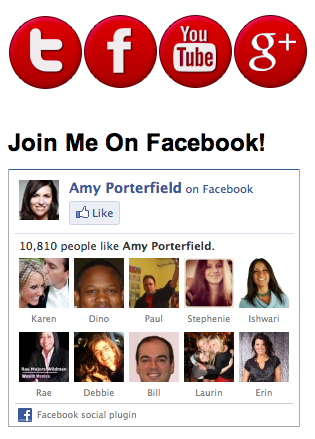
Visible social media icons and social plugins are some of the easiest ways to drive traffic to your social media networks. - Run contests and promotions or offer rewards.
- Showcase your expertise. Drive traffic (and build a reputation) by offering webinars and training programs, interviewing experts and guest blogging, to name a few.
- Promote your networks consistently. Add networks to letterhead, email signatures and business cards.
Identify Core Sales Campaigns
Yes, social media is about relationships first. But the fact is, once you've built solid, genuine relationships online, you're going to want to use your influence to grow your business. That doesn't mean shoving it down fans' throats or putting sales above the relationship. It simply means that you can and should promote what you offer to the people who believe in your mission.
Establish an action plan for the core campaigns you'll use to collect and nurture leads, like:
- Outline promotional policy—what is acceptable, and what is not allowed?
- Identify and implement opt-in opportunities—like a custom welcome tab on your Facebook page.
- Determine where to direct leads—for example, will you create an eCommerce platform on Facebook with a custom tab, or sell only on your site?
Step #3: Monitor, Measure and Get Momentum
After about two months of running your brand-new social media strategy, it's time to hunker down with your team, evaluate your progress and fine-tune the details.
Schedule an Evaluation Session
Don't put off analyzing your results. Schedule your first evaluation meeting when you start phase one. I recommend scheduling a meeting about two or three months out from your start date. That's just enough time to start seeing results and identifying weak spots.
Make sure you or your team members bring numbers and data to the table and are prepared to discuss them. Metrics, no matter how simplistic, will help you figure out what's working and what's not. Include time for brainstorming new ideas, too.
Take Advantage of the Momentum
If you're seeing traction with your strategy at this first evaluation milestone, consider mixing it up and adding some more advanced strategies into your plan. You have momentum building—run with it!
Here are ideas for some “next steps” to take:
- Facebook ads are a good, inexpensive way to grow your fan base, increase engagement and collect leads. Try mixing up different ad types and destinations.
- Run a multi-level contest integrating multiple channels (like Facebook, Twitter and YouTube). Use a promotion, event or reward that will resonate with your audience. Word-of-mouth is a powerful way to leverage momentum.
- Live Q&As on Facebook, Twitter or Google+ hangouts.
Ultimately, everyone's social media strategy will look different—and will get very different results. To be effective, know your business and the metrics that matter to you. A consultancy might need just 100 high-quality fans, whereas a company that sells a product might need several thousand to see financial results.
Now It's Your Turn
Does your business have a social media strategy in place? What tips do you have for someone putting a strategy together for the first time? Leave your questions and comments in the box below.

Where Do You Actually Stand With AI?
Most marketers use AI, but they don't know what's holding them back from real results.
Our 3-minute quiz pinpoints the one gap keeping you stuck — and gives you the exact next step to fix it.
GET MY RESULTS