by
by Do you feel like your AI-generated copy sounds robotic, generic, or just doesn't sound like you? Are you looking for a way to leverage tools like ChatGPT to increase your output without sacrificing the human element that drives sales?
In this article, you’ll discover a strategic five-step process to train AI to write high-converting copy that authentically represents your brand.
#1: Uncover Unique Audience Insights With AI
Great copy doesn't start with writing; it starts with understanding who you are writing for. To create high-converting assets, you must tap into your customers' specific pain points, fears, motivations, and desires.
When interviewing clients, you need to move past surface-level answers. Audrey Chia recommends asking specific questions to uncover their emotional state:
- “What keeps you awake?”
- “What are you actually most afraid of?”
- “What is stopping you from taking action?”
Instead of manually taking notes, you can use AI to streamline this research process. Use AI note-taking tools like Fireflies or Sybil during client calls to transcribe conversations automatically.
Once you have these transcripts, feed them back into an AI tool like ChatGPT. Ask the AI to act as an expert content strategist and extract the common insights and golden threads across your interviews.
Look for specific, emotional language rather than surface-level problems. These raw, emotional insights allow you to craft messaging that truly connects with your reader.
I’m going to give you several interview transcripts from real client conversations. Act as a senior content strategist and customer-insight analyst.

Your job is to extract the deep insights—not surface-level answers. Focus on patterns, emotional language, frustrations, desires, and motivators that show up across the interviews.

Please analyze the transcripts and deliver the following:

1. Core Emotional Insights

Pull out specific phrases clients use that reveal real emotions (fear, frustration, hope, urgency).

Highlight where they express confusion, overwhelm, or unmet needs.

2. Golden Threads (Recurring Themes Across Interviews)

Identify the themes that appear repeatedly, such as:
Consistent challenges
Shared goals
Common objections
Repeated desires
Language they keep using

These should represent the deep truth of their mindset.

3. Shift the Insights Into Messaging Angles

Based on what clients said, propose 5–10 high-impact messaging angles, such as:
What they really want
What they’re trying to avoid
What makes them feel unsafe
What makes them feel confident
How they define success

Each angle should include a short explanation and a sample headline or key message.

4. Extract Voice-of-Customer Language

Pull verbatim quotes that could be used in marketing copy.

Organize these into categories:
“Pain language”
“Desire language”
“Objection language"
“Outcome language"

5. Identify Missed Opportunities

Tell me what prospects wanted but didn’t say explicitly.

Point out gaps between what clients ask for and what they actually need.

6. Provide a Final Insight Summary

A concise synthesis of the most important takeaways that should shape the brand's messaging, offers, and content strategy.
This approach allows you to rapidly develop and test content at scale.
For example, a crowdfunding charity in Singapore used this method to launch its first advertising campaign. By using AI to develop messaging angles tied to clear audience insights, they were able to rapidly test different ad variations. The result? In less than three months, they increased their return on ad spend (ROAS) from $1 to $7.
#2: Conduct Comprehensive Competitive Research With AI
Your brand does not exist in a vacuum. To stand out, you need to know exactly what your competitors are saying and how they are identifying their unique value propositions.
Use AI tools with web-browsing capabilities, such as ChatGPT or Perplexity, to perform a deep dive on your market.
Prompting for Research:
- Be Specific: Don't just ask for “competitors.” Ask the AI to “pull out the top 5–10 competitors” in your specific niche.
- Define the Criteria: Ask for specific data points, such as their core value propositions, key benefits, and client case studies.
You are a market research analyst with access to web browsing. I want you to perform a deep dive into my market.

My niche: [Insert your niche — e.g., “AI-powered marketing tools for small business consultants,” “Pinterest ad agencies for course creators,” etc.]

Please research and present the top 5–10 competitors that currently operate in this niche.

For each competitor, provide the following specific data points:
1. Company Name & Website

2. Core Value Proposition
What promise are they making?
What unique angle or differentiator do they lead with?

3. Primary Services or Products

4. Key Benefits Highlighted in Their Marketing

5. Target Audience

6. Pricing (if publicly available)

7. Client Case Studies or Proof (testimonials, outcomes, notable clients)

8. Content & SEO Strategy
What types of content are they producing?
Are there recurring themes or signature formats?

9. Marketing Channels Used (e.g., LinkedIn, YouTube, ads, newsletters)

10. Strengths, Weaknesses, Opportunities (brief SWOT analysis)

After presenting the findings, please include:
A summary of patterns or trends across competitors
A list of potential positioning gaps or opportunities for differentiation
What a high-performing offer in this niche should include based on the research

Format the output in a clean table + bullet-point analysis.
This research helps you identify gaps in the market so you can position your offer distinctly from everyone else.
AI Is No Longer Optional for Marketers—Ready to Master It?

This April 29-30, join over a thousand forward-thinking marketers at AI Business World—a conference-in-a-conference at Social Media Marketing World.
Get two days of practical AI training where you'll discover:
✅ Systems that 3x your output—leaving time for strategy and creativity
✅ Proven strategies you can deploy right away—no guesswork, no wasted budget
Become the indispensable AI expert your company needs.
GET YOUR TICKETS—SAVE $150#3: Define Your Core Value Proposition With AI
Once you have your audience data and competitive research, you need to crystallize your offer into a clear value proposition. You need to determine if your product is a “vitamin” (nice to have) or a “painkiller” (solves a critical problem).
Ready to Supercharge Your Marketing Strategy?

Get expert training and an unbeatable conference experience when you attend Social Media Marketing World this April 28-30—from your friends at Social Media Examiner.
Broaden your reach, skyrocket your engagement, and grow your sales. Become the marketing hero your company or clients need!
🔥 Save $500 on an All-Access ticket. Sale Ends Tuesday! 🔥
GET THE DETAILSYou can use a simple formula to define this: I help [Target Audience] solve [Problem] through [Solution].
If you struggle to articulate this, ask AI for help. Feed it the audience insights and competitor research you gathered in the previous steps and ask it to generate positioning statements using the specific format above.
#4: Train AI to Master Your Brand Voice
One of the biggest complaints about AI copy is that it sounds generic or vanilla. This often happens because users rely on abstract adjectives like “witty” or “professional” in their prompts, which AI struggles to interpret accurately.
To get copy that sounds like you, think of AI as an intern. If you just tell an intern to “be funny,” they might fail. But if you give them examples of your best work, they can mimic your style effectively.
Use few-shot prompting to show AI what has worked for you in the past.
How to Execute Few-Shot Prompting:
- Select Examples: Choose 3–5 pieces of your best-performing content. Crucially, these examples must match the format you are creating (e.g., if you are writing LinkedIn posts, feed it only LinkedIn post examples).
- Analyze: Ask the AI to analyze the tone, sentence structure, and specific quirks of those examples.
- Generate: Instruct the AI to write new content that replicates that specific voice and style.
You can also stipulate keywords to guide the tone, such as “warm and personal” or “corporate,” and provide a list of banned words (like “delve” or “revolutionize”) to keep the output clean and on-brand.
#5: Dictate the AI’s Output Structure
Finally, never ask AI to simply “write a landing page” or “write an ad” without defining the structure. If you leave the format open to interpretation, you will likely get a generic result that lacks conversion elements.
You must act as the creative director and tell the AI exactly what sections to include.
- Define the Architecture: Specify that you want a Hero section, followed by a Problem/Agitation section, Social Proof, and a Call to Action.
- Model Success: If you have a structure that has worked well in the past, feed that structure to the AI and ask it to fill in the new content based on your research and value proposition.
Then, guide the AI through these specific steps—Audience, Competitors, Value Prop, Voice, and Structure—to move from generating robotic text to building high-converting copy.
How to Create a Repeatable AI Copywriting Workflow With Projects and CustomGPT Stacking
To make this process repeatable, you can use features like ChatGPT Projects or Claude Projects.
Think of a Project as a dedicated folder or knowledge base for a specific client or objective. You can upload all your research files—transcripts, competitor analysis, and voice examples—into this folder once.
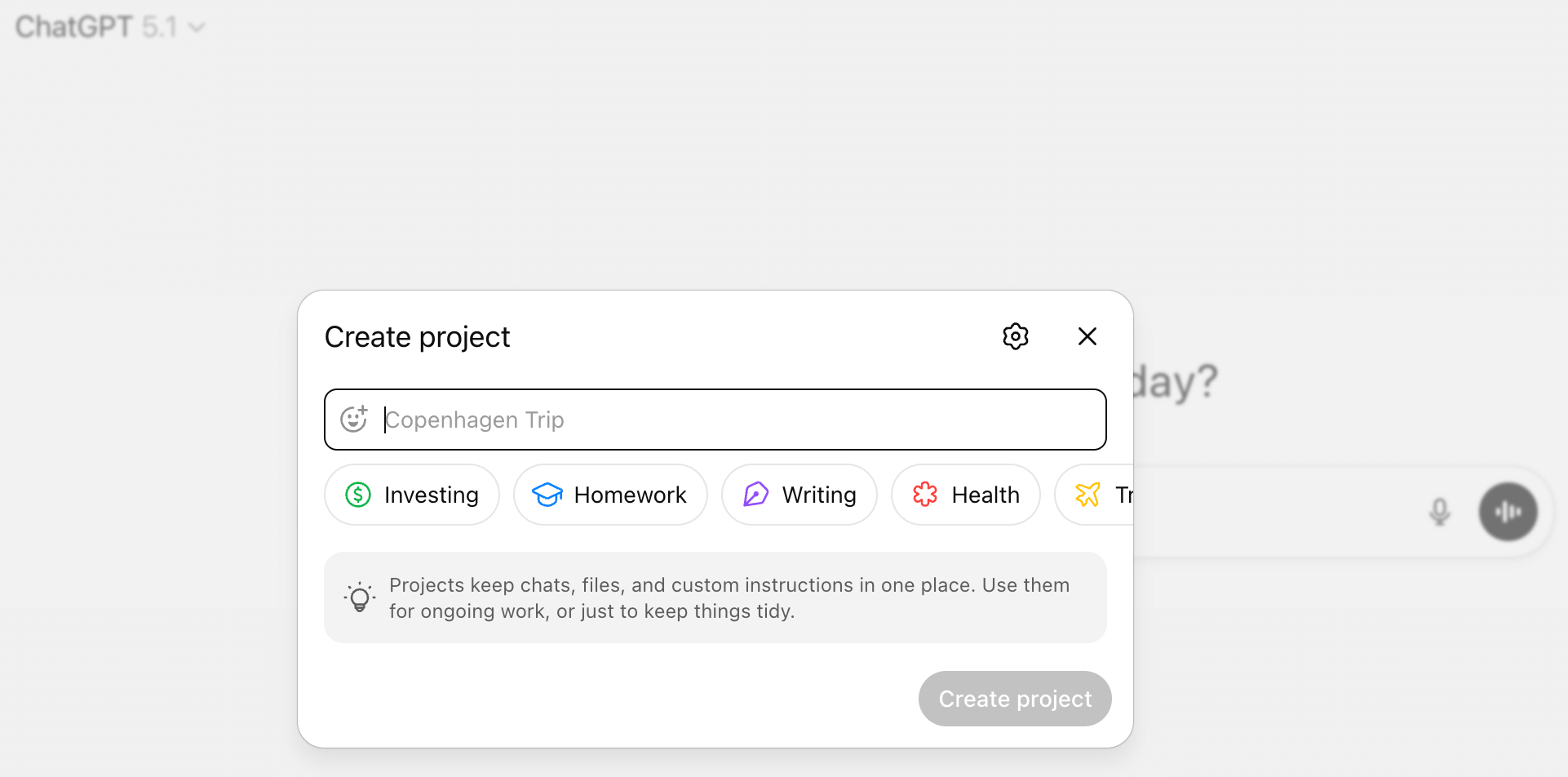
You can call specific Custom GPTs into the project, allowing each specific custom GPT to access your broad strategic context, ensuring every piece of content remains aligned with your core messaging.
To bring a Custom GPT into your Project, simply type the “@” symbol in the chat window followed by the name of your GPT, and it will pop up. This lets you stack multiple tools (e.g., Facebook Ad GPT, Google Ad GPT) in the same strategic environment.
For example, you can call your “LinkedIn Writing GPT” inside a project folder that already contains your strategy documents.
This allows the specific custom GPT to access your broad strategic context, ensuring every piece of content remains aligned with your core messaging.
Audrey Chia is an AI strategist and conversion copywriter who helps startup founders and entrepreneurs build brands to convert. She hosts The AI Marketers Playbook podcast. Follow her on LinkedIn.
Other Notes From This Episode
- Connect with Michael Stelzner @Stelzner on Facebook and @Mike_Stelzner on X.
- Watch this interview and other exclusive content from Social Media Examiner on YouTube.
Listen to the Podcast Now
This article is sourced from the AI Explored podcast. Listen or subscribe below.
Where to subscribe: Apple Podcasts | Spotify | YouTube Music | YouTube | Amazon Music | RSS
✋🏽 If you enjoyed this episode of the AI Explored podcast, please head over to Apple Podcasts, leave a rating, write a review, and subscribe.
Stay Up-to-Date: Get New Marketing Articles Delivered to You!
Don't miss out on upcoming social media marketing insights and strategies! Sign up to receive notifications when we publish new articles on Social Media Examiner. Our expertly crafted content will help you stay ahead of the curve and drive results for your business. Click the link below to sign up now and receive our annual report!

Want to Unlock AI Marketing Breakthroughs?
If you’re like most of us, you are trying to figure out how to use AI in your marketing. Here's the solution: The AI Business Society—from your friends at Social Media Examiner.The AI Business Society is the place to discover how to apply AI in your work. When you join, you'll boost your productivity, unlock your creativity, and make connections with other marketers on a similar journey.
I'M READY TO BECOME AN AI-POWERED MARKETER