by
by Have you ever wondered why some AI-generated outputs feel incomplete, even when you're using the most recommended tools? Or found yourself relying heavily on ChatGPT, only to suspect there's more potential waiting just beyond your current workflow?
The solution isn’t adding more tools at random, but using them with intent.
This article introduces a strategic, multi-model approach to using AI—one that leverages the distinct strengths of platforms like ChatGPT, Gemini, Claude, Perplexity, and NotebookLM. Instead of treating all tools as interchangeable, you'll learn how to build workflows that tap into what each model does best, from multimodal analysis to linguistic nuance and real-time research.
We’ll walk through how to evaluate, test, and sequence different AI tools for recurring tasks like content creation, data analysis, and strategic planning. You'll also learn how to avoid common pitfalls, maximize each platform’s unique advantages, and create repeatable systems that scale.

Why Moving Beyond ChatGPT Matters for Modern Marketers
Most marketers begin their AI journey with ChatGPT.
However, Grace Leung, a digital growth consultant who helps marketers grow organically with AI strategies, says limiting yourself to a single AI tool means missing significant opportunities for enhanced performance and capabilities.
Different AI models possess fundamentally different capabilities because they were trained differently from the ground up. ChatGPT, for instance, is primarily a text-based model, while Gemini has been trained multimodally since its inception. This multi-model training allows Gemini to simultaneously handle text, images, audio, and video inputs without limitations or integration challenges.
Claude brings its own advantages to the table, having been trained with a particular focus on linguistic sophistication and human-centered ethical considerations.
Different models excel at different tasks, and understanding these strengths prevents you from missing opportunities where a particular AI model might be better suited for your specific needs. Rather than relying solely on benchmarks or general recommendations, you need hands-on experience to determine which tools work best for your recurring tasks.
#1: How to Establish Your Strategic Framework for Building Multi-Tool AI Workflows
You need a structured approach to testing and implementing multiple AI platforms. This framework ensures you make informed decisions rather than random experiments.
How to Establish Your AI Tool Testing Framework
The foundation of practical multi-tool AI usage begins with identifying your most frequent, recurring tasks. Rather than trying to test every possible use case simultaneously, focus on the work you do most often. Whether your primary needs involve strategy development, content creation, data analysis, or research, start with these core activities.
Once you've identified your key use cases, design a standardized prompt that you can test across different models simultaneously. This approach provides the most objective comparison of each model's capabilities because you control the input variable while measuring different outputs.
During your testing phase, evaluate several critical factors for each model:
- Speed represents how quickly each tool responds to your queries, which becomes crucial when you're working under tight deadlines or processing large amounts of information.
- Accuracy involves checking for any bias or inaccurate information in the responses, particularly when dealing with factual content or industry-specific knowledge.
- The tone and presentation style of each model's output also vary significantly and should be considered.
How to Test AI Tools for Bias and Accuracy
A practical method for evaluating model reliability involves asking factual questions about topics you know well. This technique allows you to spot potential biases or knowledge gaps across different platforms.
Ready to Supercharge Your Marketing Strategy?
Get expert training and an unbeatable conference experience when you attend Social Media Marketing World—from your friends at Social Media Examiner.
Broaden your reach, skyrocket your engagement, and grow your sales. Become the marketing hero your company or clients need!
🔥 Save $540 on an All-Access ticket. Sale Ends Friday! 🔥
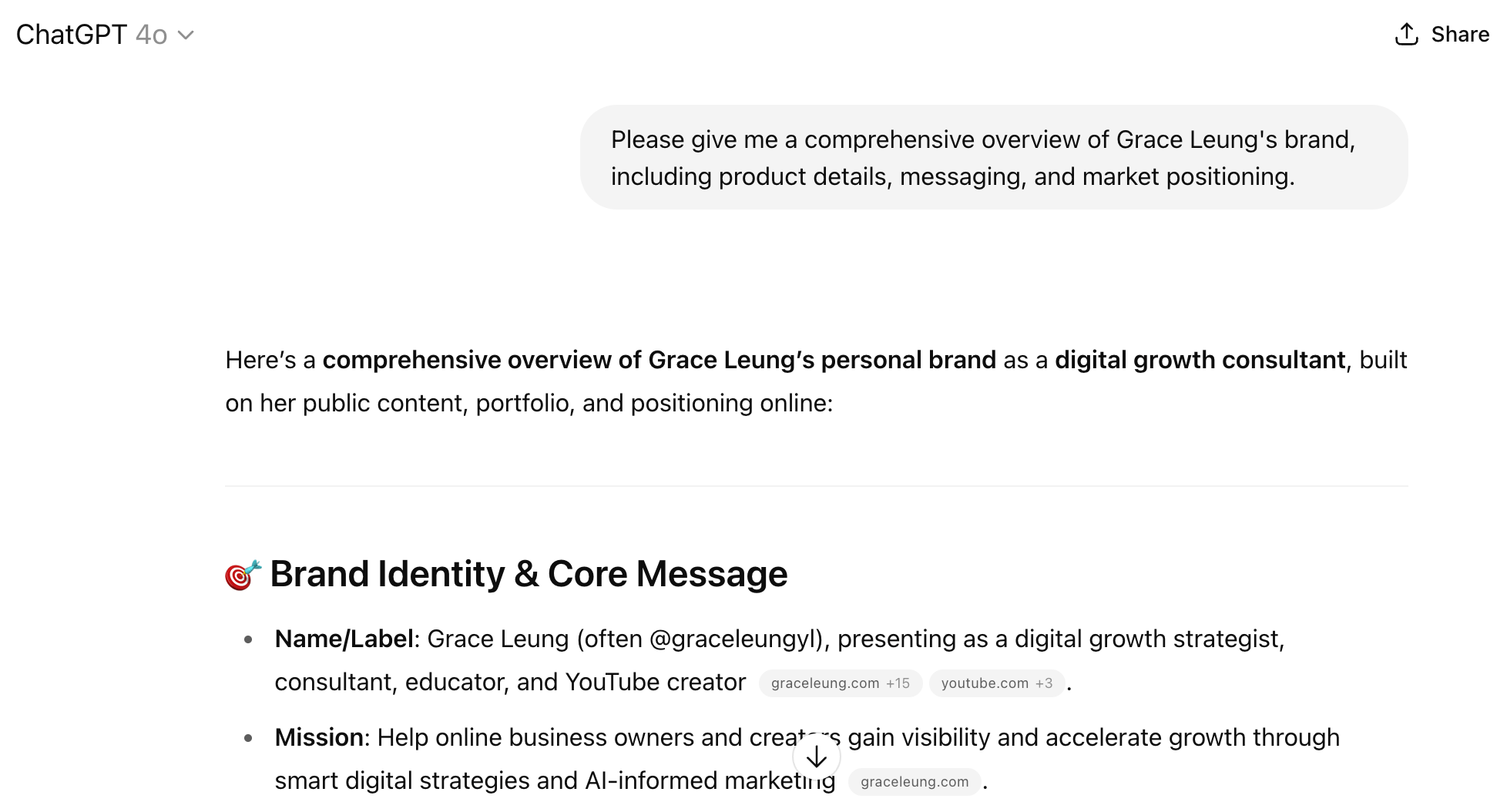
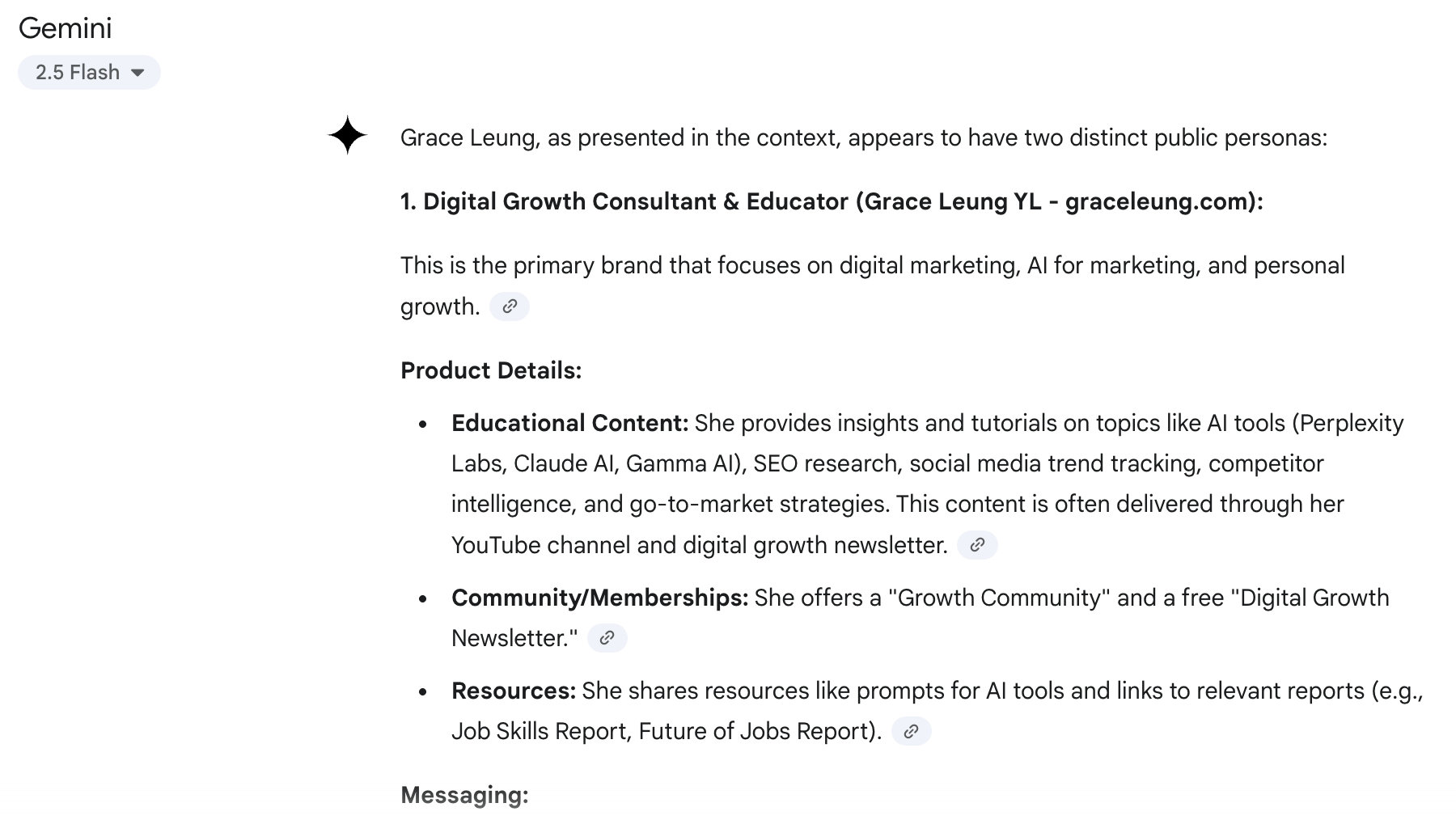
GET THE DETAILSFor example, if you work for a specific company or in a particular industry, ask each AI tool to provide a comprehensive overview of your brand, including product details, messaging, and market positioning. Compare these responses to identify which model provides the most accurate and complete information. This comparison reveals not only factual accuracy but also how each model approaches research and synthesis of information.
You can also examine each model's reasoning process by studying its chain-of-thought thinking. Different models break down complex tasks into steps differently, and observing these approaches helps you understand which reasoning style aligns best with your thinking process and desired outcomes.
How to Map Your Workflow to Multiple AI Tools
After testing reveals each model's strengths, map each part of your systematic workflow to the tool that strategically leverages these capabilities. This might mean using Perplexity for initial research, Gemini for data-heavy analysis, and Claude for refined strategic thinking and presentation.
The goal is to develop a clear understanding of which tool serves each part of your process most effectively and then build repeatable workflows around these insights. As your comfort level increases with each platform, you can combine tools to amplify their individual strengths.
#2: How to Analyze Large Data Sets with Gemini and Claude
One of the most powerful applications of multi-tool AI workflows for marketers involves processing and analyzing substantial amounts of information that would be overwhelming to handle manually. This approach transforms unstructured data into actionable insights through strategic tool sequencing.
Large data sets in marketing contexts encompass various types of information that consume significant computational resources. These might include comprehensive reports spanning hundreds of pages, extensive collections of customer reviews, social media comments from multiple platforms, forum discussions, or business profile reviews across different locations.
To put this in perspective, Gemini can process approximately two million tokens, which translates to roughly one and a half million words. This massive capacity allows you to input substantial amounts of raw information for initial processing and analysis.
The power of AI in this context lies in its ability to identify patterns within unstructured data and transform that information into structured, actionable formats. Instead of manually reading through hundreds of customer comments or reviews, AI can systematically analyze these data sets and extract meaningful themes, sentiments, and insights.
The most effective approach for large data analysis involves a two-stage process that leverages each tool's specific strengths. Gemini serves as your initial processing powerhouse, while Claude provides refined analysis and strategic interpretation.
Stage One: Initial Processing with Gemini
Begin by uploading your large data set to Gemini 2.5 Pro, which is designed for data-heavy analysis tasks. While Gemini 2.5 Flash works well for quick responses and lightweight content generation, the Pro version delivers superior performance for thorough analysis requiring computational depth.
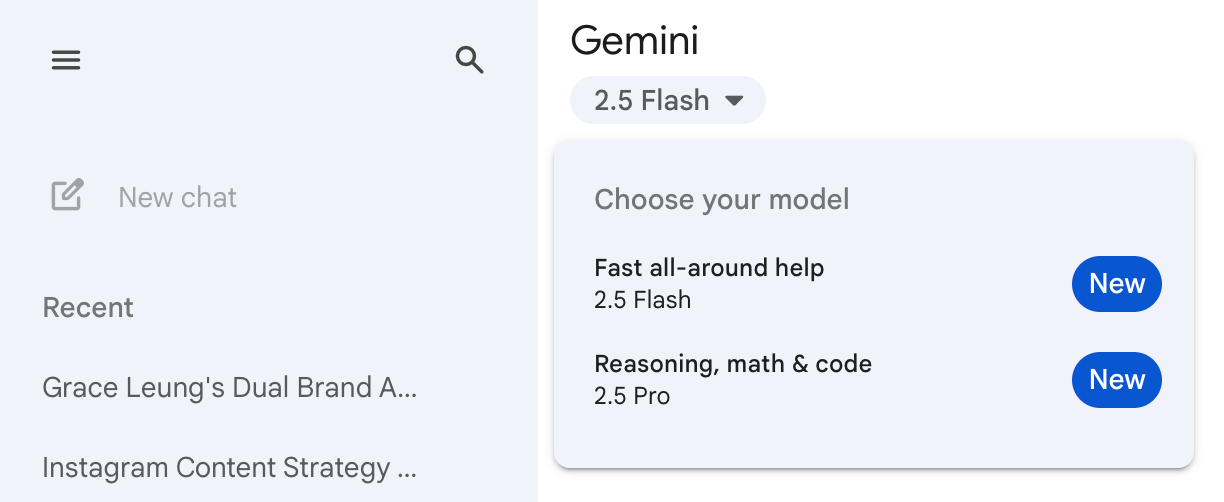
When working with Gemini for data analysis, request a comprehensive data summary rather than jumping directly to insights or recommendations. This summary should identify patterns, frequently used words or phrases, and a statistical overview of the information. Ask Gemini to perform statistical summary analysis as the foundation for deeper interpretation.
A practical example involves audience research for marketing campaigns. You might compile customer reviews, social media comments, and forum discussions about your product category, then upload this collection to Gemini with a request to identify common themes, pain points, and language patterns used by your target audience.
Stage Two: Strategic Analysis with Claude
After Gemini completes its initial analysis, take that output to Claude for refined strategic interpretation. Claude excels at storytelling, attention to detail, and presenting information in compelling, actionable formats.
When transitioning from Gemini to Claude, include context in your Gemini prompt explaining that the output will be passed to another AI for deeper analysis. This instruction helps Gemini structure its response in a way that facilitates the handoff to Claude.
I'm preparing this content to be passed to another AI system (Claude) for a deeper strategic analysis.

Please give me a clear, structured summary of the following information with labeled sections.

Be concise and avoid speculation. Claude will use your summary to identify opportunities and build out a strategic roadmap.

Here's the source material:
[Paste transcript, user notes, article draft, or other data here]
Claude's strength lies in transforming data summaries into strategic recommendations. Using the audience research example, you might ask Claude to generate a dashboard based on Gemini's analysis, develop two to three detailed persona profiles, identify specific pain points and motivations, and recommend messaging strategies that resonate with these target personas.
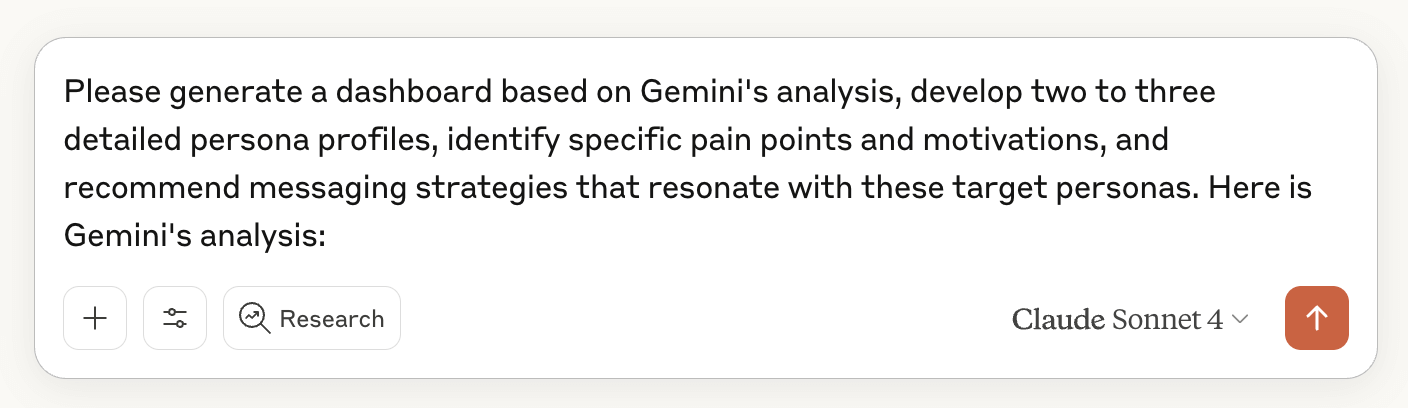
The workflow might progress from data analysis to persona development to messaging recommendations, with Claude building upon Gemini's foundational analysis to create comprehensive strategic guidance. For instance, if you're launching a new SaaS email marketing product, Claude can use the analyzed data to recommend specific messaging approaches that address the most significant pain points identified in your research.
Pro Tip: Leveraging Claude's Artifacts Feature
Claude's Artifacts feature provides additional value for data analysis projects by creating interactive, formatted presentations of your insights. When you request dashboards, strategy documents, or analytical reports, Claude can generate these in Artifact format, which presents information in a polished, professional layout that resembles a formatted document.
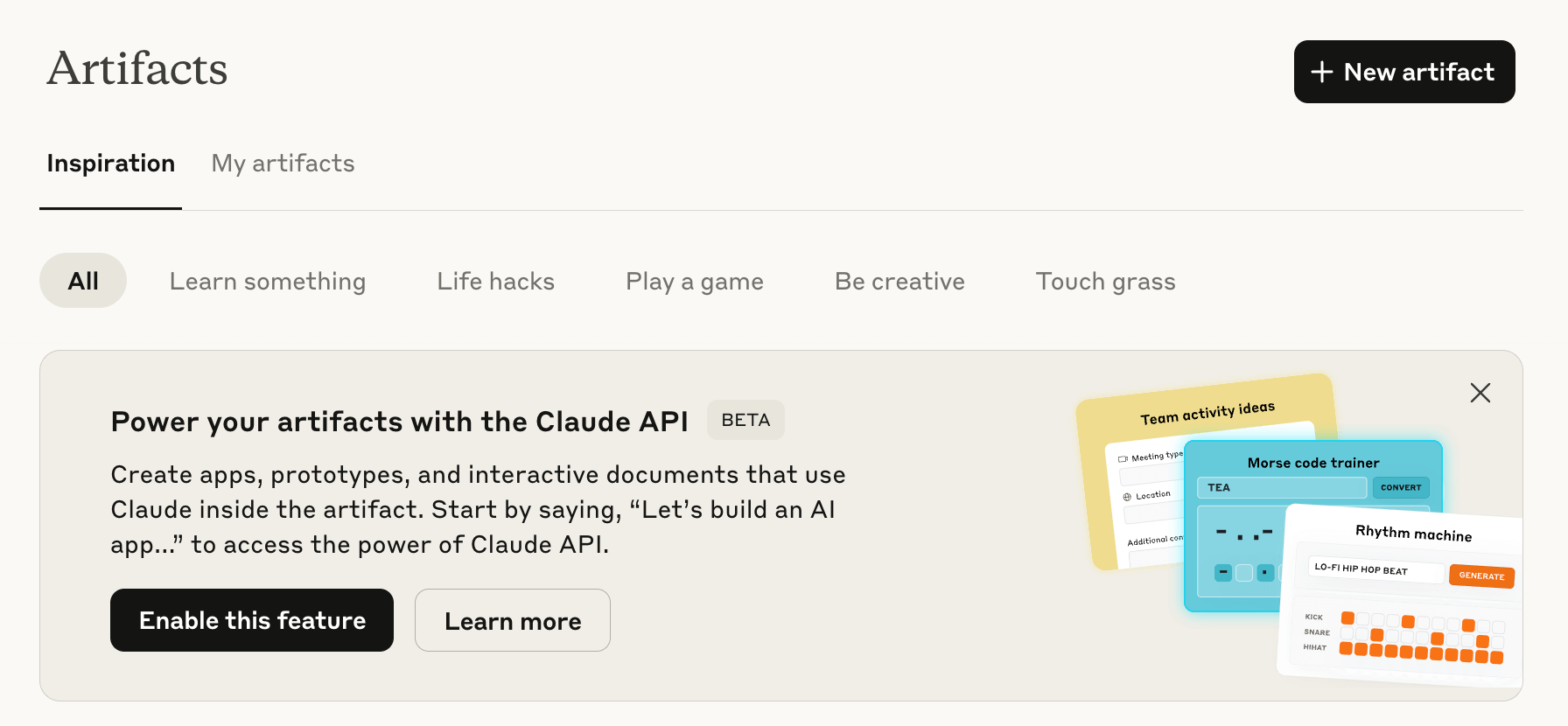
This capability proves particularly valuable when you need to share insights with team members or stakeholders, as the Artifact format makes complex information more digestible and actionable. You can easily copy and paste the formatted content while maintaining its professional appearance.
AI Is No Longer Optional for Marketers—Ready to Master It?

Join over a thousand forward-thinking marketers at AI Business World—a conference-in-a-conference at Social Media Marketing World.
Get two days of practical AI training where you'll discover:
✅ Systems that 3x your output—leaving time for strategy and creativity
✅ Proven strategies you can deploy right away—no guesswork, no wasted budget
Become the indispensable AI expert your company needs.
GET YOUR TICKETS—SAVE $200#3: How to Perform Research with Multiple AI Tools
Research represents another area where strategic tool combination delivers results that exceed what any single platform can provide. By understanding each tool's research strengths and designing workflows that leverage these capabilities, you can gather more comprehensive information and generate deeper insights.
How to Do Quick Research with Perplexity
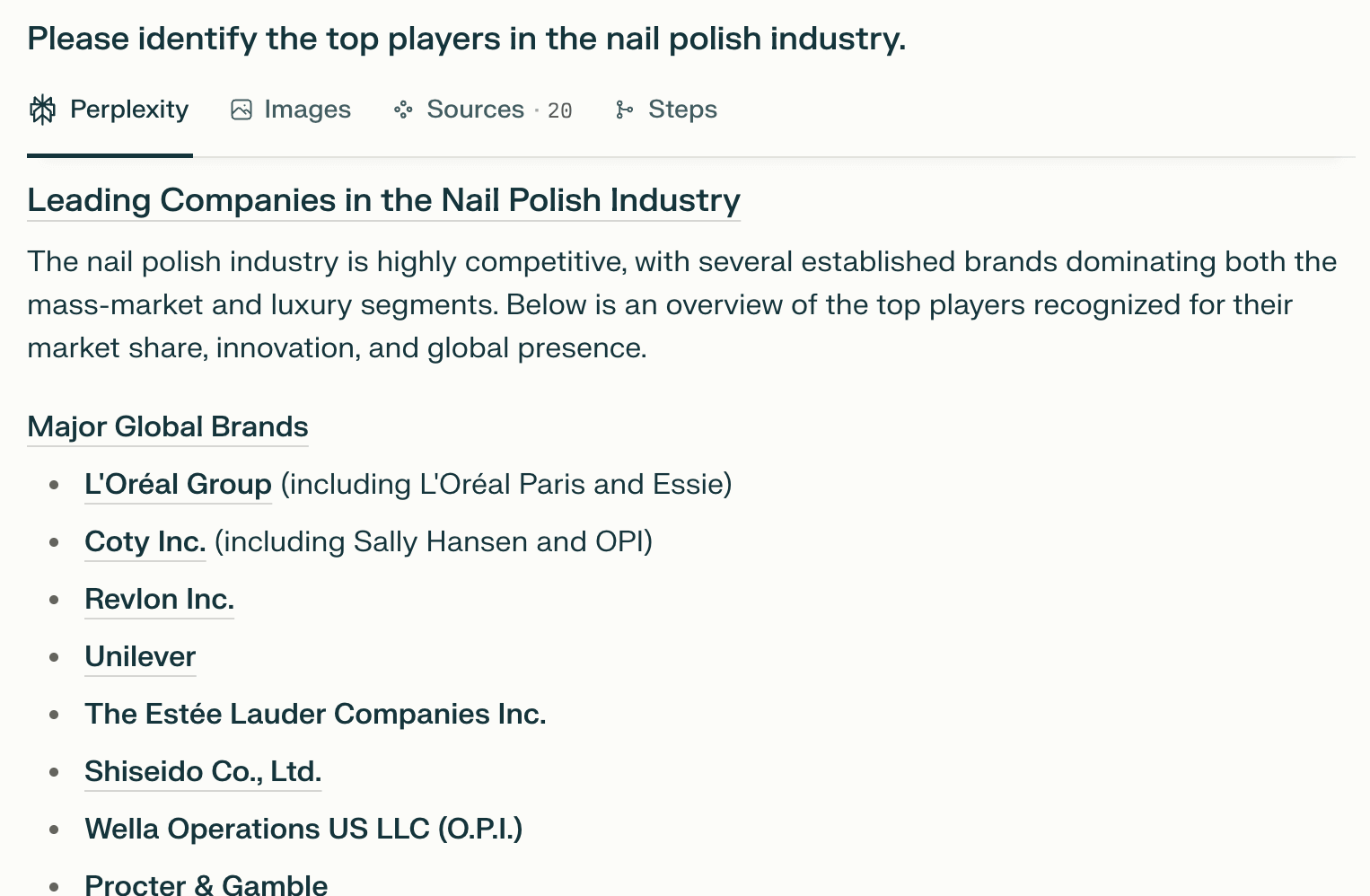
Perplexity excels at rapid information gathering and provides an excellent starting point for research projects. Unlike traditional AI models that rely solely on their training data, Perplexity searches the internet in real time and provides cited sources for its responses.
For everyday research needs, Perplexity offers several advantages over ChatGPT. It provides current information by searching recent sources, includes citations so you can verify information and explore sources independently, and offers good source variety rather than being limited to its training data cutoff.
A practical example involves competitive research for go-to-market planning. You might ask Perplexity to identify the top players in your industry or product category, requesting detailed information about each competitor. Perplexity will provide this information along with source citations, giving you both the answers and the ability to verify or expand upon the information.
The paid version of Perplexity, available for twenty dollars per month, provides significant advantages over the free version. Paid users receive unlimited quick searches, unlimited deep research capabilities, and access to Perplexity Labs with fifty searches per month. The free version limits users to approximately five to ten searches per day, which can quickly become restrictive for serious research work.
How to Do Deep Research with Gemini
For comprehensive research projects requiring extensive source gathering and analysis, Gemini's deep research capabilities provide unmatched thoroughness. Gemini consistently identifies far more sources than other platforms, sometimes discovering several hundred websites relevant to your research query.
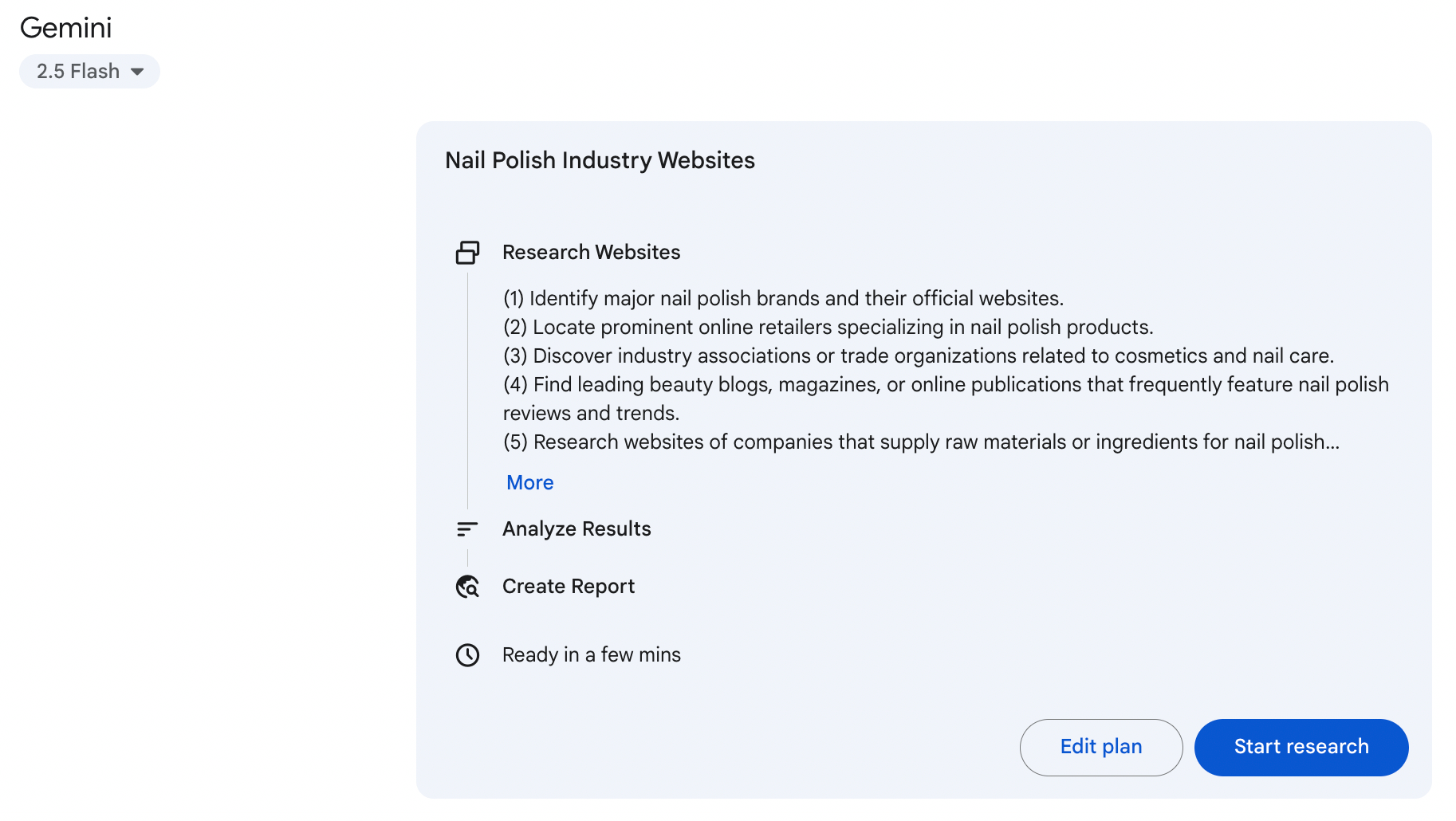
Google's fundamental strength in search and database access translates directly to Gemini's research capabilities. Beyond traditional websites, Gemini can access YouTube content and other Google-owned properties, providing a more comprehensive research base than platforms with more limited access.
When comparing deep research across platforms, Gemini typically generates substantially larger research documents than ChatGPT's deep research feature. While ChatGPT might provide more precise, concise answers, Gemini offers exhaustive coverage that can overwhelm newcomers but provides tremendous value for comprehensive research projects.
Gemini also offers more generous usage limits for deep research than ChatGPT's Plus plan, though Google doesn't officially specify the exact monthly research limits. This flexibility allows for more extensive research without constantly monitoring usage quotas.
How to Do Internal Research with NotebookLM and Perplexity
NotebookLM serves a unique role in research workflows by focusing exclusively on sources you provide, minimizing hallucination while maximizing relevance to your needs. As a Google product powered by Gemini, NotebookLM can handle up to three hundred sources in the Plus version and offers a substantial context window for comprehensive analysis.
The key advantage of NotebookLM lies in its commitment to source-based responses. Rather than drawing from general knowledge, NotebookLM only provides answers based on the documents and sources you upload, ensuring that insights remain grounded in your specific research materials.
After using Perplexity to identify relevant sources and competitors in your field, you can export the research results and their citations to a markdown file or Google Doc format.
NotebookLM's recent bulk upload feature streamlines this process significantly. You can ask Perplexity to export a list of sources, then paste these URLs directly into NotebookLM for bulk import. This integration allows you to quickly move from broad source discovery to focused analysis of the most relevant materials.
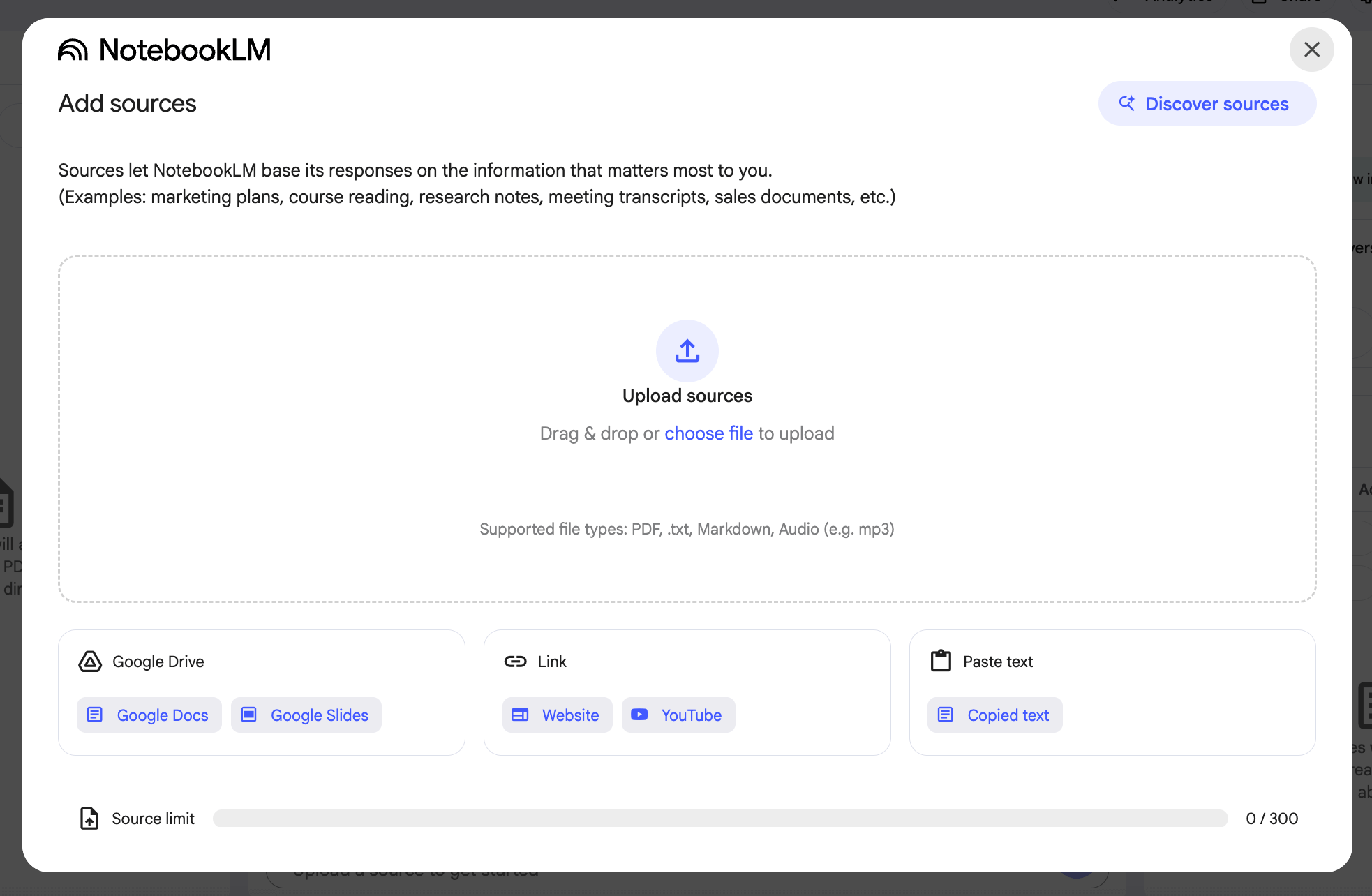
Once you've imported sources into NotebookLM, you can ask sophisticated questions about content gaps, messaging strategies, and competitive positioning. For example, if you're developing a new platform or product, you might tell NotebookLM to analyze messaging approaches across all imported competitor sources and recommend differentiation strategies.
How to Use NotebookLM for SEO Research
NotebookLM provides unexpected value for search engine optimization through its source discovery feature and connection to Google's ranking algorithms. When you ask NotebookLM to discover sources related to a specific topic, it leverages Google's understanding of website quality and authority to identify the most relevant results.
This capability allows you to reverse-engineer Google's perspective on high-quality content in your field. By analyzing which sources NotebookLM selects for a particular query, you gain insights into the types of websites and content that Google considers authoritative for that topic.
For content planning, you can import these Google-approved sources into NotebookLM and ask for a comprehensive analysis of the topics and subtopics they cover. This approach helps ensure your content addresses the full range of user search intent rather than focusing narrowly on specific keywords.
The insight extends beyond simple keyword matching to understanding the complete user journey and the questions users might have about your topic. Covering these comprehensive topic areas makes your content more likely to rank well because it addresses the breadth of user needs that Google seeks to satisfy.
This reverse-engineering approach provides a strategic advantage in content creation by ensuring your material aligns with Google's understanding of quality and comprehensiveness in your subject area. Rather than guessing at what topics to cover, you can base your content strategy on the same sources and topics that Google already considers authoritative and relevant.
#4: Implementation Tips for Multi-Tool AI Workflows
Successfully implementing multi-tool AI workflows requires understanding not just what each tool does well, but how to structure your processes for sustainable, repeatable success. The key lies in developing systematic approaches that you can refine and scale over time.
Choosing the Right Model Versions
When working with Gemini, the choice between Flash and Pro versions significantly impacts your results. Gemini 2.5 Pro delivers superior performance for data-heavy analysis, complex research projects, and tasks requiring thorough computational processing. The Flash version serves well for quick responses, lightweight content generation, and situations where speed matters more than depth.
For Claude users, Sonnet provides an excellent balance of capability and efficiency for most marketing and business applications. While Opus offers enhanced capabilities for complex coding and website development projects, it consumes usage credits much more rapidly. For the analytical and strategic work discussed in this article, Sonnet typically provides sufficient power while preserving your usage allocation for more tasks.
Managing Usage Limits and Costs
Different platforms handle usage limits differently, requiring strategic planning to maximize value. Perplexity's paid version at twenty dollars monthly provides unlimited quick searches and deep research, making it excellent for extensive research projects. The platform also includes fifty Perplexity Labs searches monthly for more advanced research and building tasks.
Claude's usage limits vary by subscription level, making it important to use Gemini for initial processing and data-heavy work before moving to Claude for refinement and strategic analysis. This approach preserves your Claude usage for high-value activities where its linguistic sophistication provides the greatest benefit.
Understanding these constraints helps you design workflows that maximize each platform's value while staying within practical usage boundaries. By using each tool for its optimal purpose rather than trying to force one tool to handle every task, you achieve better results while managing costs effectively.
File Upload and Data Integration
For maximum effectiveness when analyzing video and audio content, upload files directly to Gemini rather than providing links. This approach ensures complete context preservation and more comprehensive analysis. Gemini can detect subtle elements like pacing, pauses, video structure, and even visual nuances like smiling throughout videos.
Google AI Studio offers native features for importing YouTube videos directly, which can be particularly useful for competitive analysis or content research. However, success with this feature may vary depending on which model version you select within AI Studio, so experimentation may be necessary to find the most reliable approach.
When working with large data sets, organize your information before uploading to ensure optimal processing. Clean data produces better insights, so taking time to structure your input materials pays dividends in the quality of analysis you receive.
Developing Repeatable Workflows
The ultimate goal of multi-tool AI implementation is to create repeatable processes that consistently deliver superior results. Start with your most frequent use cases and gradually expand your multi-tool workflows as you become more comfortable with each platform's capabilities.
Document your successful workflows, including which prompts work best with each tool and how you prefer to sequence different platforms for various projects. This documentation becomes increasingly valuable as you scale your AI usage and potentially share these approaches with team members.
Grace Leung is a digital growth consultant who helps marketers grow organically with AI strategies. Her community and newsletter are for marketers and entrepreneurs who want to grow their businesses strategically with AI. Follow her on Instagram, LinkedIn, YouTube, and X.
Other Notes From This Episode
- Connect with Michael Stelzner @Stelzner on Facebook and @Mike_Stelzner on X.
- Watch this interview and other exclusive content from Social Media Examiner on YouTube.
Listen to the Podcast Now
This article is sourced from the AI Explored podcast. Listen or subscribe below.
Where to subscribe: Apple Podcasts | Spotify | YouTube Music | YouTube | Amazon Music | RSS
✋🏽 If you enjoyed this episode of the AI Explored podcast, please head over to Apple Podcasts, leave a rating, write a review, and subscribe.
Stay Up-to-Date: Get New Marketing Articles Delivered to You!
Don't miss out on upcoming social media marketing insights and strategies! Sign up to receive notifications when we publish new articles on Social Media Examiner. Our expertly crafted content will help you stay ahead of the curve and drive results for your business. Click the link below to sign up now and receive our annual report!

Want to Unlock AI Marketing Breakthroughs?
If you’re like most of us, you are trying to figure out how to use AI in your marketing. Here's the solution: The AI Business Society—from your friends at Social Media Examiner.The AI Business Society is the place to discover how to apply AI in your work. When you join, you'll boost your productivity, unlock your creativity, and make connections with other marketers on a similar journey.
I'M READY TO BECOME AN AI-POWERED MARKETER