by
by Are you struggling with the twenty-one touches necessary to convert a prospect into a customer? Wondering how to nurture your database of cold leads without overwhelming your sales team?
In this article, you'll discover how to build an AI agent that automatically texts or emails old prospects and turns them into qualified prospects ready for sales calls.
What Can AI Agent Lead Nurturing Do for Marketers?
Most small to medium-sized businesses face the same challenge when it comes to lead nurturing. They generate leads through Facebook advertising, content marketing, or lead magnets, but only ten to fifteen percent of those leads receive active engagement. The rest disappear into databases, forgotten and categorized as the cost of doing business.
That’s a massive untapped opportunity marketers and entrepreneurs are leaving money on the table simply because they lack the resources to maintain consistent contact with prospects over time, explains Noelle Russell, AI business strategist and founder of the AI Leadership Institute.
Building a custom AI agent or bot allows you automate the twenty one touches that are necessary for customer before they’re ready to talk to a marketer or sales person.
These systems never sleep, never take breaks, and consistently execute exactly what you program them to do. They can engage prospects at any hour, in any language, responding instantly when someone shows interest, regardless of time zones or business hours.
For marketing professionals working with limited resources, AI agents represent a force multiplier that allows you to focus on higher-value activities like closing deals rather than managing initial prospect conversations.
This technology democratizes sophisticated lead nurturing capabilities that were previously available only to large corporations with extensive sales teams.
How Russell's Lead Generation Agent Works
Russell's example, Ali, demonstrates how AI agents can transform dormant prospect databases into active sales opportunities through automated yet personalized engagement.
Ali operates as a multichannel AI agent designed to reactivate cold leads who previously downloaded content from Russell's AI Leadership Institute but never converted to customers. The system connects to her CRM, enabling dynamic SMS messaging to prospect lists while maintaining conversation context across multiple touchpoints.
The process begins with Ali sending automated SMS messages to prospects who downloaded PDFs or other lead magnets months earlier. This initial outreach isn't AI-generated; it's a standardized template message sent to all prospects: “Hey, my name is Ali from AI Leadership Institute. We noticed you downloaded one of our PDFs a few months ago. Are you still interested in AI boot camps?”
Russell reports that thirty percent of recipients respond to this initial message because they originally expressed interest in AI training by downloading the content.
The moment any prospect responds to the initial message, regardless of their answer, the AI agent activates and takes over the conversation. The system processes their response through the large language model and generates contextual, personalized replies.
For prospects who respond positively, Ali continues with conversational engagement designed to build rapport while qualifying their needs. The AI might respond: “Great to hear. I just wanted to make sure because I was going to call you, but I don't want to barge in on your life. Are you still looking for this solution?”
Ready to Supercharge Your Marketing Strategy?
Get expert training and an unbeatable conference experience when you attend Social Media Marketing World—from your friends at Social Media Examiner.
Broaden your reach, skyrocket your engagement, and grow your sales. Become the marketing hero your company or clients need!
🔥 Save $550 on an All-Access ticket. Sale Ends Tuesday! 🔥
GET THE DETAILSDepending on the answer, Ali uses two predetermined qualifying questions to guide prospects from initial interest to sales call booking. These questions serve as conversation waypoints that help the AI determine prospect readiness and fit.
- The first question focuses on current AI usage: “Have you already started using AI in your business?” Most prospects answer yes, even if their usage is minimal, which creates common ground and confirms their interest in the topic.
- The second question identifies training gaps: “How have you trained your team ot use AI?” This question typically reveals that prospects haven't implemented formal AI training programs, creating a natural opportunity for Ali to suggest consulting services.
When prospects express genuine interest in moving forward, Ali provides direct links to Russell's sales calendar. The calendar integration connects to her CRM system, which automatically triggers follow-up sequences to ensure prospects attend their scheduled calls.
This creates a completely automated pipeline from cold prospect identification through qualified sales call booking, requiring no manual intervention until Russell conducts the actual sales conversations.
How to Build an AI Agent Bot for Lead Nurture With Chat Bot Builder
Before building anything, you must define how you'll measure success.
For lead nurturing, the primary success metric is scheduling sales calls. As Russell explains: “Success is getting on a sales calendar, right? Getting a lead that was cold in a database that nobody's talking to, getting them to make a call, or schedule a call.”
This means you need to establish baseline conversion rates from your current lead database. If you have three hundred leads and your AI agent converts them into forty, ninety, or one hundred twenty sales calls, you can measure the system's effectiveness and return on investment.
#1: Choose Your Agentic Platform
Building an AI agent for lead nurturing begins with selecting the right technological foundation and clearly defining what success looks like.
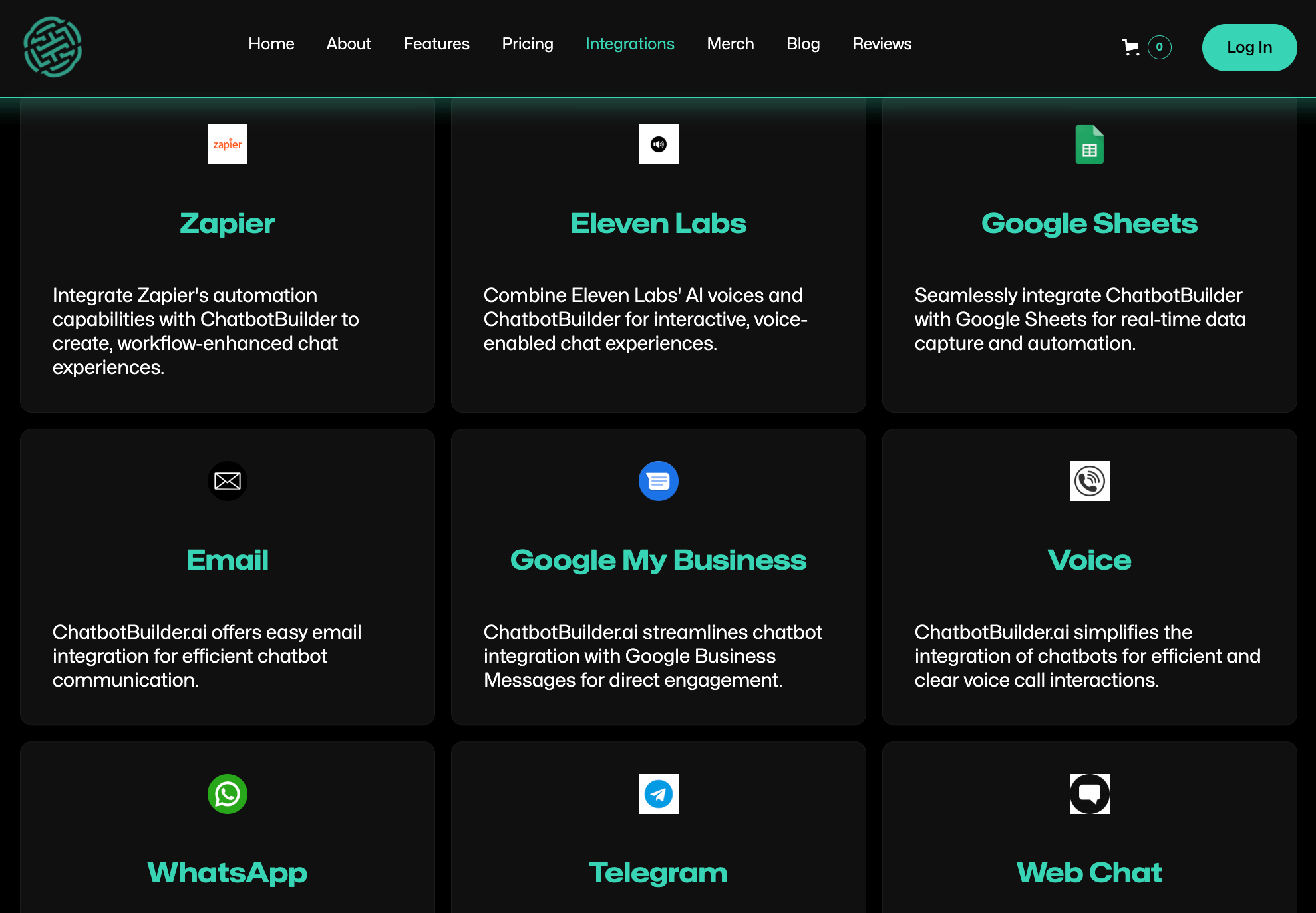
Russell recommends Chat Bot Builder as an ideal starting platform because it's free to begin with and doesn't require technical setup. The platform provides three million tokens for testing, so you can build and test your system before committing to production costs.
When you create an account on Chat Bot Builder, the platform automatically sets up API access to various AI models including ChatGPT, removing the complexity of developer accounts and API key management. This allows you to focus on strategy rather than technical implementation.
The platform connects to over twenty different channels, including SMS, email, social media platforms, and website chat widgets. This omnichannel approach means you can build one AI brain that works consistently across all touchpoints where prospects might engage with your brand.
#2: Build Your Agent’s System Prompt
The system prompt serves as the foundation for your AI agent's behavior. Russell breaks this down into what she calls the three Ps of prompt engineering: Purpose, People, and Portfolio.
Purpose: Defining Your AI Agent's Mission
Your AI agent needs crystal-clear instructions about its role and responsibilities. Rather than crafting this from scratch, Russell recommends leveraging existing AI systems to help build your system prompt.
Go to ChatGPT or another AI model and request:
Can you write me a safe and responsible system prompt that will allow me to create an agent that'll do this work?
Then describe exactly what you want the agent to accomplish.
The AI will generate a comprehensive prompt that includes appropriate guardrails and safety measures. For a lead nurturing agent, this might look like:
Your purpose is to be an AI assistant on the [Company] website to guide users from investigating and curiosity into the confidence of actually reserving their spot in an event.
The safe and responsible specification is crucial because it automatically incorporates industry best practices for AI deployment. The system will add context to increase explainability, prevent misuse, and ensure accurate information handling.
You should read through and customize the generated prompt to match your specific business needs, but you don't need to understand every technical detail of AI safety to implement responsible practices.
People: Identifying Your Target Audience
The second P focuses on precisely defining who your AI agent serves, including both ideal prospects and those who aren't good fits for your offerings.
Give your agent demographic information like industry, company size, role, and geographic location. More importantly, include psychographic details about their challenges, goals, and decision-making processes.
When you clearly define your target audience, the AI agent automatically makes inferences about who doesn't fit your ideal customer profile. This enables sophisticated lead scoring capabilities where the system can identify lower-quality conversations and handle them appropriately.
AI Is No Longer Optional for Marketers—Ready to Master It?
Join over a thousand forward-thinking marketers at AI Business World—a conference-in-a-conference at Social Media Marketing World.
Get two days of practical AI training where you'll discover:
✅ Systems that 3x your output—leaving time for strategy and creativity
✅ Proven strategies you can deploy right away—no guesswork, no wasted budget
Become the indispensable AI expert your company needs.
GET YOUR TICKETS—SAVE $200For prospects who don't match your ideal customer criteria, you can instruct the agent to redirect them to alternative resources like blog content, free guides, or lower-commitment offerings rather than pushing them toward sales calls that likely won't convert.
This granular audience definition enables the AI to provide personalized responses and automatically segment prospects based on their likelihood to convert.
Portfolio: Curating Your Knowledge Base
The third P involves providing your AI agent with the specific information it needs to answer questions accurately and represent your brand effectively.
AI models are pre-trained on internet data, but this creates challenges because online information includes opinions, outdated facts, and contradictory sources. You need to tell the model exactly what truth is for your business, for your transactions, for the ethos of your company.
This approach implements Retrieval Augmented Generation (RAG), where instead of relying on general internet training data, the AI agent specifically references your curated information to generate responses.
Chat Bot Builder provides over three million characters of space, which accommodates substantial amounts of information.
For basic implementations, you can simply copy and paste all relevant website content directly into your system prompt.
For more sophisticated systems, consider including content from Google Drive documents, PDFs, SharePoint directories, Dropbox files, and even audio recordings. The platform can process up to fifteen different file types, creating a comprehensive knowledge base.
Pro Tip: The knowledge base requires ongoing maintenance. You'll need to refine the prompt data as you create new offers continuously, develop new marketing content, or discover inconsistencies that confuse the AI agent. For example, if you point your agent to the website as the source of truth, you might find out you have pages that contradict each other.
#3: Establish Brand Voice Through Conversation Design
Beyond the three Ps framework, you need to program your AI agent for specific conversation scenarios to prevent hallucinations and maintain brand consistency.
Russell categorizes conversation examples into two types: desirable conversations you want to encourage, and undesirable conversations you need to redirect appropriately.
Desirable Conversation Examples
Create three to seven examples of ideal prospect interactions, including both the questions customers might ask and exactly how you want the AI agent to respond. These might include questions about your services, pricing, implementation processes, or booking procedures.
This step allows you to embed your brand voice into the AI agent's responses. Russell cites Progressive Insurance's implementation, where they programmed their AI agent to respond with Flo's characteristic spunkiness, maintaining brand personality while providing accurate information.
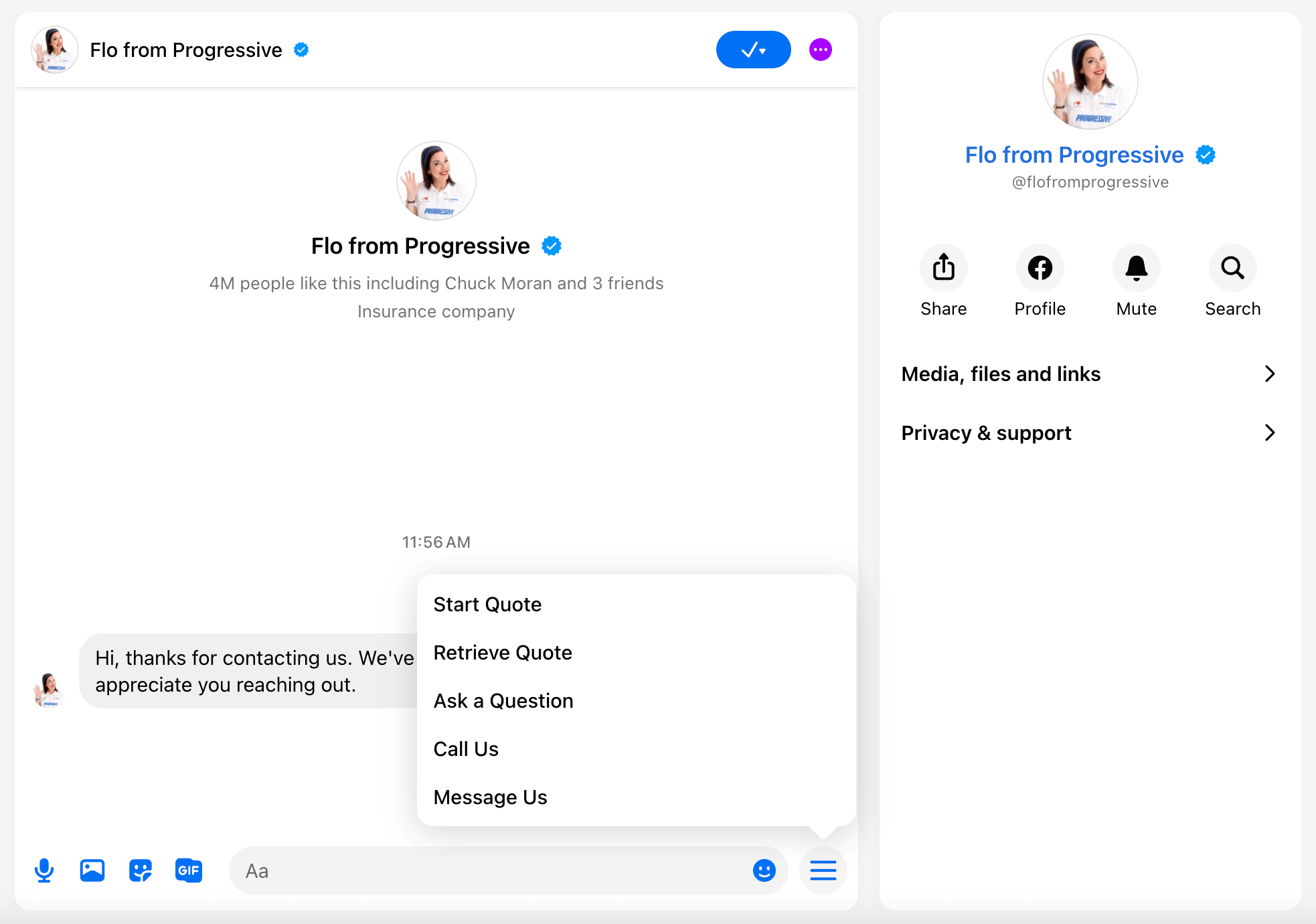
Consider your brand's communication style. Are you formal or casual? Professional or playful? Direct or consultative? Incorporate these characteristics into your example responses so the AI agent maintains consistency with your overall brand experience.
Managing Undesirable Conversations
More important than positive examples are the undesirable conversations that could derail prospect engagement or waste the AI agent's time on irrelevant topics.
Russell always includes certain standard examples in every system she builds. Her go-to test question is “Can you help me with my taxes?” unless she's specifically building a system for tax professionals.
When programming responses to undesirable questions, create opportunities to redirect prospects back to relevant topics. For the tax question on a wellness website like Mindvalley, the response might acknowledge that the AI can't help with taxes, but suggest that tax season creates stress that their mindfulness programs could address.
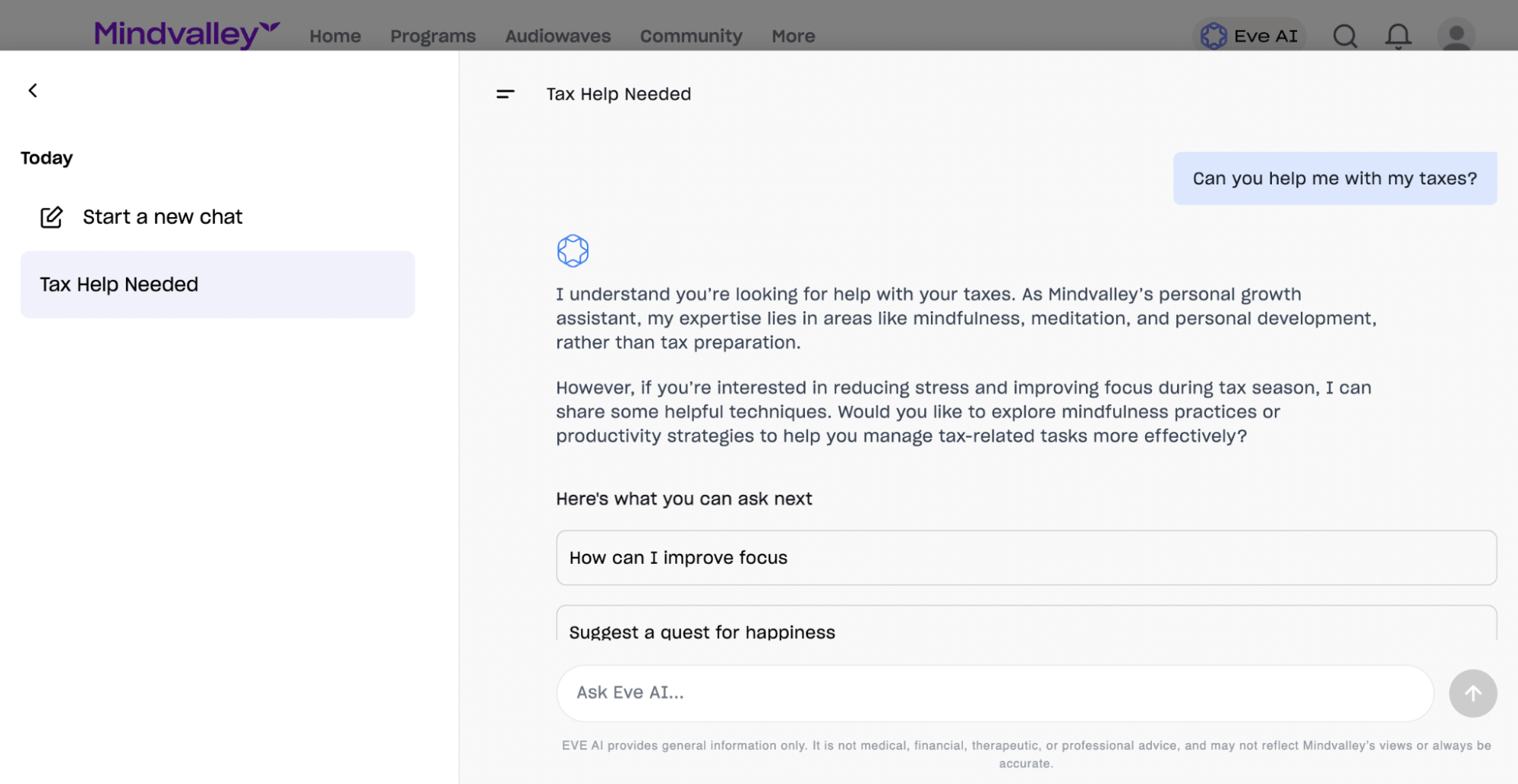
This approach transforms potential dead ends into selling opportunities. “Even when people ask you questions that are not in alignment with what you offer, you can turn them into, hey, but you might actually need what we do,” Russell explains.
Include five to seven undesirable question examples with specific response scripts. Consider questions like “Where's the post office?” or “Tell me about Picasso” – completely off-topic queries that real users might pose to test your system.
The AI agent will use these examples to understand appropriate boundaries and develop consistent responses to similar off-topic requests.
#4: Test Your AI Agent Through Red Teaming
Before deploying your AI agent with real prospects, conduct thorough testing to identify potential vulnerabilities or unexpected behaviors.
Russell calls this process AI red teaming – a systematic approach to stress-testing your system with diverse perspectives and unexpected inputs.
Organize what Russell terms break your bot sessions where twenty-five trusted colleagues, friends, or team members attempt to make your AI agent behave inappropriately or provide incorrect information.
Encourage testers to ask unusual questions, try to confuse the system with ambiguous requests, or attempt to get it to go beyond its programmed boundaries. Different people will approach the system differently based on their backgrounds and perspectives.
These diverse testing perspectives help identify edge cases and scenarios you hadn't considered during development.
Conversation Monitoring and Analysis
Chat Bot Builder includes an inbox feature that logs every conversation your AI agent has with prospects. This creates a permanent record you can review to identify patterns, problems, and improvement opportunities.
During testing, closely examine each conversation the system logs to understand where the AI agent performs well and where it struggles. Look for instances where prospects become frustrated, receive inaccurate information, or abandon conversations without scheduling calls.
Use this data to refine your system prompt, add new conversation examples, or update your knowledge base to address gaps in the AI agent's capabilities.
#5: Deploy Your Lead Nurturing Agent
Even the most sophisticated AI agent won't generate results unless prospects actually engage with it.
Deploy your AI agent across multiple touchpoints where prospects naturally engage with your brand. This includes your website, but it also extends to SMS, email, direct messages on social media, and other communication channels.
The key insight is building one brain to rule them all–a single AI system that maintains consistent personality and knowledge across every channel.
When a prospect starts a conversation via SMS and later switches to email, the AI agent should seamlessly continue the relationship without requiring the prospect to repeat information.
Noelle Russell is an AI business strategist at Agentic AI and the founder of AI Leadership Institute, where she helps marketers and entrepreneurs increase revenue and reduce their costs with AI. Her podcast is Good Morning AI. Follow her on Instagram and LinkedIn.
Other Notes From This Episode
- Connect with Michael Stelzner @Stelzner on Facebook and @Mike_Stelzner on X.
- Watch this interview and other exclusive content from Social Media Examiner on YouTube.
Listen to the Podcast Now
This article is sourced from the AI Explored podcast. Listen or subscribe below.
Where to subscribe: Apple Podcasts | Spotify | YouTube Music | YouTube | Amazon Music | RSS
✋🏽 If you enjoyed this episode of the AI Explored podcast, please head over to Apple Podcasts, leave a rating, write a review, and subscribe.
Stay Up-to-Date: Get New Marketing Articles Delivered to You!
Don't miss out on upcoming social media marketing insights and strategies! Sign up to receive notifications when we publish new articles on Social Media Examiner. Our expertly crafted content will help you stay ahead of the curve and drive results for your business. Click the link below to sign up now and receive our annual report!
Want to Unlock AI Marketing Breakthroughs?
If you’re like most of us, you are trying to figure out how to use AI in your marketing. Here's the solution: The AI Business Society—from your friends at Social Media Examiner.The AI Business Society is the place to discover how to apply AI in your work. When you join, you'll boost your productivity, unlock your creativity, and make connections with other marketers on a similar journey.
I'M READY TO BECOME AN AI-POWERED MARKETER