by
by Custom GPTs don't just save you time, they can actually make you money. People say that custom GPTs deliver generic results, but is that really true?
In this article, you'll discover how to create custom GPTs that free your time and increase your sales through the strategic implementation of three distinct types of AI assistants.
What are Custom GPTs and How Can They Improve Your Business?
Custom GPTs have evolved far beyond simple time-saving tools to become powerful revenue generators for businesses across industries. The misconception that these AI assistants produce only generic, unhelpful responses stems from poor implementation rather than platform limitations.
The reality is that custom GPTs can fundamentally transform how businesses operate.
When built correctly using proprietary methodologies, frameworks, and experience, these AI assistants become extensions of your teaching and expertise rather than generic content generators.
When implemented strategically, custom GPTs also deliver measurable business outcomes across multiple dimensions. The primary benefits center around two core areas that every business owner values: making more money and saving time.
AI strategist Wendy Breakstone shares that one client saved five thousand dollars by building two foundational custom GPTs that took over the work previously requiring a full-time employee. The speed and efficiency gains were immediate and substantial, demonstrating how these tools can directly impact your bottom line through cost reduction and capacity expansion.
From a revenue perspective, well-designed custom GPTs can double your enrollments, retention rates, renewals, and referrals. When you can deliver faster, better results to clients or stakeholders, you become the person who naturally comes to mind for referrals. People don't care about the mechanics of how you achieve results; they care about reaching their destination quickly and effectively. Custom GPTs serve as the vehicle that gets them there faster.
These AI assistants also enable rapid expansion of your service offerings. You can spin up new income streams quickly by leveraging existing expertise through different custom GPT applications. For service-based providers and consultants doing done-for-you work, custom GPTs allow you to accomplish more in less time, which creates opportunities to take on additional clients and increase overall revenue.
#1: Where Should I Begin: 3 Types of Custom GPTs
The hardest part of custom GPT development is often getting out of your own way and identifying which GPT to build first. Many people get caught up thinking about the fifty different GPTs they want to create rather than focusing on the one that will make the most immediate impact.
Here are three categories of custom GPTs to consider when prioritizing your custom GPT builds.
Foundational GPT Examples: The Core of Your Business Operations
The most critical custom GPTs to build first are foundational. These handle the core work that drives everything else in your business. Foundational GPTs address what many call module one work–the heavy foundational tasks that must be completed before clients can achieve their desired transformation or before team members can perform their roles effectively.
In course creation and client onboarding, there's typically substantial foundational work that can burn out students or delay project timelines. This work is essential for achieving end results, but its time-intensive nature often prevents people from reaching completion. Foundational custom GPTs solve this problem by making the necessary groundwork fast and manageable.
To identify what should become a foundational GPT, examine your recurring work patterns. If you repeatedly return to the same forms, templates, or swipe files for similar tasks, there's likely foundational work that can be systematized. Whether you're reviewing niche identification, ideal client analysis, core messaging development, or any other foundational business element, these repetitive deep-dive processes are prime candidates for GPT automation.
Go Deeper Than an Article Can Take You
Join thousands of small-business marketers at Social Media Marketing World — three days of AI, social media, and marketing strategy taught by world-class experts. April 1–3, 2027 in Anaheim.
Every session is pitch-free and built around tactics you can use yourself, no big team required. Your All-Access ticket includes an extra day of workshops, full access to AI Business World, and recordings of everything.
GET MY ALL-ACCESS TICKET — SAVE $770Brenna McGowan created two foundational GPTs for her business.
The first one helps clients understand and flesh out their offer details, along with the buyer's beliefs necessary for people to purchase that offer. Clients cannot effectively sell what they don't clearly understand, and they cannot sell without deeply understanding their buyer's beliefs.
The second custom GPT addresses Brenna's belief that clients need direct conversations with their ideal customers and existing clients. This GPT synthesizes interview transcripts, automatically extracting pains, desires, goals, and misconceptions using the actual language and words that clients use. Instead of generic market research, clients receive authentic voice-of-customer insights that can be immediately applied to their marketing and sales efforts.
Both GPTs are built on Brenna's proprietary methodologies, frameworks, and years of experience, so they are extensions of her teaching rather than generic AI outputs. When foundational work is completed through these custom GPTs, clients have the essential information needed to move forward effectively in their programs.
For corporate environments, foundational GPTs can address onboarding challenges for new marketing department employees. Without access to foundational information like messaging guidelines, ideal client personas, and strategic frameworks, new team members cannot perform their roles effectively. A foundational GPT that provides immediate access to this critical information eliminates spinning wheels and accelerates productivity.
Add-On GPT Examples: Extending Foundational Work
Add-on GPTs take information generated by foundational GPTs and transform it into specific, actionable outputs. These tools address the “what now?” question that arises after foundational work is complete. The key characteristic of add-on GPTs is their dependence on foundational GPT outputs; they cannot function effectively without the preliminary work being completed.
The relationship between foundational and add-on GPTs follows a logical sequence. Users complete foundational GPT work and save those outputs into workbooks or worksheets. They then copy and paste this information into add-on GPTs that are specifically designed to work with that foundational data.
Using Brenna McGowan's system as an example, after clients complete her two foundational GPTs, they possess comprehensive information about their messaging and client needs. This foundational data gets directly input into her add-on GPT–a social media and email calendar creator. The add-on GPT knows it will receive information generated from other GPTs, creating a tightly connected system where each tool builds upon previous work.
This modular approach prevents the common mistake of trying to create one massive GPT that handles everything. When you attempt to put everything into a single system, you often create too much output for end users to synthesize effectively. The step-by-step process ensures users can consume and act on information in manageable portions.
Add-on GPTs serve both self-use and client-facing applications. For internal use, they might transform client onboarding form information into foundational reports that guide ongoing work. For client-facing applications, they provide natural next steps after foundational work is complete, maintaining momentum and preventing the common problem of people getting stuck after initial breakthrough work.
The beauty of the foundational-to-add-on progression is that it mirrors how people naturally work through complex projects. Rather than overwhelming users with comprehensive outputs all at once, the system guides them through logical sequences that build understanding and capability progressively.
Stand-Alone GPT Examples: Independent Tools for Specific Outcomes
Stand-alone GPTs operate independently without requiring foundational GPT outputs. These tools serve specific purposes, including lead magnets, low-ticket offers, curriculum exercises, and internal repetitive tasks that aren't connected to foundational work.
The key distinction is that stand-alone GPTs don't cannibalize core foundational work. They address peripheral needs or serve marketing functions without replacing the essential foundational elements that drive your primary offerings.
Brenna McGowan's workshop calendar calculator demonstrates an effective stand-alone GPT application. She wanted a new low-ticket offer and lead magnet for speaking engagements and events. This calculator takes launch dates, open cart and close cart dates, then calculates backwards through the five weeks of necessary preparation. Based on high-level details built into the system, it maps out exactly what needs to be done based on when users want to open and close their cart.
This stand-alone GPT serves multiple purposes: it functions as a lead magnet for prospects learning about her pre-launch program, operates as a low-ticket offer for those not ready for her full program, and provides value to existing program members. The tool addresses a specific need without requiring users to complete foundational work first.
Another example comes from a client who helps myofascial release therapists grow their businesses. Her stand-alone rate calculator requires just four inputs: desired annual income, business expenses, the number of weeks per year they want to work, and the number of clients per week. The GPT calculates appropriate package rates and single therapy session prices. This tool provides immediate value without connecting to foundational business development work.

Tired of Guessing Which AI Moves Matter?
New AI tools and strategies launch every week — and figuring out which ones matter takes hours you don't have.The AI Business Society filters the noise for you, with expert-led training you can put to work the same day — plus a community of marketers sharing what's actually working.
I'M READY FOR REAL AI RESULTSStandalone GPTs also serve internal business functions effectively. A Hooks Genius GPT takes basic information and generates multiple hook ideas for offers. This tool gets used repeatedly whenever fresh hook concepts are needed for marketing campaigns, providing consistent value without requiring extensive foundational input.
For lead generation and customer acquisition, stand-alone GPTs offer prospects a taste of your expertise without giving away foundational methodologies. They demonstrate value while naturally leading prospects toward more comprehensive offerings. When designed correctly, they solve immediate problems while highlighting the deeper work available through your primary programs.
#2: Determine Whether a Certain Custom GPT Is Worth Your Time: The Two-of-Three Rule
Before you commit to developing a custom GPT, apply the two-of-three rule to ensure your project will be worthwhile. This framework helps distinguish between passion projects that drain resources and strategic investments that generate returns.
Every custom GPT project should check at least two of these three boxes:
- Will it make you money or save you money?
- Will it save you a significant amount of time?
- Does it scratch a creative itch or fulfill a passion project?
While creative passion projects can be engaging, they often require time investment without generating monetary returns. However, when you follow a systematic approach to custom GPT development, you'll typically achieve all three outcomes–saving time, making money, and experiencing the creative satisfaction of building something innovative and useful.
Applying the two-of-three framework encourages you to think strategically about resource allocation. If you're an entrepreneur or creative professional where time equals money, time savings directly translate to revenue opportunities. The productivity gains from well-designed custom GPTs create space for higher-value activities that generate income.
#3: Use the STARS Framework to Build Effective Custom GPTs
The STARS framework provides a systematic approach to custom GPT development, ensuring each tool delivers consistent, high-quality outputs rather than generic responses.
Strategy forms the foundation of every custom GPT. Before building anything, clearly define what problem you want to solve and what outcome you want to accomplish. Take a deep look into your work, offers, and client needs to identify where people consistently get stuck. The best custom GPTs clear roadblocks and eliminate frustration, whether for students, clients, team members, or stakeholders.
Training Docs (called knowledge docs in ChatGPT) determine output quality more than any other factor. If you're receiving generic responses, the training information provided to the GPT isn't comprehensive enough. This is typically the builder's responsibility, not a platform limitation. Think carefully about what knowledge and examples you want to give your GPT. Include proprietary methodologies, frameworks, specific examples, and detailed background information that reflects your unique expertise and approach.
Actions specify exactly what you want the GPT to do, and specificity is crucial here. Talk to the GPT like you're teaching a five-year-old, being pedantic about each step. Instead of general instructions, provide detailed, sequential directions. If you were teaching someone to bake cookies, you wouldn't just list ingredients–you'd specify measurements, temperatures, timing, and step-by-step procedures. Custom GPTs require the same level of detailed instruction.
Responses control how the GPT delivers information back to users. Evaluate whether outputs meet your standards for consistency, format, and tone. Do you want information in outline format? Are there too many emojis? Is the language too casual or too formal? All of these elements can be controlled through specific instructions in the actions section. The goal is to ensure responses consistently meet your quality standards.
Structure provides the framework that ties everything together. Every effective custom GPT follows a specific, repeatable structure rather than a random, flow-with-it approach. When your GPTs follow consistent structures, it becomes much easier to identify where fine-tuning is needed and where improvements can be made. Structure also makes the development process more systematic and scalable.
What are the Best Third-Party Platforms for Custom GPTs?
While ChatGPT's native custom GPT builder works well for many applications, third-party platforms offer additional control and functionality, particularly for businesses wanting to create walled gardens or embed GPTs into existing systems.
Your choice of tool ultimately depends on your technical comfort level, budget, and specific business requirements. Starting with simpler platforms and upgrading as needs become more sophisticated provides a logical progression path for most businesses entering the custom GPT space.
RadGenius stands out for its simplicity and affordability.
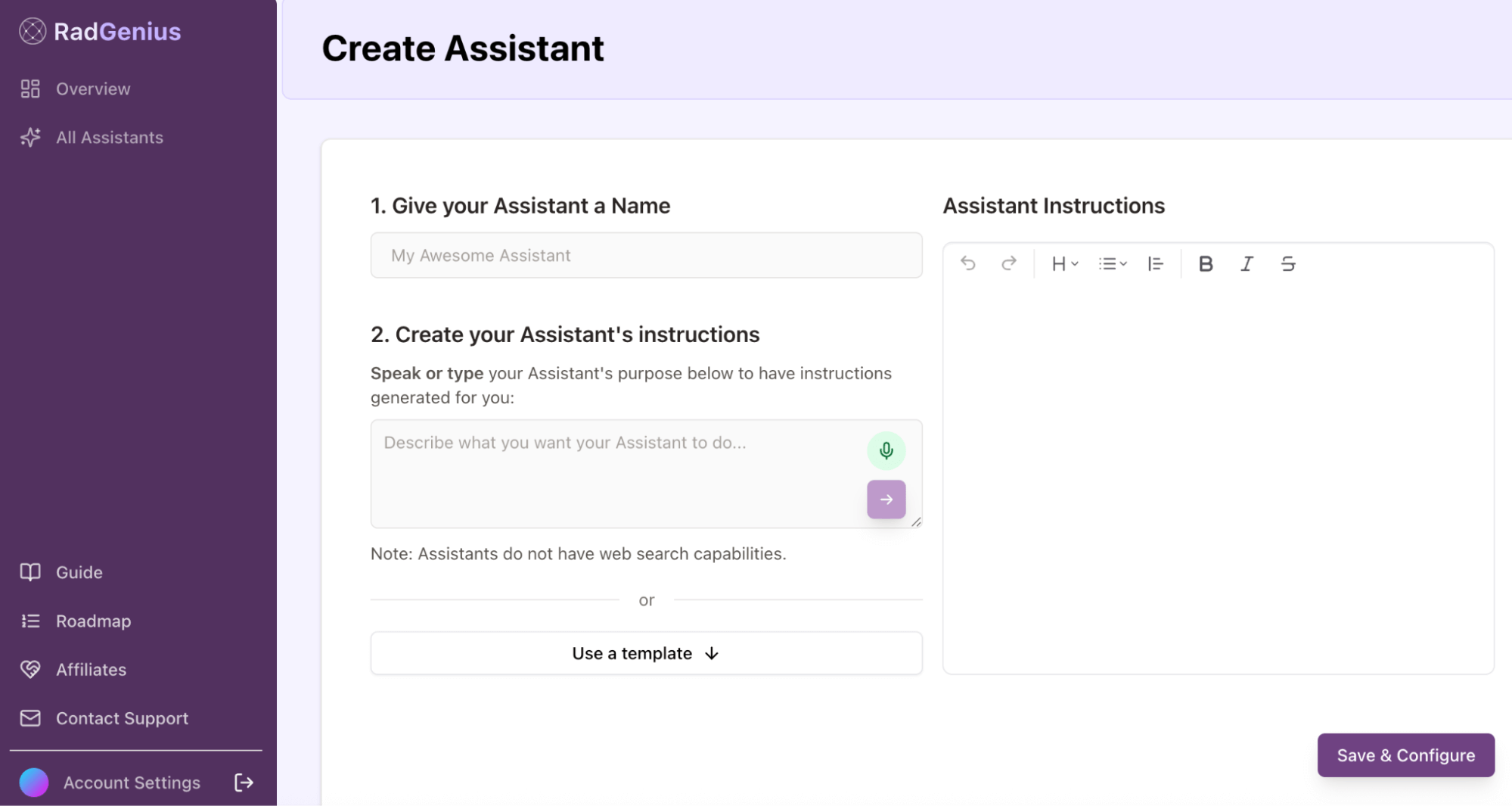
At seven dollars per month, it provides an uncomplicated platform that mirrors the ChatGPT building experience without overwhelming bells and whistles. The platform focuses on core functionality while gradually adding powerful features in a thoughtful, selective manner. Rad Genius works exclusively with OpenAI models including GPT-4 and GPT-4.1, ensuring compatibility with the most advanced language models available.
The platform appeals to users who want to use AI expertly without becoming AI experts. Its straightforward approach eliminates complexity while maintaining the functionality needed to create professional custom GPTs. For businesses wanting to embed GPTs into websites, course pages, or internal management systems, Rad Genius provides the necessary tools without requiring technical expertise.
Pickaxe offers a more robust platform for advanced users willing to navigate additional complexity.
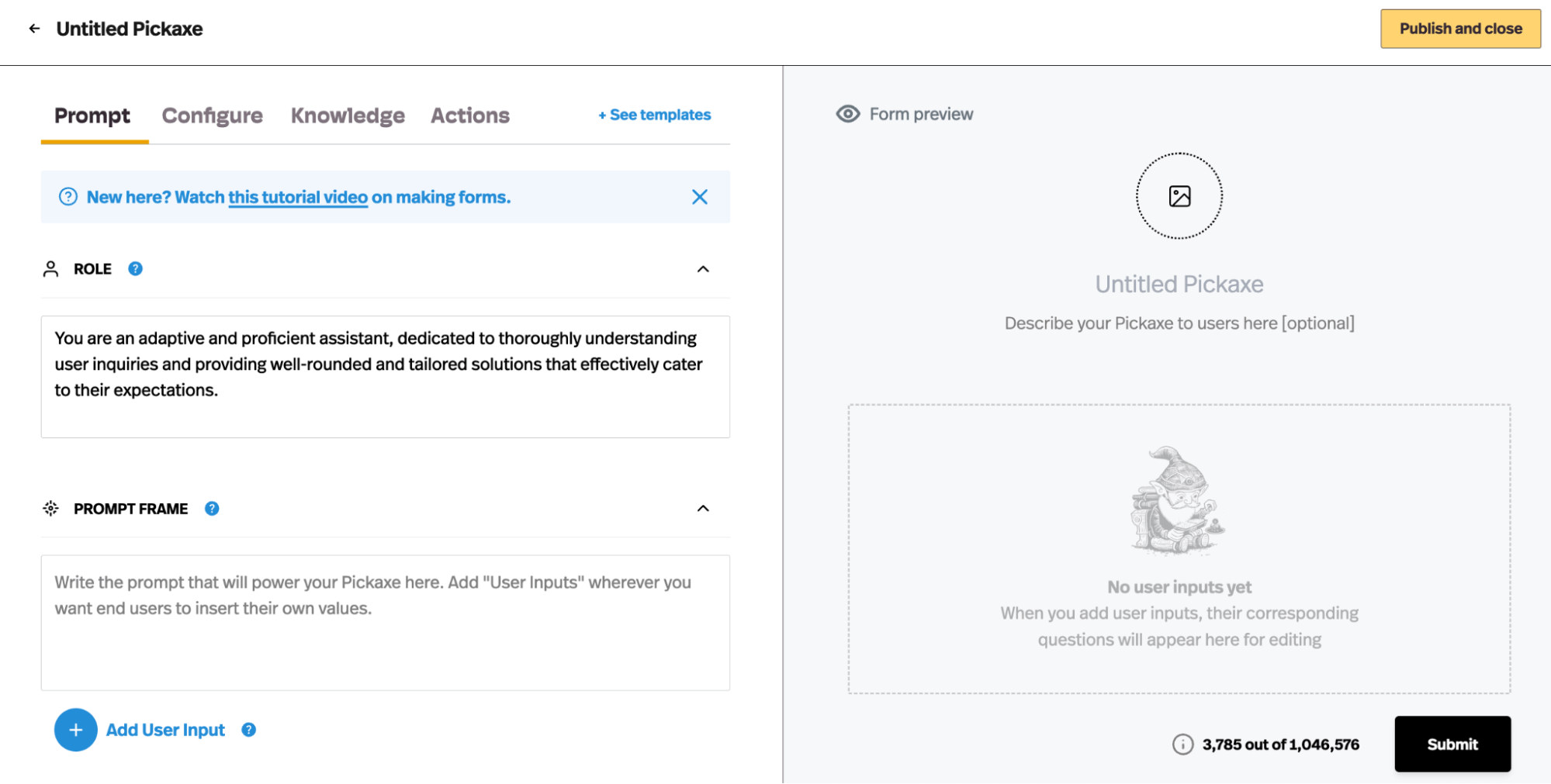
The platform has evolved significantly over the past year, adding features that increase capability while also increasing complexity. Some recent changes have made it more complicated than necessary for basic custom GPT needs, but it remains powerful for users requiring advanced functionality.
Pickaxe recently raised another round of funding and continues expanding its feature set. For corporations wanting to embed custom GPTs into intranets or for advanced users requiring sophisticated AI assistant capabilities, Pickaxe provides the necessary tools. However, the increased complexity means it's better suited for users who are comfortable with more technical platforms.
FormWise represents a higher-end option that many users are testing, though it operates at a different price point.
While the platform offers advanced capabilities, it may not be necessary for most custom GPT applications. The additional cost and complexity aren't justified for basic custom GPT needs, making it more suitable for enterprise applications requiring specialized features.
When choosing between platforms, consider your specific needs around control, embedding capabilities, and user management. For most applications, ChatGPT's native builder provides sufficient functionality. When you need to lock GPTs behind paywalls, embed them into existing systems, or maintain detailed usage analytics, third-party platforms become valuable investments.
Wendy Breakstone is an AI strategist who helps seasoned coaches, creators, and service-based businesses embrace AI to increase their revenue and free their time. Explore her AI-for-Income Accelerator and connect with her in the free AI-Powered Business with Wendy community.
Other Notes From This Episode
- Connect with Michael Stelzner @Stelzner on Facebook and @Mike_Stelzner on X.
- Watch this interview and other exclusive content from Social Media Examiner on YouTube.
Listen to the Podcast Now
This article is sourced from the AI Explored podcast. Listen or subscribe below.
Where to subscribe: Apple Podcasts | Spotify | YouTube Music | YouTube | Amazon Music | RSS
✋🏽 If you enjoyed this episode of the AI Explored podcast, please head over to Apple Podcasts, leave a rating, write a review, and subscribe.
Stay Up-to-Date: Get New Marketing Articles Delivered to You!
Don't miss out on upcoming social media marketing insights and strategies! Sign up to receive notifications when we publish new articles on Social Media Examiner. Our expertly crafted content will help you stay ahead of the curve and drive results for your business. Click the link below to sign up now and receive our annual report!

Where Do You Actually Stand With AI?
Most marketers use AI, but they don't know what's holding them back from real results.
Our 3-minute quiz pinpoints the one gap keeping you stuck — and gives you the exact next step to fix it.
GET MY RESULTS